Budgeting: Which insurance do you need? A list by life stage
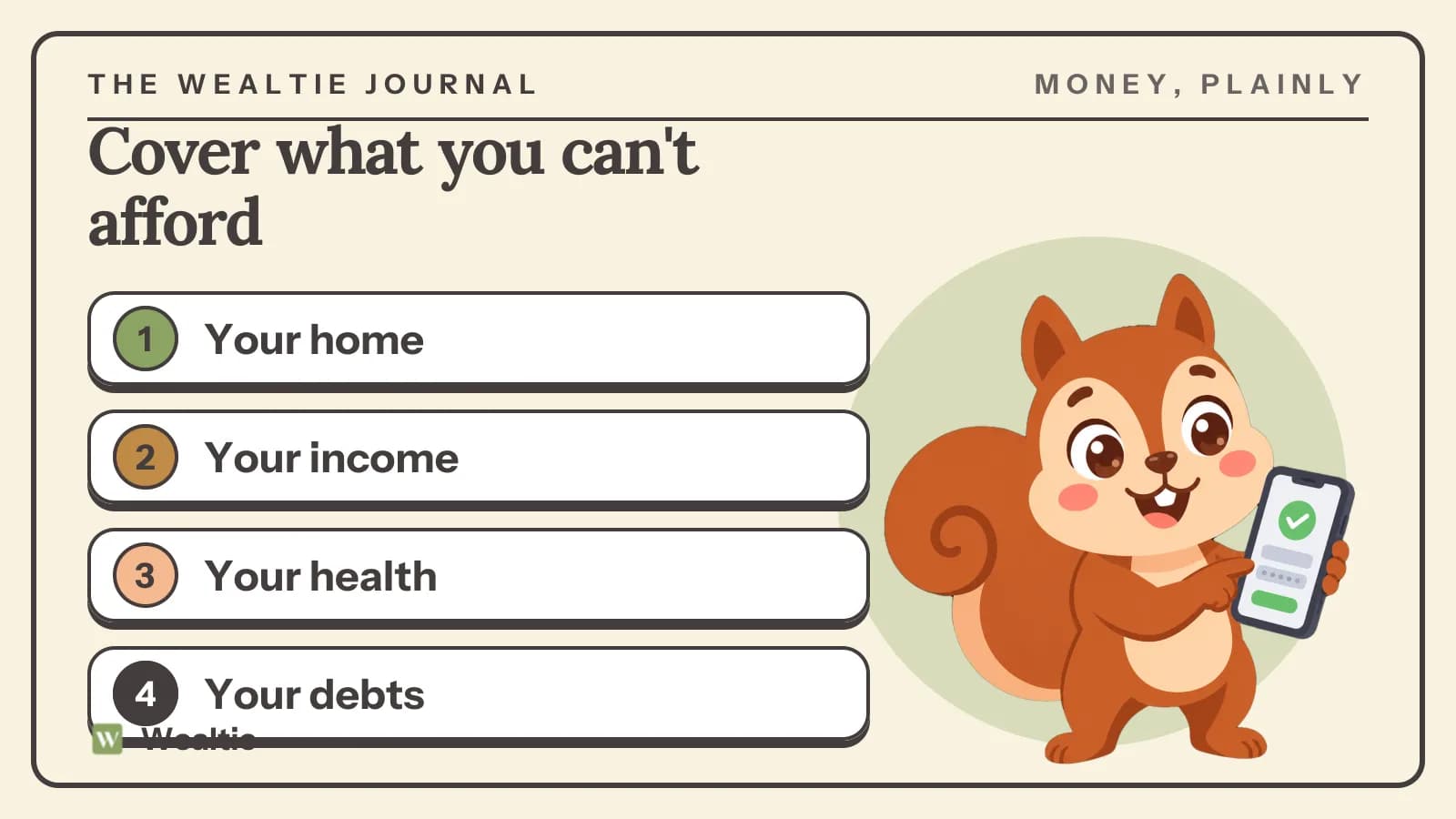
Which insurance do you need? Cover for what you couldn't afford to lose, like your home, your income or your health, which for most people means a few core policies and very few optional extras.
 By Wealtie Team · 3 min read
Key takeaways
- Insure against losses you couldn't afford to pay for yourself, and skip cover for small costs you could handle from savings.
- Renters usually need contents insurance; homeowners need buildings and contents cover.
- Income protection and life cover matter most when others depend on your income.
- Review your cover when life changes, like moving, buying a home or having children.
Which insurance do you need?
Cover for the losses you couldn't afford to pay for yourself. That's the simplest test. Insurance is worth it when a loss would be large, unexpected and hard to recover from, like losing your home's contents in a fire, or your income through illness. It's rarely worth it for small costs you could cover from savings.
What you need depends on your country, too. Some cover is compulsory, like car insurance in many places, and some needs are covered by state systems.
What's usually essential?
The core cover for most people:
| Situation | Cover to consider |
|---|---|
| You drive | Car insurance, often required by law |
| You rent | Contents insurance |
| You own a home | Buildings insurance, usually required by a mortgage lender, plus contents |
| You travel abroad | Travel insurance, especially for medical costs |
| Others depend on your income | Life cover and income protection |
| Your health care isn't fully covered | Health insurance, depending on your system |
If you're self-employed, check whether your work needs professional or public liability cover. Your own list depends on your circumstances. A single renter with savings needs far less than a parent with a mortgage.
When do you need life cover and income protection?
When someone depends on your income. Life cover pays out if you die, which can help a partner or children keep their home and manage costs. Income protection pays part of your income if you can't work because of illness or injury, for a set period or until you return.
If nobody relies on your income and you've got savings, you may not need life cover yet. Life cover is often cheaper the younger and healthier you are when you take it out, and critical illness or disability cover is worth a look if you've got dependants and no sick pay. Income protection is worth thinking about for anyone whose household would struggle without their pay, including the self-employed, who don't get sick pay from an employer. How much to save before going freelance covers that side.
What's usually optional?
Cover for things you could afford to replace, or that overlaps with what you already have:
- Extended warranties on electronics and appliances
- Gadget insurance, which may overlap with home contents cover
- Insurance offered at the till for small items
- Add-ons you don't need, like legal cover you already have through another policy
Sellers usually price them so that, on average, they cost more than the repairs they cover. Pet insurance sits in between: useful if a big vet bill would be hard to pay, less so if you've set money aside for it. Building an emergency fund often does the same job for small losses, and you keep the money if nothing happens.
How do needs change through life?
They grow and shrink. When you start renting, contents and maybe car insurance are usually enough. Buying a home adds buildings insurance and often life cover linked to the mortgage. Having children is when life cover and income protection matter most. Later, as the mortgage is paid and children leave home, some cover can be reduced. Students and young renters may only need contents cover, sometimes through a parent's policy.
Review your cover whenever something big changes, and at least once a year at renewal.
How do you avoid paying too much?
Shop around at renewal, check you're not insured twice for the same thing, and pick an excess you could afford if you claimed. Pay yearly if you can, since monthly payments can cost more in total. How to save money on car insurance goes through the details for one of the biggest policies.
Check whether your bank account, employer or card already includes cover like travel insurance, so you don't buy it twice. Read what's excluded. A cheap policy that doesn't cover what you need isn't a saving.
What should you check before buying?
What's covered, what isn't, how much you'd pay towards a claim, and how claims are handled. Be honest on applications, since wrong information can make a claim fail. Keep a list of all your policies, with renewal dates and what each covers, in one place. For bigger policies like life cover or income protection, an independent adviser can help compare options.
How do you keep track of insurance in Wealtie?
Set each policy up as a recurring transaction with the bill tracker, monthly or yearly, so it logs itself on the due date and renewals don't catch you out. Give insurance its own line in your expense categories, so you can see what all your cover costs together each year.
Questions people ask
Cover for losses you couldn't afford yourself: usually car insurance if you drive, contents if you rent, buildings and contents if you own, and life cover and income protection if others depend on you.
Often not, if nobody depends on your income and you have savings. It matters more when you have a partner, children or a mortgage.
Cover for small costs you could pay from savings, like extended warranties and gadget insurance that overlaps with home contents cover.
At least once a year at renewal, and whenever your life changes, like moving, buying a home or having children.
This article is general information, not financial, tax or legal advice. Your situation is your own; check the numbers that apply to you before you act on them.



