Budgeting: Rent guarantor: what it means and the alternatives
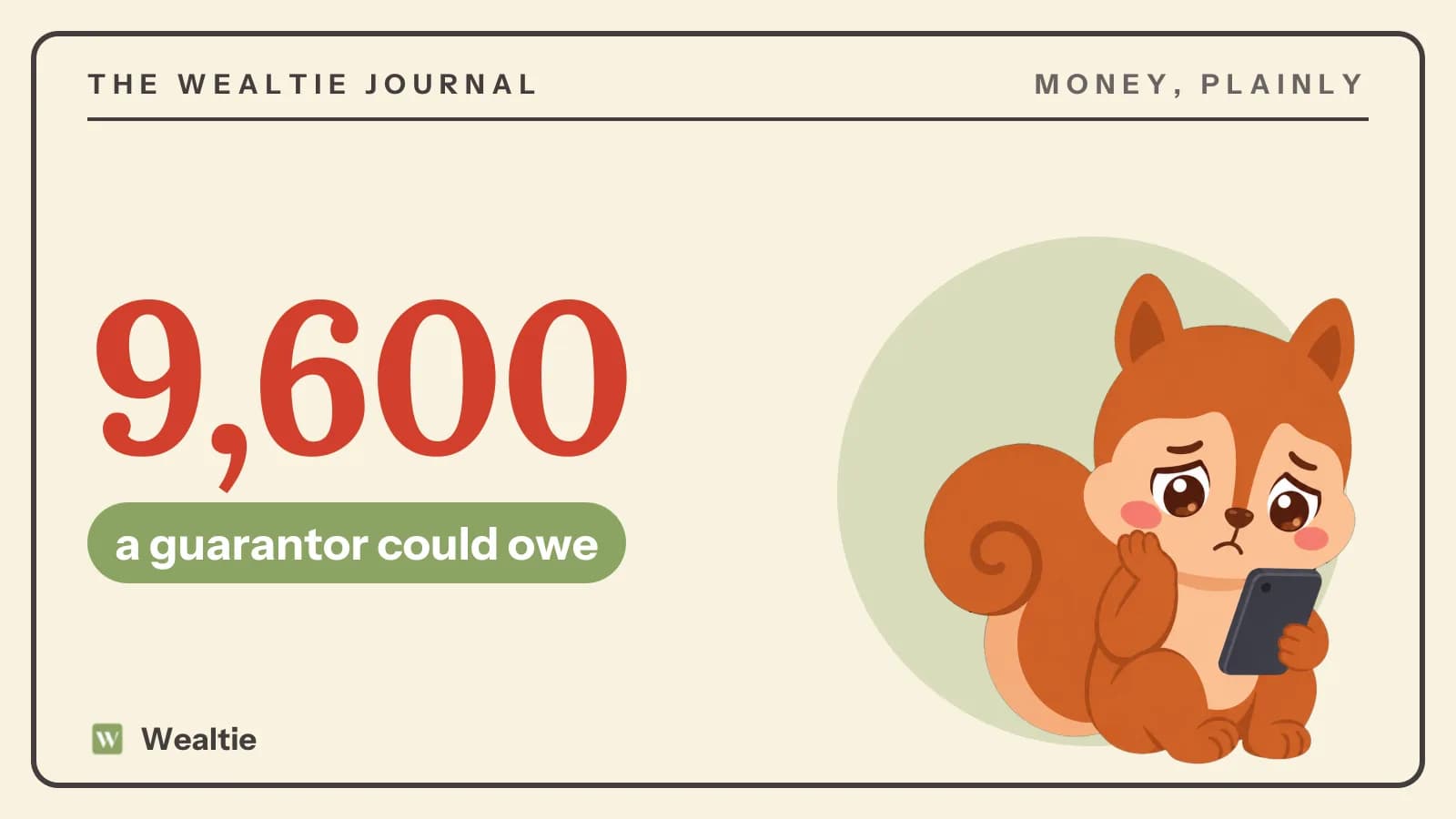
A rent guarantor agrees to pay your rent if you can't, which can be a big commitment for the person who signs. In a worked example, a guarantor on a 12-month lease at 800 a month could be liable for up to 9,600.
 By Wealtie Team · 3 min read
Key takeaways
- A rent guarantor agrees to pay your rent and damages if you don't.
- Guarantors can be liable for a full year's rent or more.
- Guarantor services, rent upfront or a larger deposit are alternatives.
- Agree clear terms and keep the guarantor informed.
What is a rent guarantor?
A rent guarantor is someone who agrees to pay your rent, and sometimes the cost of damage, if you can't. Landlords and letting agents often ask for one when a tenant is a student, has a low or irregular income, is new to the country or has a limited credit history. The guarantor is usually a parent or close relative with a steady income or owns a home.
Being a guarantor is a serious commitment. If the tenant stops paying, the landlord can ask the guarantor for the money, and in some cases take legal action to recover it. Here's a worked example in round numbers that work in any currency. On a 12-month lease at 800 a month, a guarantor could be liable for up to 9,600 in unpaid rent, plus damage or legal costs, depending on the agreement.
What are the alternatives?
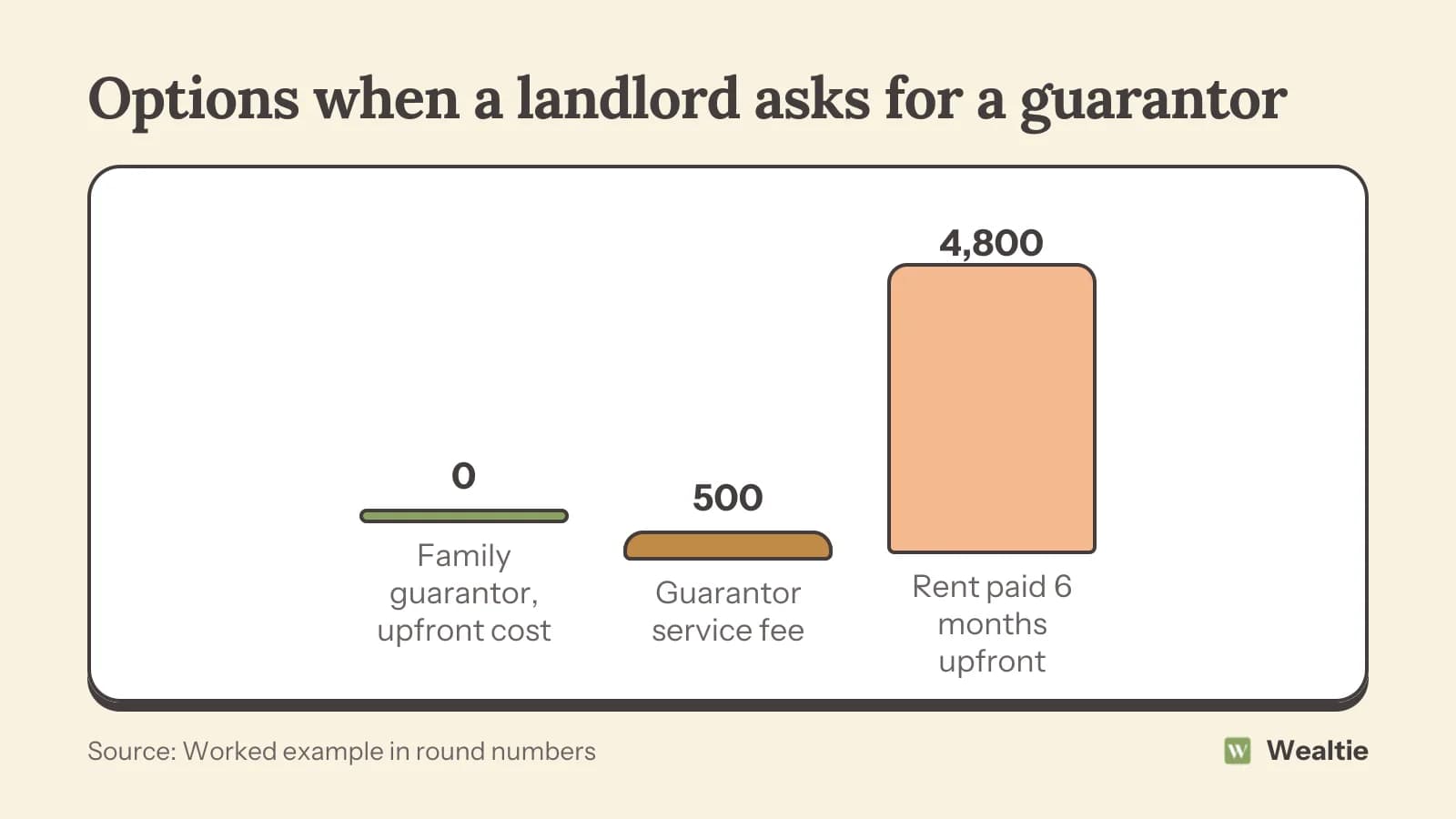
Here's a worked example of options when a landlord asks for a guarantor:
| Option | Upfront cost |
|---|---|
| Family guarantor, upfront cost | 0 |
| Guarantor service fee | 500 |
| Rent paid 6 months upfront | 4,800 |
Guarantor services
Some companies act as your guarantor for a fee, often a share of a year's rent, like 500 in this example. They're useful if you don't have a suitable family member, but the fee isn't refundable.
Paying rent upfront
Some landlords accept several months' rent in advance instead of a guarantor. Six months at 800 would mean 4,800 upfront. It's a lot of money to tie up, and if something goes wrong with the tenancy, getting it back can be difficult.
A larger deposit
In some places, a bigger deposit may reassure a landlord, though deposit limits apply in some countries.
Showing income or savings
Proof of a stable job, savings or a strong rental history can sometimes remove the need for a guarantor.
What should a guarantor check before signing?
What they're liable for
Is it rent only, or damage and legal costs too? For how long? Does it continue if the lease renews?
Joint tenancies
In shared houses with a joint tenancy, a guarantor may be liable for the whole household's rent, not just their relative's share. Ask for the guarantee to be limited to one tenant's share. How to split rent with roommates covers shared tenancies.
Whether they can afford it
A guarantor should only sign if they could cover the payments without hardship.
Getting a copy of the lease
The guarantor should read the full tenancy agreement, not just the guarantee form.
How do tenants protect their guarantor?
Pay rent on time
Setting up a standing order on payday makes missed payments less likely.
Keep an emergency fund
A small buffer covers rent if income drops for a month.
Talk early if there's a problem
If you can't pay, tell the landlord and your guarantor as soon as possible. What to do if you can't pay rent covers your options.
Look after the property
Avoiding damage protects both your deposit and your guarantor.
Is being a guarantor like co-signing a loan?
It's similar in that you're promising to pay someone else's debt if they don't. Both carry real financial risk and can affect relationships if things go wrong. Talk openly about expectations before signing. How much rent can you afford? helps tenants choose a rent they can manage, which reduces the risk for everyone.
Some guarantor agreements continue automatically if the tenancy rolls on or renews, which can leave a guarantor liable for years. A guarantor can ask for the agreement to end at the close of the first fixed term, or to be told before any renewal. Reading the small print and asking these questions before signing protects both sides.
For students and young renters, it helps to talk openly with parents about what they're signing up for. A simple conversation about budgets, rent dates and what happens if money gets tight can prevent problems and stress later. Some families agree that the tenant will tell them straight away if a payment might be late, so the guarantor isn't surprised by a call from the landlord.
If you can't find a guarantor and the alternatives are too expensive, looking for landlords who don't require one, or renting a room in a shared house where the landlord takes less risk, can be easier. University accommodation often doesn't need a guarantor either. University accommodation costs covers the options for students.
How can Wealtie help tenants stay on track?
Add your rent as a recurring transaction in Wealtie, so it's always planned in your budget. Logging spending in expense categories shows how much is left after rent, which helps you spot problems early and keep your guarantor's risk low.
Questions people ask
A rent guarantor agrees to pay your rent, and sometimes damage costs, if you can't. It's often a parent or close relative.
Up to the full amount owed under the agreement. In a worked example, that was 9,600 for a year's rent at 800 a month.
Often, yes. Options include guarantor services, paying rent upfront, a larger deposit or showing strong income or savings.
In some joint tenancies, yes. Ask for the guarantee to be limited to one tenant's share before signing.
This article is general information, not financial, tax or legal advice. Your situation is your own; check the numbers that apply to you before you act on them.