Budgeting: What to do if you can't pay rent this month
If you can't pay rent, contact your landlord before the due date, offer what you can and a plan for the rest, and check what emergency support you're entitled to. Acting early keeps more options open.
 By Wealtie Team · 3 min read
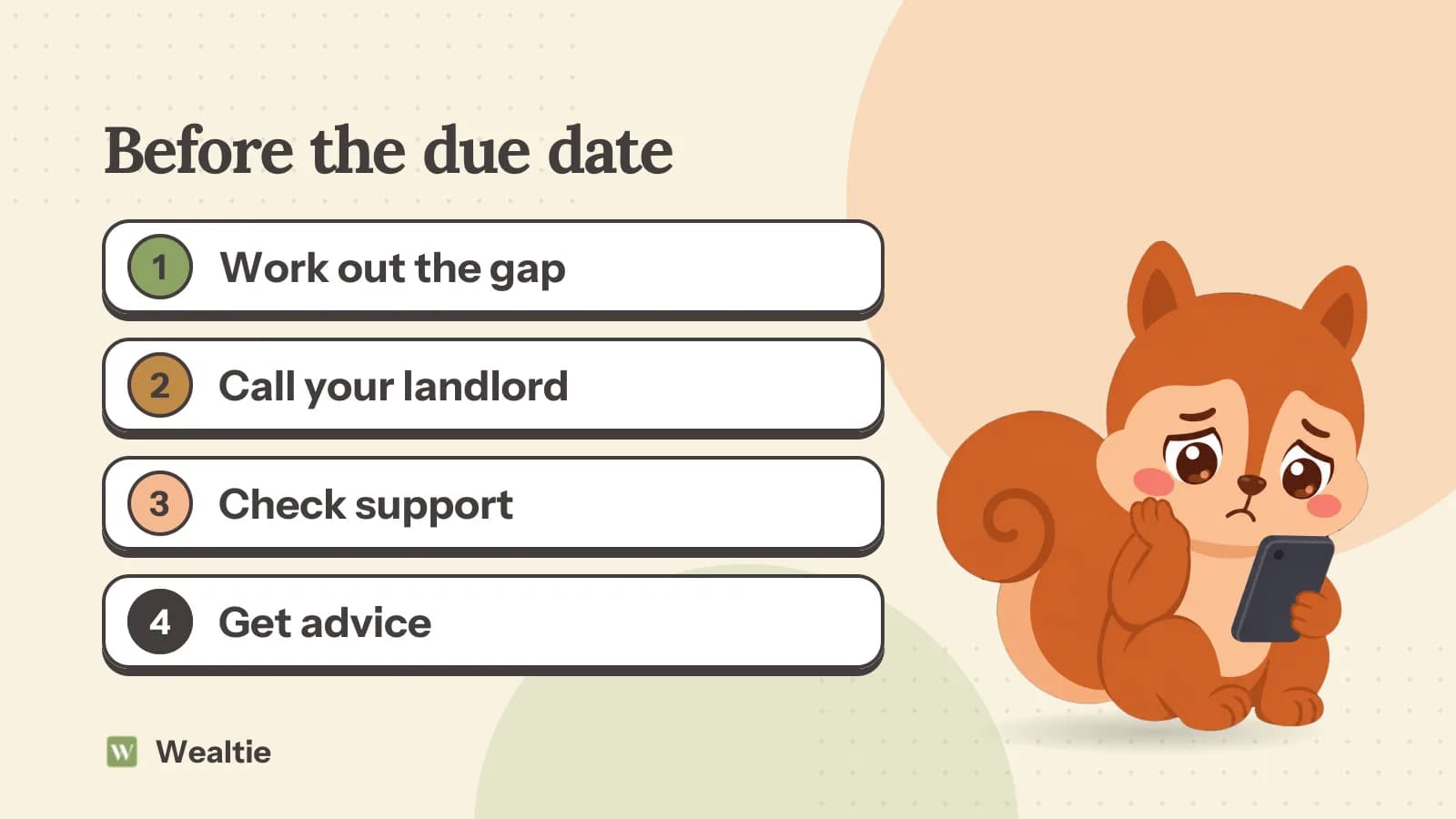
Key takeaways
- Contact your landlord before the rent is due, since most options shrink once a payment is missed.
- Offer what you can now and a written plan for the rest, such as paying a 300 shortfall over three months.
- Check what emergency support, benefits or local help you may be entitled to.
- Pay rent before less urgent debts, and get free advice early if you're falling behind.
What should you do if you can't pay rent?
Act before the due date. Work out how much you can pay, contact your landlord or letting agent, and offer a plan. Most landlords would rather receive part of the rent and a clear plan than nothing and silence, and early contact shows you're taking it seriously. Waiting until after the rent's late leaves you with fewer options and more stress.
How do you work out the gap?
Look at your money as it stands today. How much is in your account, what's still coming in before the due date, and what other essential bills must be paid? Here's a worked example in round numbers that work in any currency:
| Line | Amount |
|---|---|
| Rent due | 900 |
| What you can pay on time | 600 |
| Shortfall | 300 |
Knowing the exact number makes the conversation easier and helps you plan. List any money owed to you that might arrive in time too, like a refund or late pay.
What should you say to your landlord?
Be honest, brief and specific. Explain what's happened, what you can pay now, and when you can pay the rest. Something like: "My hours were cut this month. I can pay 600 on the 1st and the remaining 300 over the next three months, at 100 a month on top of the rent."
Ask whether there's a hardship policy, especially with a letting agent or larger landlord. Put any agreement in writing, even a short email, and keep copies of every letter and message about the rent. Keep records of what you pay and when. If your landlord agrees to a plan, stick to it, and contact them again straight away if anything changes.
What support might be available?
Depending on where you live, there may be benefits or housing support, emergency hardship funds from local authorities, or charities that help with rent arrears. If your income's dropped because of job loss or illness, you might qualify for support you didn't before.
A benefits calculator or a local advice service can tell you what's available. It's worth checking quickly, since some support can take time to arrive. Ask your employer too, since some offer hardship loans or advances on pay.
Where can you find money quickly?
Look at what you can pause or cut this month. Eating out, shopping, subscriptions and anything that isn't essential can stop for now. A bare bones budget shows what to keep and what to pause.
If you've got an emergency fund, this is what it's for. Selling something you don't need can help too. Phones, bikes and furniture usually sell fastest, and a quick sale is worth more than a high price that takes weeks.
Be careful with borrowing. A payday loan or a credit card cash withdrawal can make the next month worse. If you do borrow, have a plan to repay it.
Which bills come first?
Rent, along with energy and water, usually comes before other debts like credit cards or buy now pay later, because the consequences of falling behind are more serious. If you can't pay everything, keep up with housing first and contact the other companies to ask for more time.
When should you get advice?
As soon as you're worried about falling behind, not after. Free advice from a tenant support service, housing charity or debt advice organisation can explain your rights where you live and help you deal with your landlord and other creditors. Rules on rent arrears and eviction vary a lot between countries and areas, so local advice matters.
How do you stop it happening again?
Once things settle, look at what caused the gap. If it was a one-off, like a big repair, build an emergency fund. If you've got a partner or flatmate, review how rent is split if one income has dropped. If rent is too high for your income, it might be worth looking at a cheaper home or a flatmate when your lease allows. How much rent can I afford has a test, and how to build an emergency fund has the steps.
How do you plan your rent in Wealtie?
Set rent up as a recurring transaction with the bill tracker, so it logs itself on the due date and you can see it coming. A monthly limit in the budget tracker, with Budget Health, warns you mid-month if spending would leave you short for next month's rent.
Questions people ask
Your landlord may charge late fees or start a formal process, depending on local rules, so act early. Contact them before the due date and offer what you can and a plan for the rest.
Depending on where you live, benefits, local authority hardship funds and housing charities may help. A benefits calculator or local advice service can tell you what's available.
Rent, energy and water usually come first, because the consequences of falling behind are more serious than for most other debts.
Contact them before the due date, explain briefly, say what you can pay now and when you'll pay the rest, and confirm any agreement in writing.
This article is general information, not financial, tax or legal advice. Your situation is your own; check the numbers that apply to you before you act on them.



