Budgeting: How to budget for university accommodation and keep it affordable
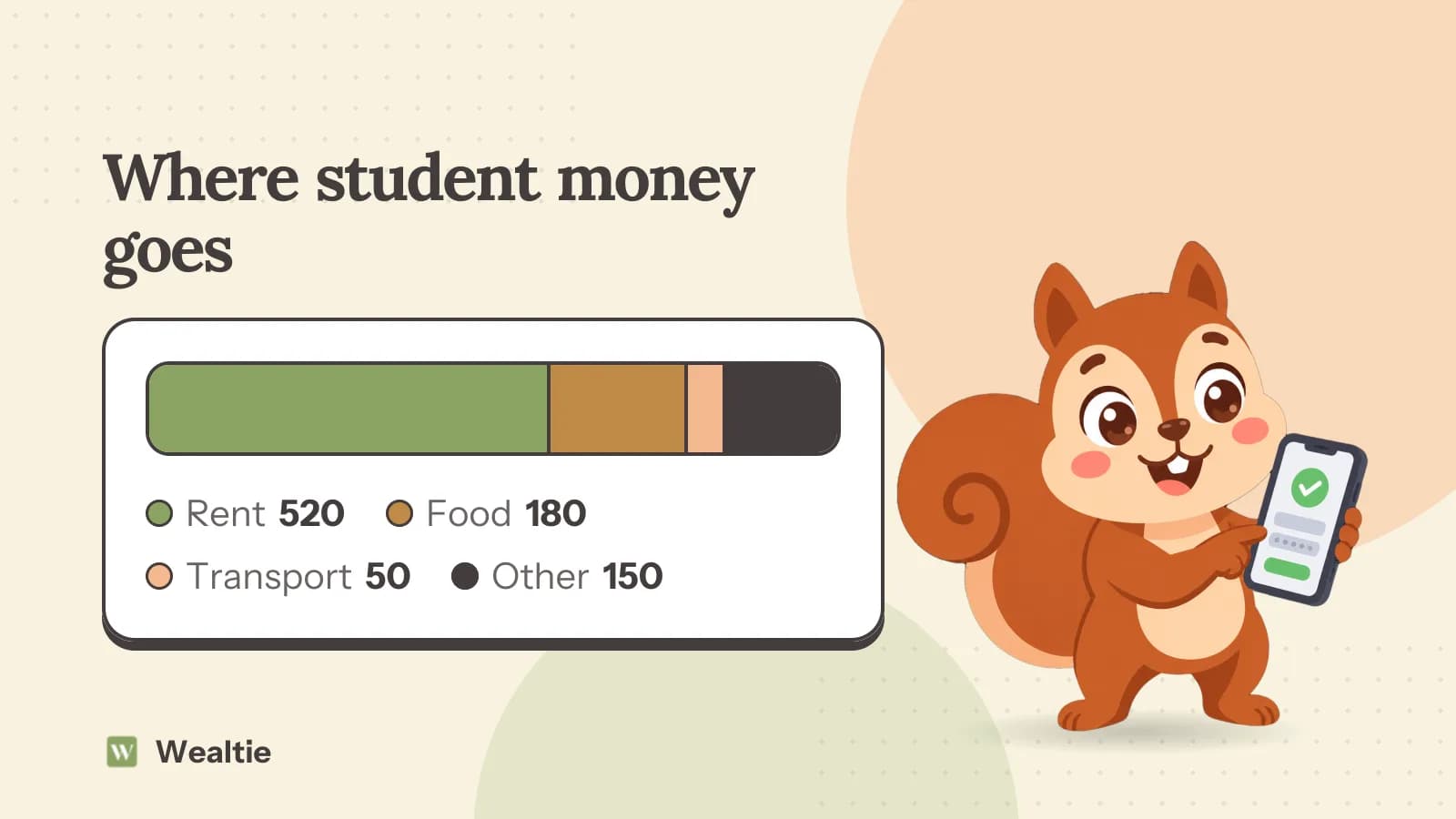
University accommodation costs are often the biggest part of a student budget, so check what's included, compare halls with private rentals, and plan for deposits and contract lengths. In a worked example, rent takes 520 of a 900 monthly budget.
 By Wealtie Team · 3 min read
Key takeaways
- Accommodation is often the biggest part of a student budget, so compare options carefully.
- In a worked example, rent takes 520 of a 900 monthly budget.
- Check what's included, like bills, internet and contents insurance, since it changes the real cost.
- Read contract lengths and deposit terms, since some contracts run for a full year including summer.
How do you budget for university accommodation costs?
Start with it, since it's usually the largest cost. Rent often takes more than half of a student's money, so choosing the right place, and knowing exactly what you're paying for, makes the rest of the budget much easier. A cheap room that adds big bills, or a contract that charges for months you won't be there, can cost more than it looks.
How much of a student budget goes on rent?
Here's a worked example of a monthly budget of 900, in round numbers that work in any currency:
| Line | Monthly |
|---|---|
| Rent | 520 |
| Food | 180 |
| Transport | 50 |
| Books and course costs | 40 |
| Everything else | 110 |
| Total | 900 |
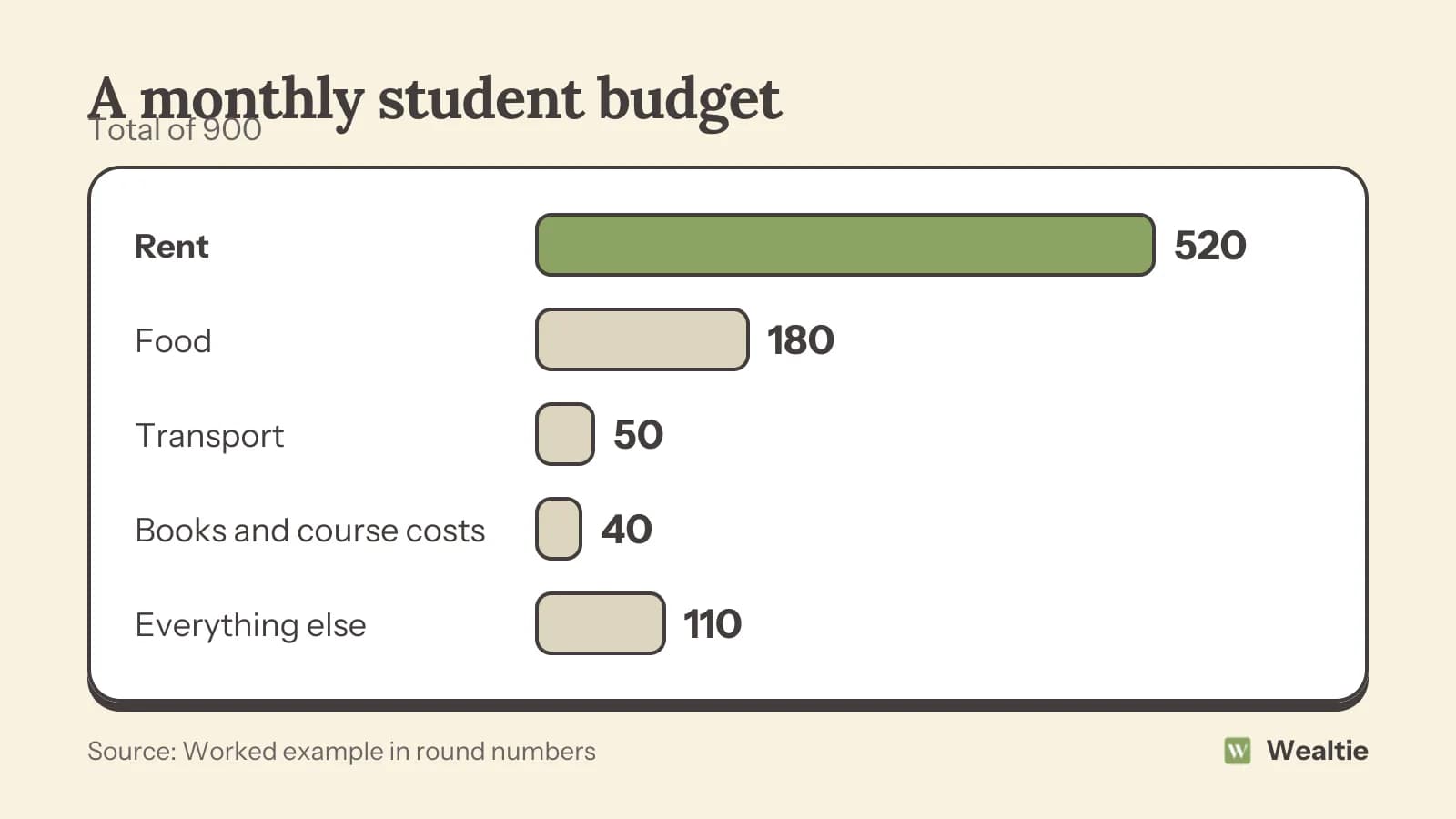
Rent takes more than half. Your own figures depend on the city, the type of accommodation, and your income from loans, grants, family or work. If rent takes much more than this, look at the other lines first, especially food and everything else, since those are easier to change than a signed contract. A part-time job or a cheaper room next year can also help.
Halls or a private rental?
Each has trade-offs. University halls often include bills and internet, are close to campus and are simpler for first-year students. Private rentals, often shared houses, can be cheaper in some cities, especially in later years, but bills are usually extra. Compare the total monthly cost, not just the rent.
| Halls | Private shared house | |
|---|---|---|
| Bills included | Often | Usually not |
| Contract length | Often term time | Often a full year |
| Location | Usually near campus | Varies |
Check the contract length in particular. A private rental for 12 months can cost more than halls for 9 months, even if the monthly rent is lower. Some landlords offer a reduced rate for the summer months, so it's worth asking.
What's included in the rent?
Ask before you sign. Bills, internet, contents insurance, cleaning of shared areas and laundry can all be included or extra. A room that costs a little more but includes bills can be cheaper overall. How to split utilities with roommates helps if bills are shared in a private house.
What about deposits and upfront costs?
Many private rentals ask for a deposit and the first month's rent upfront, and some ask for a guarantor, usually a parent or relative who agrees to pay if you can't. Halls may ask for a booking fee or deposit too. Check whether the deposit is protected under local rules and how it's returned. Take photos of the room and any damage when you move in, which helps you get the deposit back when you leave. Budget for these upfront costs before term starts, since they often come before the first loan or grant payment.
What about bills in a shared house?
Agree how they'll be split before you move in, and decide who'll be named on each account. Energy can be a surprise in winter, so ask the landlord or current tenants what bills usually come to. Setting up a shared kitty, where everyone pays a fixed amount monthly, avoids chasing people for money. Checking meter readings on moving day protects you from paying for the last tenants' use.
How do you keep accommodation costs down?
A few options:
- Share with more people, which lowers rent and bills per person
- Live a little further from campus, if transport is cheap
- Choose a contract that matches term dates, so you're not paying for summer
- Look at university-owned options in later years, which can be cheaper than private ones
Don't sign early just because others are rushing. Take time to compare, view the property, and ask current tenants about bills and the landlord if you can.
How do you fit rent into the budget?
Budget the year in terms, since money often arrives at the start of each term. A separate account for rent, topped up when each payment lands, keeps it safe from everyday spending. Divide each payment by the weeks or months it needs to last, and set aside rent first. How to budget as a college student covers the rest of a student budget.
How do you track student costs in Wealtie?
Set a monthly limit in the budget tracker, and Budget Health warns you mid-month if spending's running ahead, which helps when money has to last a whole term. If you share bills with housemates, a shared account lets everyone see and split them, with the owner on Pro and others on any plan. The shared accounts page has more.
Questions people ask
It varies by city and type. In a worked example, rent takes 520 of a 900 monthly student budget.
Not always either way. Halls often include bills and run for term time, while private houses can be cheaper per month but often add bills and run for a full year.
The contract length, what's included, the deposit terms and whether a guarantor is needed.
Share with more people, live a little further from campus, choose a contract that matches term dates and compare options before signing.
This article is general information, not financial, tax or legal advice. Your situation is your own; check the numbers that apply to you before you act on them.