Saving: Ready meals vs cooking: what's cheaper per week?
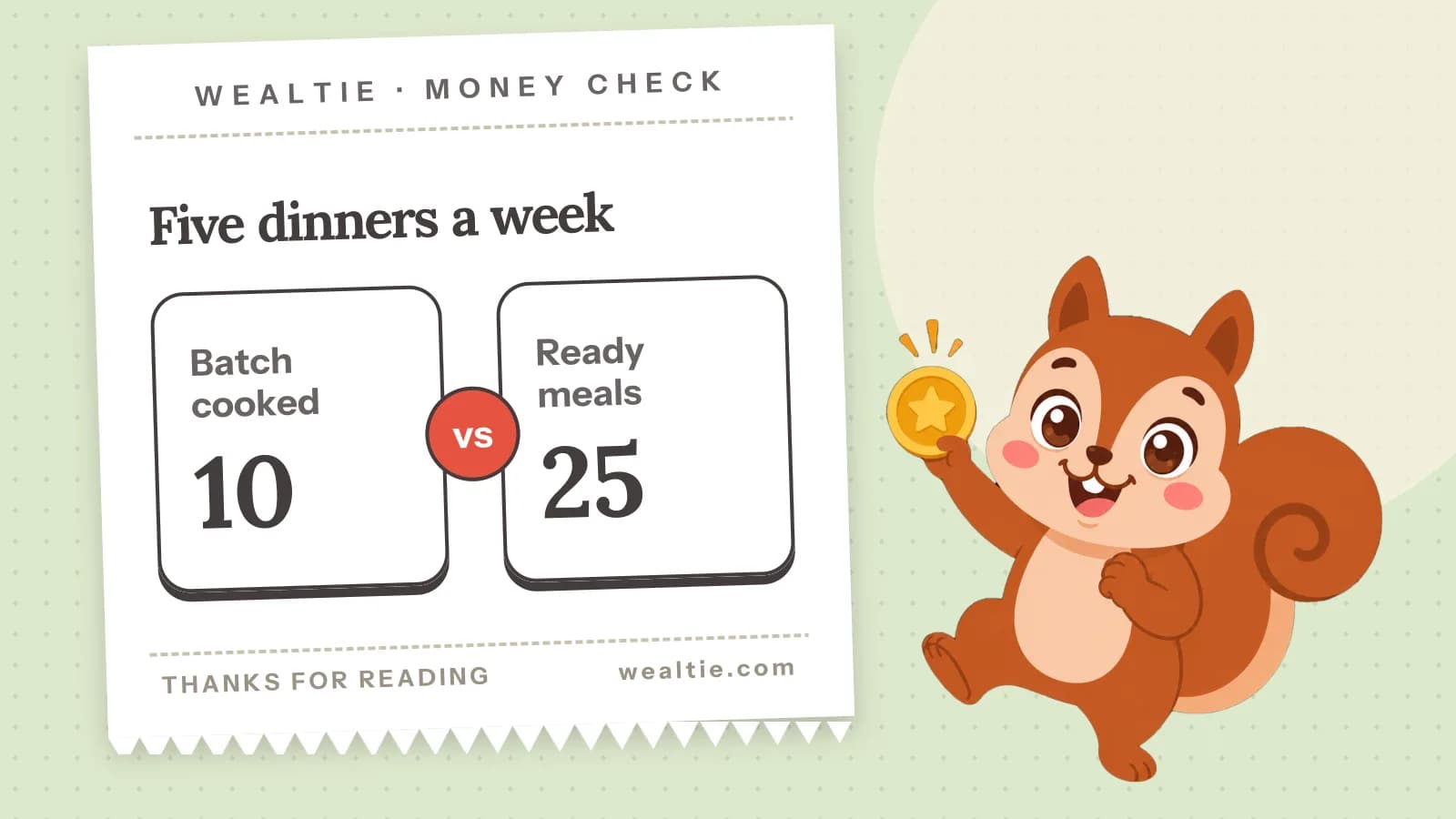
In the ready meals vs cooking choice, cooking from scratch usually costs far less, especially if you batch cook. In a worked example, five ready meals cost 25 a week, while batch-cooked meals cost 10.
 By Wealtie Team · 3 min read
Key takeaways
- Cooking from scratch is usually much cheaper than ready meals.
- Batch cooking saves money and time on busy evenings.
- Ready meals can still help on the busiest days.
- Keeping a few quick, cheap meals ready avoids expensive takeaways.
Ready meals vs cooking: which costs less?
Ready meals are convenient after a long day: heat, eat and no washing up. But they usually cost more than cooking the same food yourself, and the difference adds up over weeks and months. In the ready meals vs cooking comparison, batch cooking is often the cheapest option of all, since you buy ingredients in bigger quantities and cook several meals at once.
Here's a worked example of five dinners for one person each week, in round numbers that work in any currency:
| Option | Weekly cost |
|---|---|
| Batch cooked | 10 |
| Cooked fresh each night | 15 |
| Ready meals | 25 |
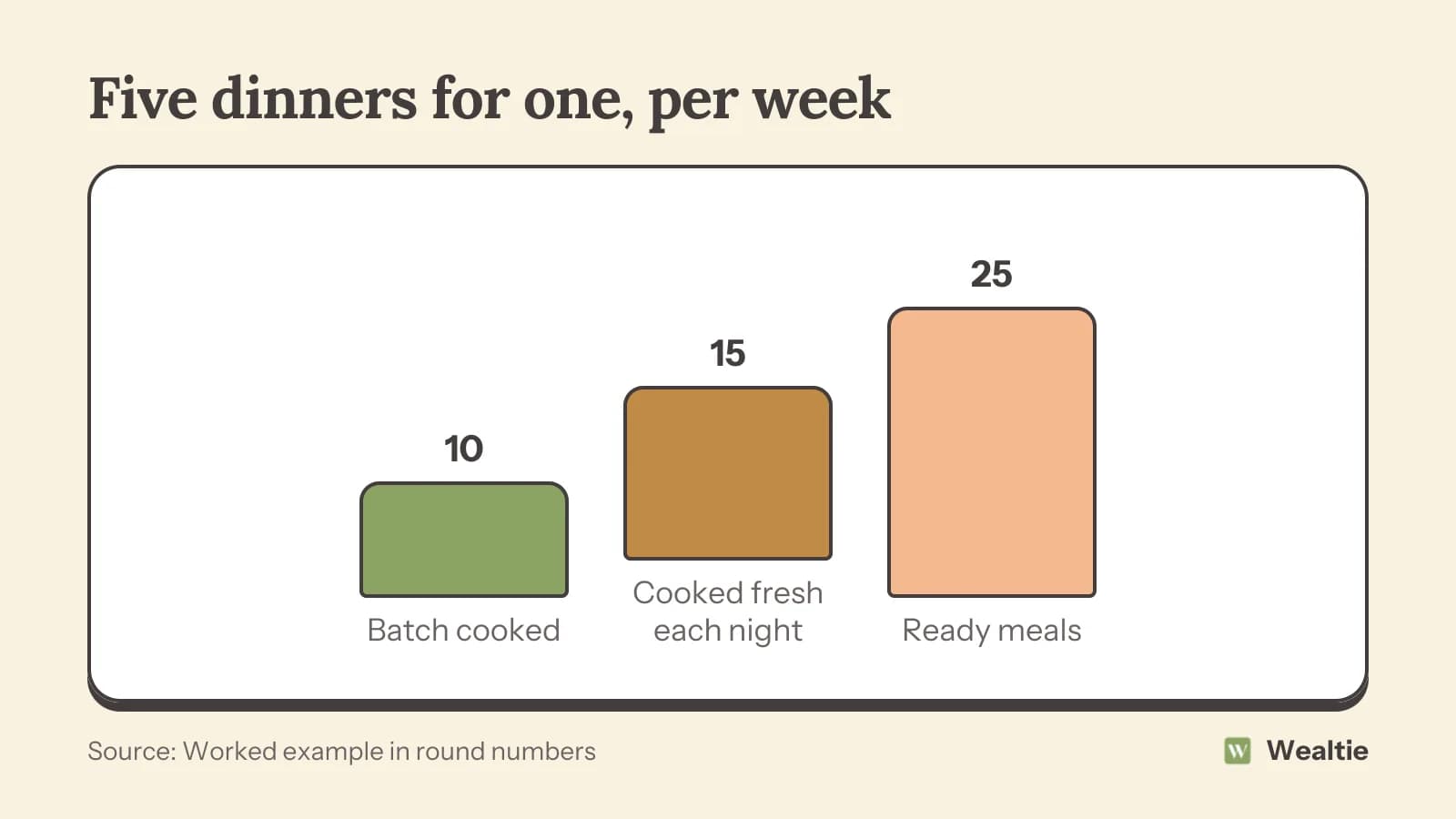
Five ready meals at around 5 each cost 25 a week, or about 1,300 a year. Batch cooking the same number of meals at around 2 each costs 10 a week, or about 520 a year. That's a saving of around 780 a year for one person.
Why are ready meals more expensive?
You pay for convenience
Preparation, packaging and branding all add to the price.
Smaller portions
Ready meals are often smaller than homemade portions, which can lead to buying extras.
Premium ranges
Higher-end ready meals can cost much more than basic ones.
Why is batch cooking so cheap?
Buying in bulk
Larger packs of rice, pasta, vegetables and meat cost less per portion.
Less waste
Using whole ingredients in one big cook means less food going off in the fridge. How to reduce food waste and save money covers more ways to waste less.
Less temptation
With meals ready in the freezer, you're less likely to order a takeaway on a tired evening.
How do you start batch cooking?
Pick a few easy recipes
Chilli, curry, pasta sauce, soup and stew freeze well and are simple to make in big batches.
Cook once or twice a week
Set aside an hour or two at the weekend to cook several portions.
Freeze in portions
Use containers or bags so you can take out one meal at a time.
Plan the week
Decide which meals you'll eat each night, so you know what to cook and buy. How to plan meals on a budget covers building a weekly plan.
When are ready meals worth it?
Ready meals can still be useful on the busiest days, when you're unwell or when you'd otherwise order a takeaway. A ready meal is usually cheaper than a delivery. Keeping one or two in the freezer as a backup, and cooking the rest of the week, gives you convenience without the full cost. Are meal kits worth it? covers another middle option.
What are quick, cheap meals for busy nights?
Eggs on toast, jacket potatoes with beans, pasta with a jar of sauce and frozen vegetables, stir-fries and wraps take a few minutes and cost very little. Having the ingredients in your cupboard means you're never stuck. How to save money on groceries covers stocking a cheap, useful cupboard.
Start small if you're new to cooking. You don't need to cook every night straight away. Replacing two or three ready meals a week with simple homemade dishes already makes a noticeable difference to your budget. As you get more confident, you can add more recipes and cook bigger batches.
Good containers make batch cooking easier. Freezer-safe boxes or bags, labelled with the dish and date, help you see what's in the freezer and use food before it gets old. A well-organised freezer full of homemade meals is like having your own ready meals, at a fraction of the price.
Cooking with others can help too. Sharing batch cooking with a partner, flatmate or friend spreads the work, and you can swap portions to get more variety. Some families make cooking a weekend activity, which also teaches children useful skills.
If time is your biggest barrier, look at one-pot meals, traybakes and slow cooker recipes. They need little preparation and cook themselves while you get on with other things.
Keep an eye on what you spend on ingredients. Buying seasonal vegetables, own-brand staples and larger packs keeps the cost per portion low, which makes the savings even bigger.
Finally, remember that homemade doesn't have to mean complicated. A simple pasta, soup or stir-fry made at home is often cheaper, tastier and quicker than heating up a ready meal.
How can Wealtie help you see the savings?
Log groceries and ready meals in their own expense categories, and set a monthly budget for food. Comparing a month of ready meals with a month of batch cooking shows exactly how much you save.
Questions people ask
Usually not. In a worked example, five ready meals cost 25 a week, while batch-cooked meals cost 10.
In a worked example, batch cooking instead of buying ready meals saved about 780 a year for one person.
Chilli, curry, pasta sauce, soup and stew are easy to make in big batches and freeze well.
On the busiest days or when you'd otherwise order a takeaway, since a ready meal is usually cheaper than delivery.
This article is general information, not financial, tax or legal advice. Your situation is your own; check the numbers that apply to you before you act on them.