Budgeting: How price matching works and how to use it to pay less
Price matching is when a shop agrees to lower its price to match a cheaper offer from a competitor. Knowing how price matching works, and how to ask, can save a useful amount on big purchases.
 By Wealtie Team · 3 min read
Key takeaways
- Price matching is when a shop lowers its price to match a competitor.
- Most shops have rules about which competitors and products qualify.
- Bring proof of the lower price and ask politely at the till or online.
- In a worked example, a price match saves 80 on a washing machine.
What is price matching?
Price matching is a promise some shops make: if you find the same item cheaper at a competitor, they'll lower their price to match it. Shops do it to stop you walking out and buying elsewhere. For you, it means you can buy from the shop you prefer, perhaps one with better delivery, returns or a store nearby, and still pay the lowest price.
Not every shop offers price matching, and those that do usually have rules. Knowing how price matching works before you shop helps you use it with confidence.
Price matching is most common at large electrical, furniture and home stores, and with some supermarkets and online retailers. Smaller independent shops rarely have a formal policy, but many will still consider a lower price if you ask. Because policies change, it's worth checking the latest version on the shop's website before a big purchase rather than relying on what you remember from last time.
How much can price matching save?
Here's a worked example of a washing machine, in round numbers that work in any currency:
| Option | Price |
|---|---|
| Shop price | 600 |
| Matched price | 520 |
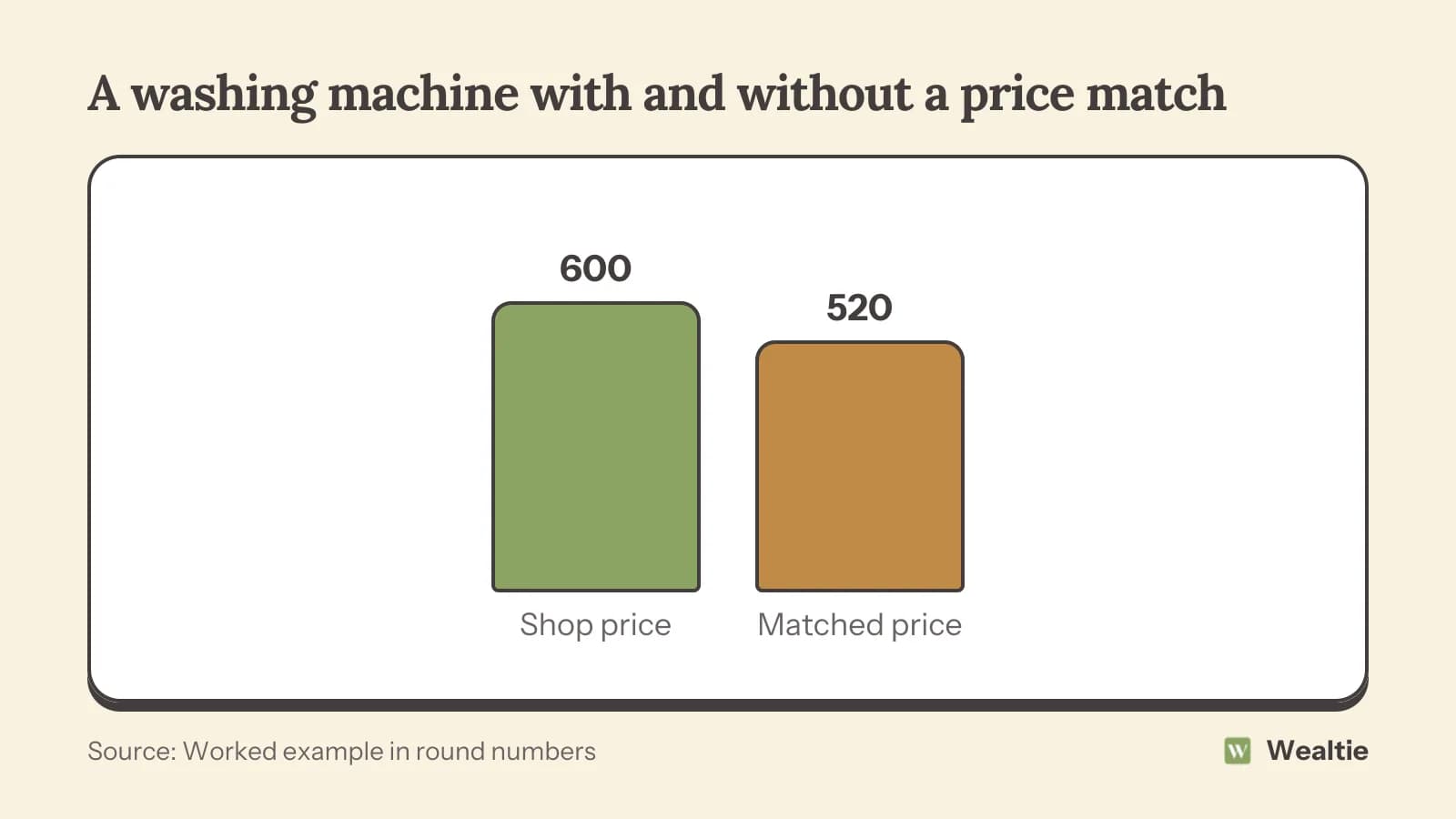
The shop you prefer sells it for 600, but another shop has it for 520. You show the lower price, and the first shop matches it. That's 80 saved, and you still get the delivery and installation you wanted from your preferred shop.
How does price matching work?
Check the shop's policy
Most shops that price match explain their rules on their website or at the till. Read them before you ask, so you know what's covered.
Find the same item cheaper
The item usually needs to be identical: same model, size, colour and condition. It must be in stock at the competitor, for sale to the public and not part of a limited deal.
Bring proof
Show the lower price on your phone, in an advert or on the competitor's website. Some shops check the price themselves before agreeing.
Ask politely
At the till, ask whether they'll price match and show your proof. Online, many shops have a chat or phone line for price match requests. Staff deal with these often, so there's no need to feel awkward. If the first person you ask isn't sure, ask for a manager, who usually has the authority to approve a match on the spot.
What are the usual rules and exclusions?
Most price match policies only cover certain competitors, often big, well-known shops nearby or online. Many exclude marketplace sellers, auction sites, clearance items, membership-only prices and flash sales. Some only match before you buy, while others will refund the difference if you find a lower price within a set time after buying. Delivery costs may be included in the comparison. If the rules seem unclear, ask the staff to explain before you buy.
When is price matching most useful?
Price matching works best on big purchases where the price difference is worth the effort: appliances, electronics, furniture and tyres. It's also useful when you prefer one shop for its service, location or returns policy, but another has a better price. During sale seasons, prices change daily, so checking a few shops before buying can turn up a match. The Black Friday budget covers shopping sale events carefully.
Ask about price drops after buying
Some shops will refund the difference if the price drops soon after you buy. Keep your receipt and check the price for a week or two, especially for expensive items.
What else can you ask for?
If a shop won't match the price, it might offer something else instead: free delivery, installation, an accessory or a longer warranty. Be careful with extended warranties, though, since they're often not worth the cost. Is an extended warranty worth it? covers when to say no. How to negotiate bills covers similar conversations with service providers.
Don't let a match trick you
A price match only saves money if you were going to buy the item anyway. A lower price on something you don't need is still spending. Price anchoring explains how a high starting price can make a deal look better than it is, and how to save money on electronics covers more ways to pay less for tech.
How do you track savings in Wealtie?
Log purchases in your expense categories and set a monthly budget for big items, so you can see how price matching and comparing shops keep spending down.
Questions people ask
Price matching is when a shop agrees to lower its price to match a cheaper offer from a competitor for the same item.
Check the shop's policy, find the identical item cheaper at a qualifying competitor, bring proof and ask politely at the till or online.
Many shops exclude marketplace sellers, auction sites, clearance items, membership-only prices and flash sales.
Some shops refund the difference if you find a lower price within a set time after buying. Check the policy and keep your receipt.
This article is general information, not financial, tax or legal advice. Your situation is your own; check the numbers that apply to you before you act on them.