Saving: Present bias: why saving for later feels so hard, and what helps
Present bias is the pull to choose something smaller now over something bigger later, which is why saving often loses to spending. Making saving automatic and the future feel real helps tip the balance.
 By Wealtie Team · 3 min read
Key takeaways
- Present bias is the pull to choose a smaller reward now over a bigger one later.
- It's why saving and healthy habits often lose to spending today.
- Automatic saving removes the choice, so present bias has nothing to work on.
- Making goals vivid and close helps your future self compete.
What is present bias?
Present bias is the tendency to give more weight to what happens now than to what happens later. A reward today feels much bigger than the same reward next year. That's why a coffee, a takeaway or a new jacket often wins over putting money aside, even when you know saving would leave you better off.
It's a well-studied pattern in behavioural economics, and everyone has it to some degree. Understanding present bias won't make it disappear, but it helps you set things up so your future self gets a fair hearing.
How does present bias affect your money?
Saving gets put off
Saving for later competes with spending today, and today usually wins. "I'll start next month" becomes a habit, because next month the same pull is there.
Small purchases add up
Each small treat feels harmless in the moment. The cost only becomes clear when you look back at a month of spending.
Debt feels lighter than it is
Buying now and paying later shifts the pain into the future, where it feels smaller. That's part of why buy now, pay later deals and credit cards are so easy to use. Buy now, pay later covers the risks.
Long-term goals feel unreal
Retirement, a house deposit or a big trip years away can feel abstract. A night out this weekend feels very real.
What does present bias cost?
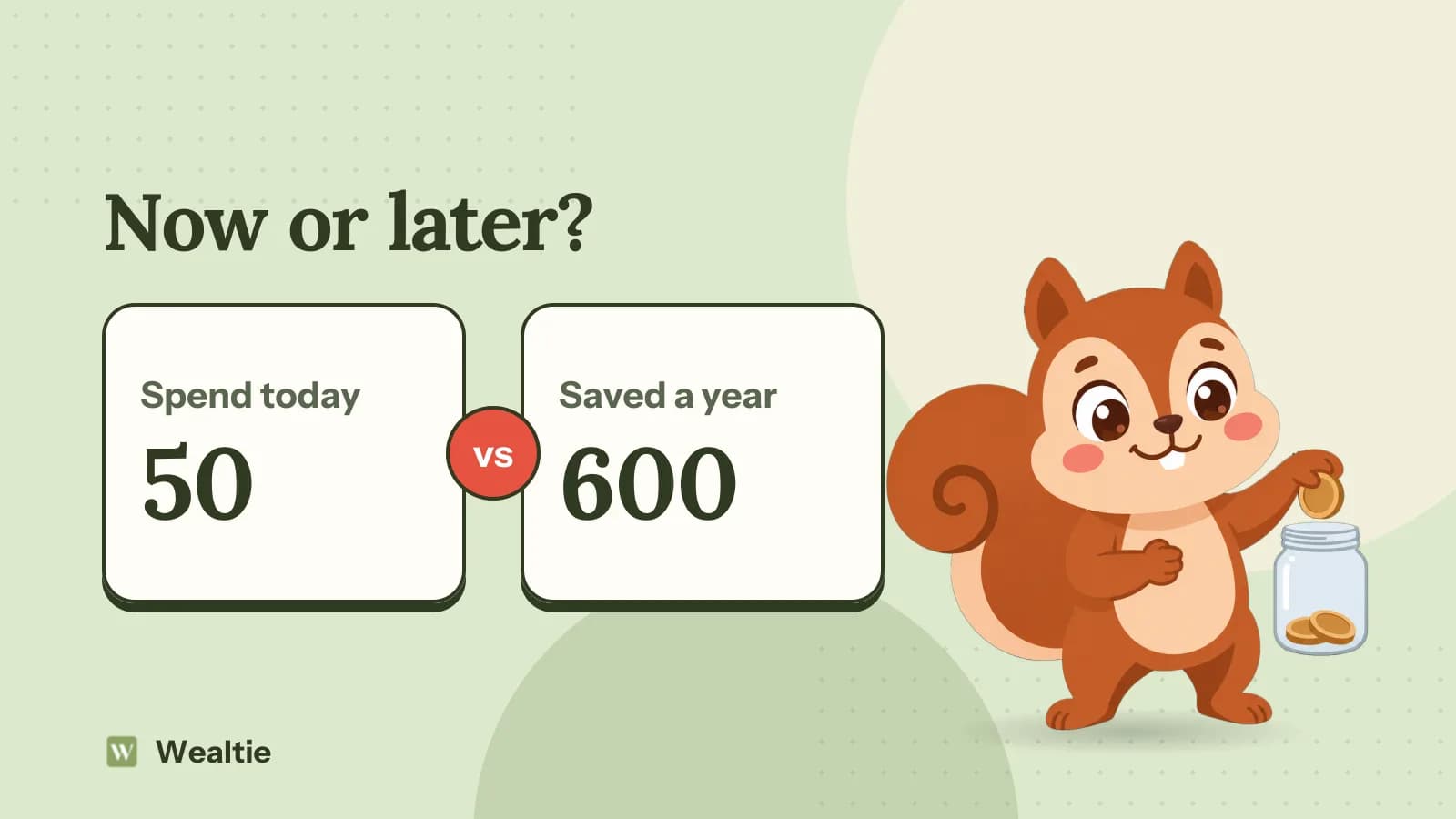
Here's a worked example of spending 50 a month on small treats versus saving it, in round numbers that work in any currency:
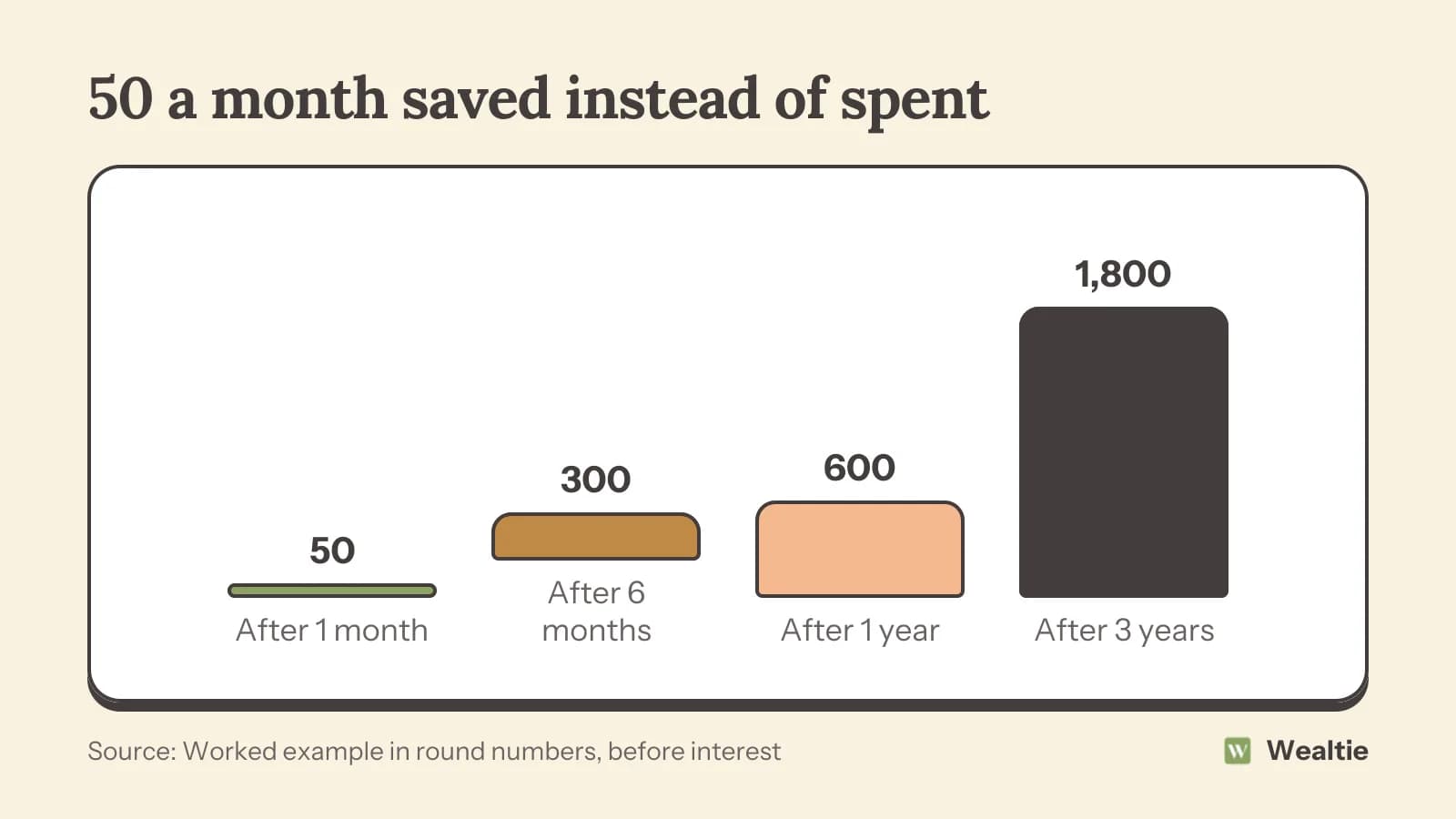
After a year, that's 600. After three years, 1,800, before any interest. Each choice to spend 50 feels small. Together, they add up to a holiday, an emergency fund or a debt cleared.
How do you beat present bias?
Make saving automatic
The most effective step is to remove the choice. Set up a transfer to savings on payday, before you can spend the money. When saving happens without a decision, present bias has nothing to push against. Pay yourself first explains how.
Make the future feel close
Give each savings goal a name, a picture and a date. "Holiday in June" feels more real than "savings". Breaking a big goal into monthly steps makes it feel closer too.
Add a pause before spending
Present bias is strongest in the moment. Waiting a day before non-essential purchases gives the future a chance to compete. How to stop impulse buying has more ways to slow down.
Reward yourself now for saving
Since the brain likes rewards now, give yourself a small one for saving: ticking off a chart, watching a streak grow or a treat when you hit a milestone. A 52-week savings challenge turns saving into a game with weekly wins.
Commit in advance
Decide today what you'll do with future money, like a pay rise or bonus. It's easier to agree to save money you don't have yet than money already in your account.
Is present bias always bad?
No. Enjoying life now matters too. The aim isn't to save every spare coin but to make sure your future self isn't always the one who loses. A budget that includes fun money lets you spend on today without guilt, because tomorrow is already taken care of.
Find a balance that lasts
A plan that's too strict tends to collapse, and then present bias wins completely. Saving a smaller amount every month beats saving a large amount for two months and giving up. Start with what feels manageable and raise it once the habit sticks.
Picture your future self
Some people find it helps to imagine themselves a year or five years from now, in detail. Where do you live? What do you wish you'd done? Writing a short note to that future self, or naming a savings pot after them, makes the trade-off feel personal. Spending 50 on a whim feels different when you picture the person who'll miss it. You don't need to do this every day. A quick reminder when you set up a goal, or when you're tempted to raid savings, is enough to tip the balance.
How does Wealtie help you beat present bias?
Add your savings transfer as a recurring transaction, so it logs itself on payday. Set a monthly budget with room for fun, so spending today has a limit and saving is already done. Wealtie's streaks also give you a small reward now for keeping a good habit going.
Questions people ask
Present bias is the tendency to choose a smaller reward now over a bigger one later, which makes saving and long-term goals harder.
Spending on a takeaway today instead of saving for a holiday you'd enjoy more, or putting off saving until next month.
Make saving automatic, give goals a name and a date, pause before spending and reward yourself for saving.
No. Enjoying life now matters too. The aim is a budget where today and the future both get a fair share.
This article is general information, not financial, tax or legal advice. Your situation is your own; check the numbers that apply to you before you act on them.