Saving: 52-week savings challenge: $1,378 in a year, and versions that work
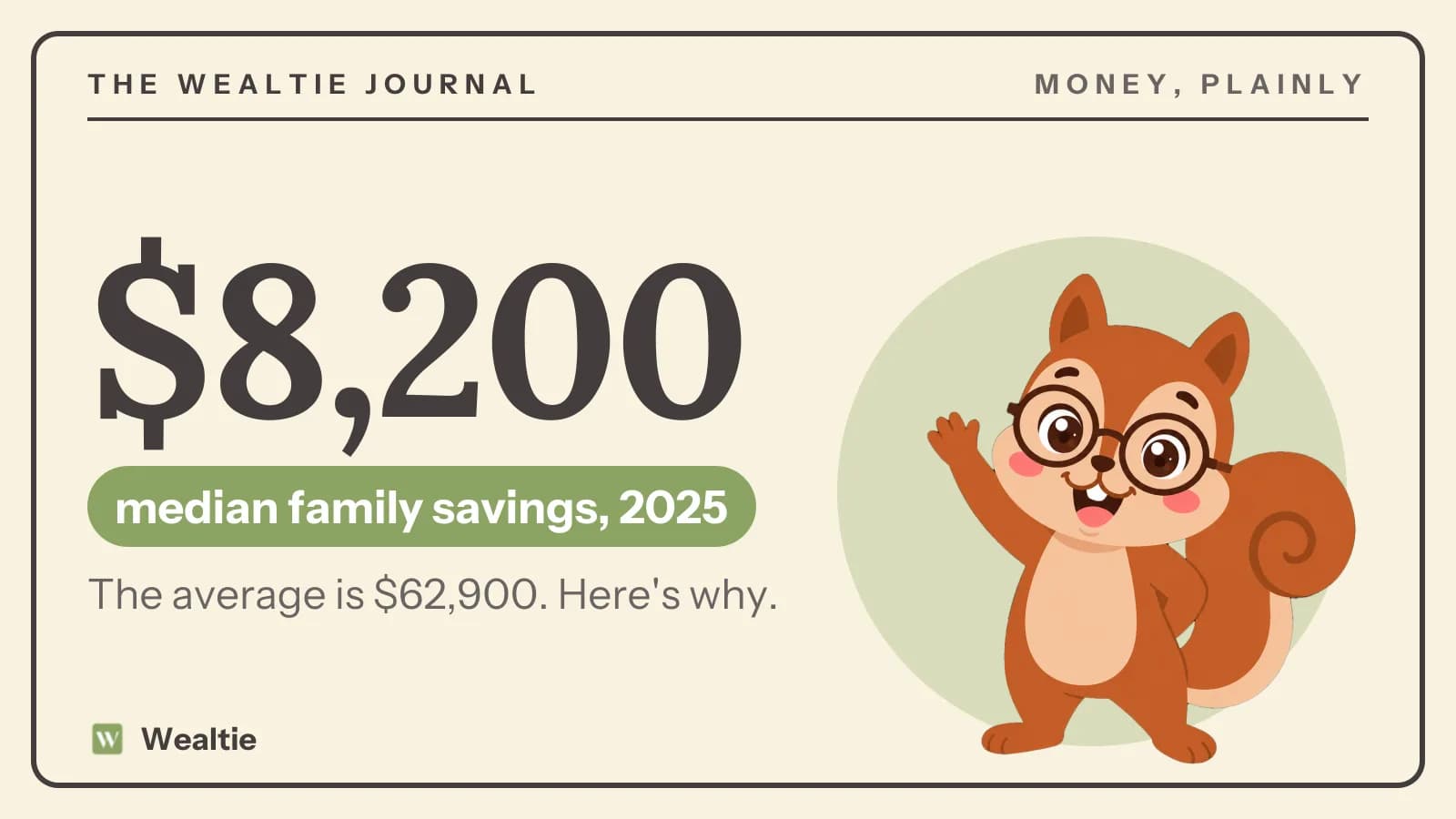
The 52 week savings challenge has you save 1 in week one, 2 in week two, and so on up to 52 in the last week, for 1,378 by the end of the year. The catch is that the biggest weeks land in December; doing it in reverse, starting at 52, puts the hard weeks first and finishes the same.
 By Wealtie Team · 3 min read
Key takeaways
- The classic 52-week challenge saves 1 more each week, from 1 to 52, for a total of 1,378 in a year.
- The last quarter of the year holds 598 of the 1,378, about 43% of the total, and December is when money is tightest for most people.
- The reverse version, 52 down to 1, saves the same 1,378 with the biggest amounts in January.
- A flat version of 26.50 a week also reaches 1,378, with no hard weeks at all.
- Doubling every amount gives 2,756; multiplying by five gives 6,890.
What is the 52-week savings challenge?
You save the week's number: 1 in week one, 2 in week two, and so on up to 52 in the last week of the year. By week 52, you've saved 1,378.
It's popular because the start is almost painless. The first month asks for 10 in total. By the time the amounts are noticeable, the habit is already there. The numbers work the same in any currency.
How much do you save each quarter?
The challenge is back-loaded: the amounts grow every week, so most of the money comes at the end.
| Weeks | Weekly amounts | Saved in the quarter | Running total |
|---|---|---|---|
| 1–13 (Jan–Mar) | 1 to 13 | 91 | 91 |
| 14–26 (Apr–Jun) | 14 to 26 | 260 | 351 |
| 27–39 (Jul–Sep) | 27 to 39 | 429 | 780 |
| 40–52 (Oct–Dec) | 40 to 52 | 598 | 1,378 |
The last quarter holds 598 of the 1,378, about 43% of the total. The last four weeks alone ask for 202, in December, alongside gifts, travel and heating. That's where most people give up.
What is the reverse 52-week challenge?
The same amounts in the opposite order: 52 in week one, down to 1 in week 52. It saves the same 1,378.
The hard weeks land in January to March instead of October to December, when holiday costs have passed and the new-year motivation is highest. By December, the challenge asks for almost nothing, just as everything else asks for the most.
If you've tried the classic version and stopped in November, try the reverse.
What other versions are there?
| Version | How it works | Total in a year |
|---|---|---|
| Classic | 1, 2, 3 … 52 | 1,378 |
| Reverse | 52, 51 … 1 | 1,378 |
| Flat | 26.50 every week | 1,378 |
| Doubled | 2, 4, 6 … 104 | 2,756 |
| Times five | 5, 10, 15 … 260 | 6,890 |
| Pick-a-week | Tick off any unused amount from 1 to 52 each week | 1,378 |
The flat version is the least exciting and the easiest to keep: 26.50 a week, set up once as an automatic transfer. Pick-a-week lets you choose a big number in a good week and a small one in a tight week, as long as every number gets used once.
How do you make sure you finish?
Automate it, keep it separate, and plan for the weeks you miss.
- Automatic transfer: a weekly transfer on payday is easier than remembering 52 times. For the classic version, change the amount at the start of each month.
- A separate account: keep the challenge money in its own savings account, so it isn't spent by accident. Where to keep your emergency fund compares the options.
- A catch-up rule: if you miss a week, add it to the next week or split it over the next few. One missed week isn't a failed challenge.
- A goal for the money: decide in January what the 1,378 is for. A first emergency fund is a good use; so is a sinking fund for next year's holidays.
Can you do the challenge with a partner or with kids?
Yes, and it often goes better with company. Two people doing the classic version side by side save 2,756 between them, and a shared tally keeps both going through the slow middle months.
With children, the challenge is a good first lesson in how small amounts add up. Use coins or small notes in a jar for the first few months, so the pile is visible, then move to a savings account once the weekly amounts get bigger. Let them choose what the money is for at the start, and check the total together each month.
For couples saving towards one shared goal, split the weekly amount the way you split other shared costs. If you earn different amounts, each person can take a share of every week instead of the same number.
Is the 52-week challenge a good way to save?
For building a habit, yes. For the amount, it's modest: 1,378 a year is about 115 a month.
If you can save more, a fixed monthly amount taken on payday, sized to your income, will get further. How much of your income should you save works out what that looks like. The challenge is best as a start: once it's done, the weekly transfer is already set up, and you can keep it at 52 a week, which is 2,704 the next year.
How do you track the challenge?
Watch the savings balance grow week by week, and count every transfer as saving, not spending.
In Wealtie, add the challenge account alongside your everyday account (two accounts are included on Free), and your net worth total shows both. Each weekly transfer is logged as a transfer between your own accounts, so your budget shows what you spent and the savings balance shows the challenge so far.
Questions people ask
1,378 in the classic version, saving 1 in week one, 2 in week two and so on up to 52. Doubling every amount gives 2,756, and saving 5 times the week number gives 6,890.
The same amounts in the opposite order: 52 in week one down to 1 in week 52. It saves the same 1,378, but the big weeks fall in January instead of December, when holiday costs hit.
Any week. If you start mid-year, number the weeks from your start date. Starting in January lines it up with the calendar, but the total is the same whenever you begin.
Add the missed amount to the next week, or spread it over the next few. One missed week doesn't end the challenge; a plan for catching up keeps it going.
In a separate savings account, ideally one that pays interest, so the money doesn't mix with spending. Set up a weekly transfer so you don't have to remember.
This article is general information, not financial, tax or legal advice. Your situation is your own; check the numbers that apply to you before you act on them.