Budgeting: Pet-friendly rental costs: deposits, rent and fees
Pet-friendly rental costs can include a higher deposit, monthly pet rent and a cleaning fee when you leave. In a worked example, renting with a dog costs an extra 900 over a year.
 By Wealtie Team · 3 min read

Key takeaways
- Pet-friendly rental costs can include pet rent, extra deposits and cleaning fees.
- Rules on pet deposits and fees vary by country.
- A pet CV and references can help you find a rental.
- Look after the home and keep records to protect your deposit.
What are typical pet-friendly rental costs?
Finding a rental that accepts pets can be hard, and when you do, it often comes with extra costs. Pet-friendly rental costs can include a higher deposit, a monthly pet rent, a cleaning fee when you leave and sometimes a one-off admin fee. Rules on what landlords can charge vary a lot between countries and cities, so check what's allowed where you live.
Here's a worked example of the extra costs of renting with a dog for a year, in round numbers that work in any currency:
| Extra cost | Amount |
|---|---|
| Pet rent, 40 a month | 480 |
| Professional cleaning at move-out | 200 |
| Minor repairs and wear | 120 |
| Pet references and admin | 100 |
| Total | 900 |
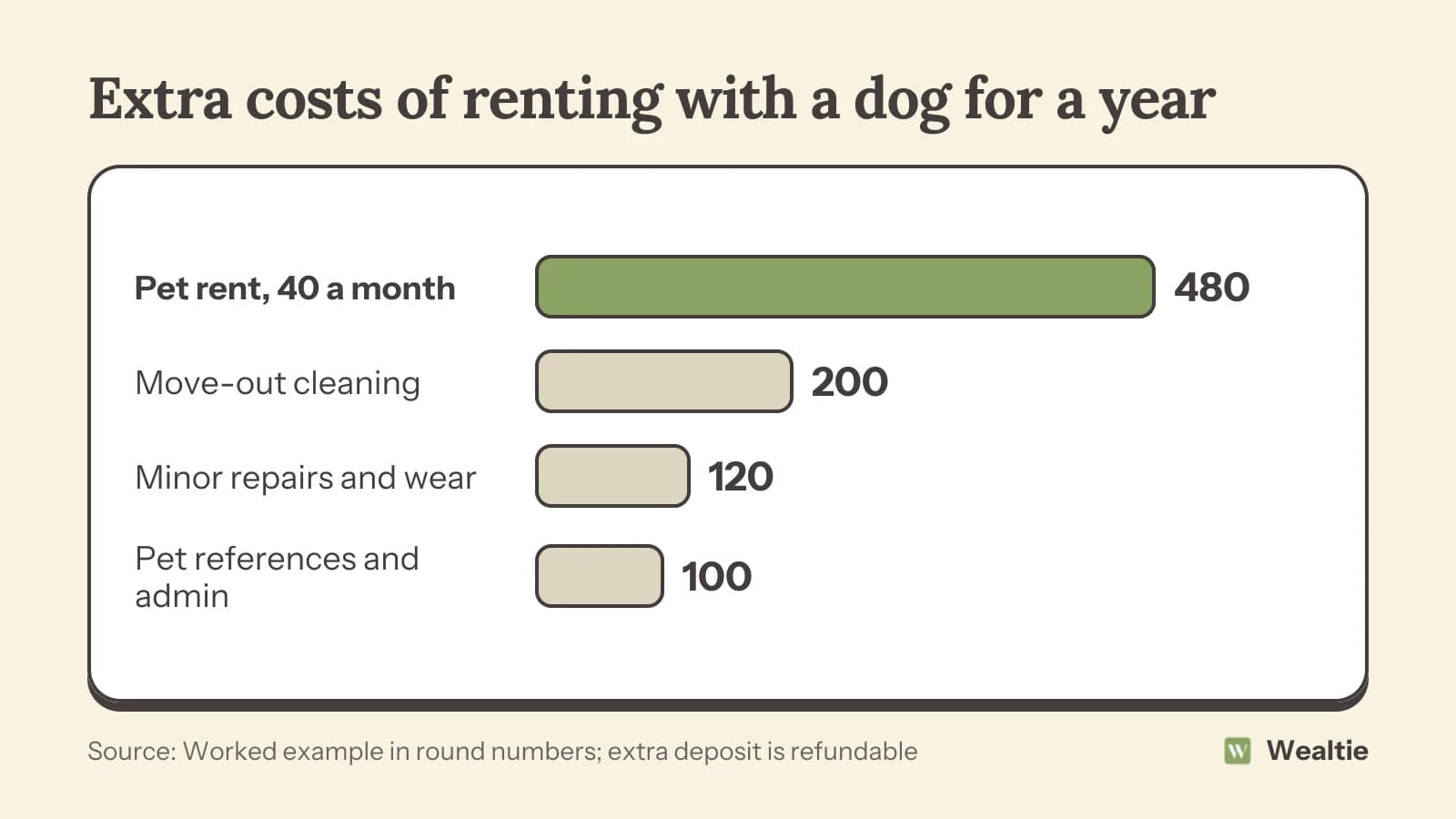
On top of that, the landlord might ask for a higher deposit, like an extra 300. That's refundable if the home is left in good condition, so it's not counted as a cost here, but you'll need the money upfront.
What fees might you face?
Pet deposit
An extra deposit covers potential damage. In some places, deposits are capped by law, which limits how much landlords can ask.
Pet rent
A small monthly addition to the rent for having a pet. It isn't refundable.
Cleaning fees
Some tenancies require professional cleaning or carpet cleaning when you move out.
Admin fees
A one-off fee for adding a pet to the agreement, where allowed.
How do you find a pet-friendly rental?
Start early
Pet-friendly homes can take longer to find, so give yourself extra time.
Create a pet CV
Include your pet's age, breed, vaccination and flea treatment records, training and a reference from a previous landlord or vet.
Offer to meet the landlord with your pet
Meeting a calm, well-behaved pet can reassure a landlord.
Ask about pets even if not advertised
Some landlords will consider pets on request, especially for long-term tenants.
Offer reasonable reassurances
Pet insurance with liability cover, or agreeing to professional cleaning when you leave, can help. Is pet insurance worth it? covers what policies include.
How do you protect your deposit?
Document the condition at move-in
Take photos of floors, doors, walls and gardens before your pet moves in.
Prevent damage
Scratching posts, training, protective covers and regular grooming reduce wear.
Fix small damage quickly
Repair small scratches or marks before they become bigger problems.
Clean thoroughly before leaving
A deep clean, including carpets and gardens, gives you the best chance of a full refund. How to get your rental deposit back covers the steps in detail.
How do pet costs fit into your budget?
Renting with a pet adds to the regular costs of owning one, like food, insurance and vet bills. How to budget for a pet covers those costs, and how much rent can you afford? covers fitting rent and extras into your budget. If you're moving abroad with a pet, moving abroad with a pet covers travel and paperwork costs.
Being open about your pet from the start is important. Keeping a pet in a rental without permission can breach your tenancy agreement and, in some cases, lead to losing your deposit or your home. Asking first, and getting permission in writing, protects you and builds trust with your landlord, which can help if you want to renew or need a reference later.
The type of pet makes a difference too. Small caged pets, fish and older, calm animals are often easier to get approved than young dogs or cats. If you have a well-trained dog, evidence of training classes or a previous landlord's reference can go a long way. Some landlords also feel more comfortable if you have a plan for when you're away, like a regular pet sitter or daycare.
Think about the home itself when choosing. Hard floors are easier to clean than carpets, a garden or nearby park makes dog walks easier and a ground-floor flat avoids stairs for older pets. Choosing a home that suits your pet reduces wear and tear and makes it easier to get your deposit back.
It's also worth checking your pet insurance includes third-party liability, which can cover damage to someone else's property in some cases. Some landlords ask to see it before agreeing.
Finally, budget for the move itself. Moving can be stressful for pets, and some owners book a few days of boarding or daycare so the animal is safe while furniture is moved, which adds a small cost.
How can Wealtie help you plan for it?
Add rent and any pet rent as recurring transactions in Wealtie, and log pet costs in their own expense category. Setting a budget for your pet shows the full cost of renting with them, including the extras.
Questions people ask
In a worked example, renting with a dog cost an extra 900 over a year in pet rent, cleaning, repairs and admin, plus a refundable deposit.
Pet rent is a small extra monthly charge for having a pet in a rental. Unlike a deposit, it isn't refundable.
Start early, create a pet CV with records and references, offer to meet the landlord and ask even when pets aren't advertised.
Document the home at move-in, prevent and fix damage quickly and clean thoroughly, including carpets, before leaving.
This article is general information, not financial, tax or legal advice. Your situation is your own; check the numbers that apply to you before you act on them.