Saving: How to get your rental deposit back in full
To get your rental deposit back in full, record the condition of the home when you move in, look after it during the tenancy, clean thoroughly before you leave and challenge unfair deductions. In a worked example, careful preparation saves a 1,200 deposit from 300 of deductions.
 By Wealtie Team · 3 min read

Key takeaways
- To get your rental deposit back, record the home's condition when you move in.
- In a worked example, careful preparation avoids 300 of deductions from a 1,200 deposit.
- Cleaning is the most common reason for deductions, so clean thoroughly before you leave.
- Normal wear and tear usually can't be charged for; challenge unfair deductions.
How do you get your rental deposit back?
Start on the day you move in, and finish with a careful clean and check when you leave. A rental deposit is often a large sum, sometimes a month's rent or more, and it's your money. Landlords can deduct for damage, unpaid rent or cleaning beyond normal wear, but many deductions can be avoided with a little preparation. Knowing how to get your rental deposit back in full can save hundreds.
Rules about deposits vary between countries. In some places, deposits must be held in a protection scheme, and there's a free service to resolve disputes. Check the rules where you rent.
What do landlords commonly deduct for?
Here's a worked example of deductions a tenant avoided, in round numbers that work in any currency:
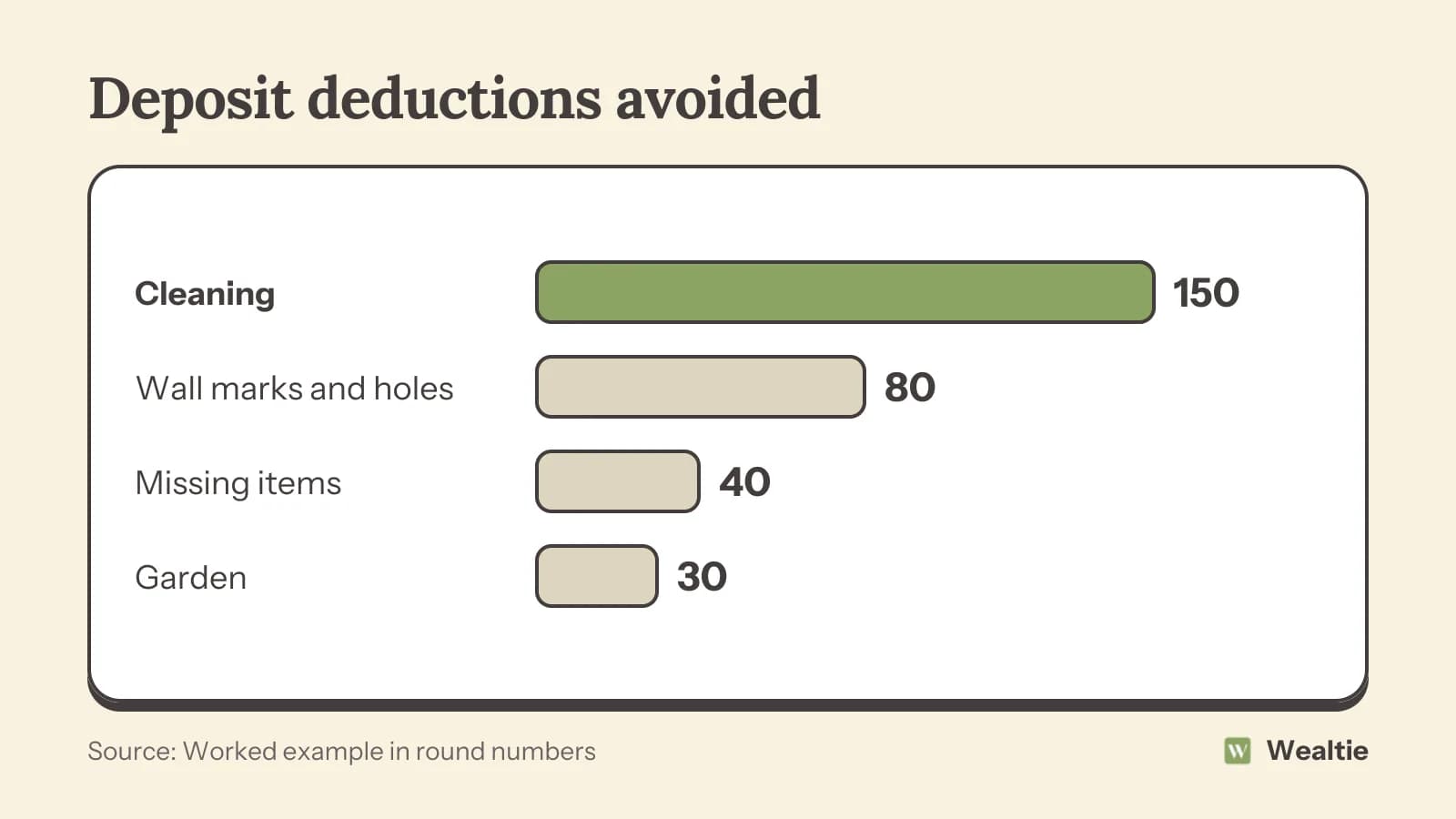
In this example, the tenant kept 300 of a 1,200 deposit that might otherwise have been deducted, mostly by cleaning thoroughly and fixing small marks. Common reasons for deductions include:
- Cleaning, especially kitchens, bathrooms and carpets
- Damage beyond normal wear, like holes, stains or broken items
- Missing items listed in the inventory
- Unpaid rent or bills
- Garden or outdoor areas left untidy
What should you do when you move in?
Record the condition of everything. Check the inventory carefully, and note anything that's missing or damaged. Take dated photos and videos of every room, including walls, floors, appliances and any existing marks. Send any corrections to the landlord or agent in writing within the time allowed, and keep a copy. This record is your best protection when you leave. Save the photos somewhere you won't lose them, like cloud storage, since you may need them years later.
How do you look after the home during the tenancy?
Small habits prevent big deductions. Ventilate rooms to avoid damp and mould, clean regularly so grime doesn't build up, and report repairs promptly in writing, since problems that get worse can be blamed on the tenant. Ask permission before hanging pictures or making changes. If something breaks, tell the landlord rather than hoping it won't be noticed. Fixing a small problem early usually costs less than a deduction later.
How do you prepare to leave?
Clean thoroughly
Cleaning is the most common deduction. Aim to leave the home as clean as when you moved in. Focus on the oven, fridge, bathroom, windows, skirting boards and inside cupboards. Professional cleaning costs money, but doing it yourself with a checklist works well for many tenants. Check your tenancy agreement for any specific cleaning requirements.
Fix small things
Fill small nail holes, touch up marks with matching paint if allowed, replace blown bulbs and make sure everything on the inventory is there. Return all keys.
Take final photos
Photograph every room after cleaning, matching the photos you took when you moved in. Take final meter readings, too.
What counts as normal wear and tear?
Landlords usually can't charge for the natural ageing of a home: slightly worn carpets, faded paint or minor scuffs after years of normal living. They can charge for damage beyond that, like large stains, burns or broken fittings. The longer you've lived somewhere, the more wear is reasonable.
Professional cleaning clauses
Some tenancy agreements say the home must be professionally cleaned at the end. In some places, these clauses aren't enforceable unless the home was professionally cleaned when you moved in. Check the rules where you rent, and keep receipts if you do pay for cleaning.
What if you disagree with deductions?
Ask for an itemised list with evidence, like photos and receipts. Compare it with your own move-in and move-out photos. If you think a deduction is unfair, explain why in writing and offer your evidence. If you can't agree, use the dispute service where one exists. Many disputes are settled in the tenant's favour when there's good evidence.
How do you plan for your next deposit?
The next home often needs a deposit before the old one is returned. Saving ahead, or keeping a buffer, avoids a squeeze. How much rent can you afford helps you plan your next move, and rent or buy a house covers the bigger decision.
How do you track deposits in Wealtie?
Record your deposit as money owed back to you by adding it as an account, so it's part of your net worth. When it's returned, move it into savings or towards your next deposit. Log cleaning and move-out costs in your expense categories, and keep a limit in the budget tracker during the move.
Questions people ask
Record the home's condition when you move in, look after it, clean thoroughly before you leave and challenge unfair deductions.
Usually cleaning, damage beyond normal wear, missing items, unpaid rent and bills.
Usually not. Natural ageing like slightly worn carpets or faded paint is normally expected.
Ask for an itemised list with evidence, reply in writing with your own photos and use a dispute service if one exists.
This article is general information, not financial, tax or legal advice. Your situation is your own; check the numbers that apply to you before you act on them.