Budgeting: How pawn shop loans work, and what they cost
A pawn shop loan lends you money against something valuable you leave with the shop, which you get back when you repay the loan and its fees. It's quick and needs no credit check, but it costs a lot and you lose the item if you can't repay.
 By Wealtie Team · 3 min read
Key takeaways
- A pawn shop loan lends money against an item you leave with the shop.
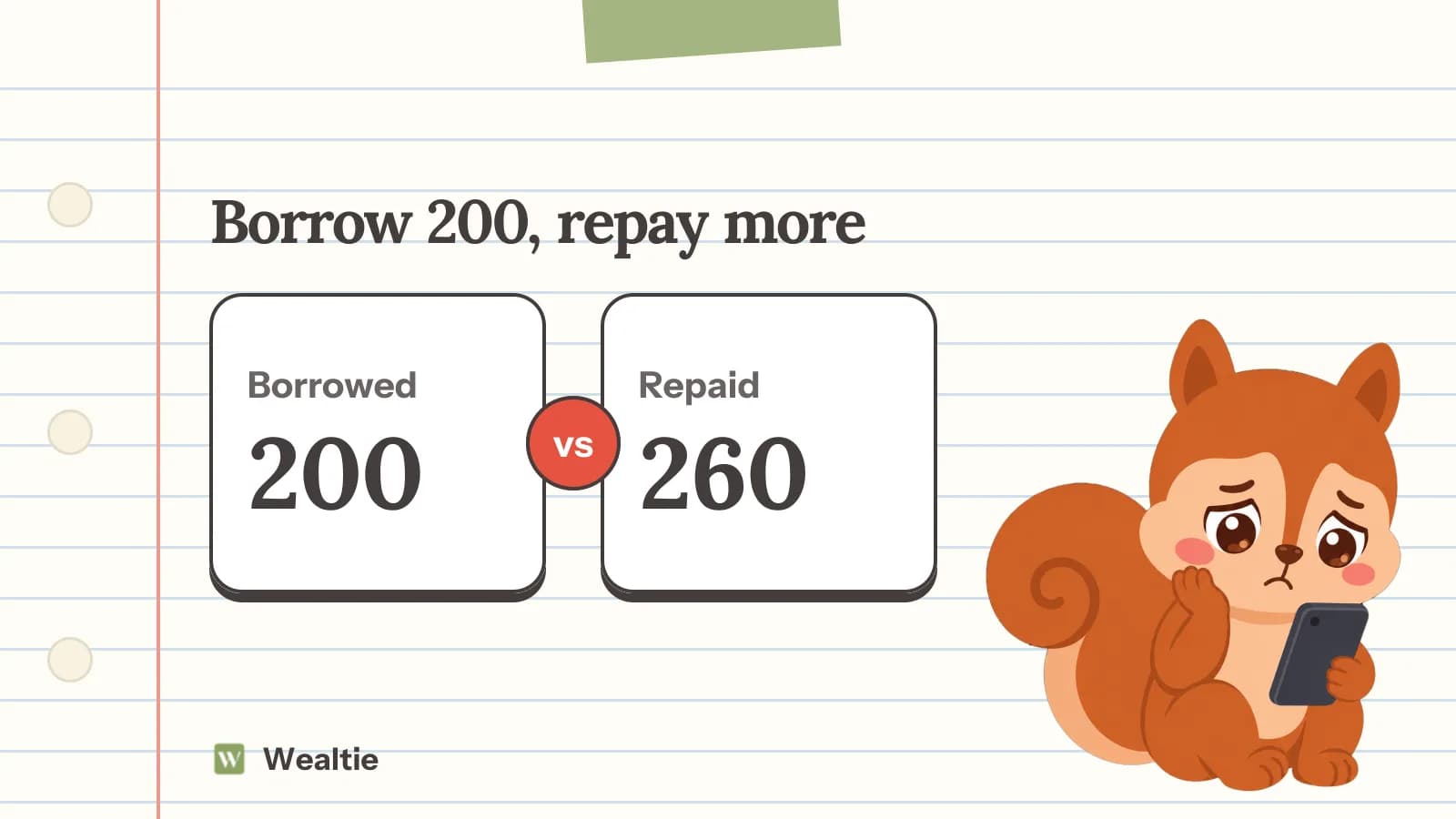
- In a worked example, borrowing 200 for three months costs 260 to repay.
- If you can't repay, the shop sells your item.
- Credit unions, community lenders or selling the item outright can cost less.
What is a pawn shop loan?
A pawn shop loan is a short-term loan secured against something you own. You take a valuable item, like jewellery, a watch, electronics or a musical instrument, to a pawnbroker. They value it and lend you a portion of that value. The item stays with them as security. If you repay the loan plus interest and fees by the agreed date, you get your item back. If you don't, the pawnbroker keeps it and sells it.
Pawn shop loans are quick, often arranged in minutes, and usually don't involve a credit check. That makes them appealing when money is short and other options feel closed. But they're an expensive way to borrow.
People often turn to pawnbrokers when a bill arrives before payday or an unexpected cost lands at a bad time. The loan solves today's problem, but adds a fee that makes next month a little tighter. If that happens once and the item comes back on time, the damage is limited. The trouble starts when one loan leads to another, and the fees build up month after month.
How much does a pawn shop loan cost?
Here's a worked example of borrowing against a watch, in round numbers that work in any currency:
| Item | Amount |
|---|---|
| Watch value | 500 |
| Amount borrowed | 200 |
| Repaid after three months | 260 |
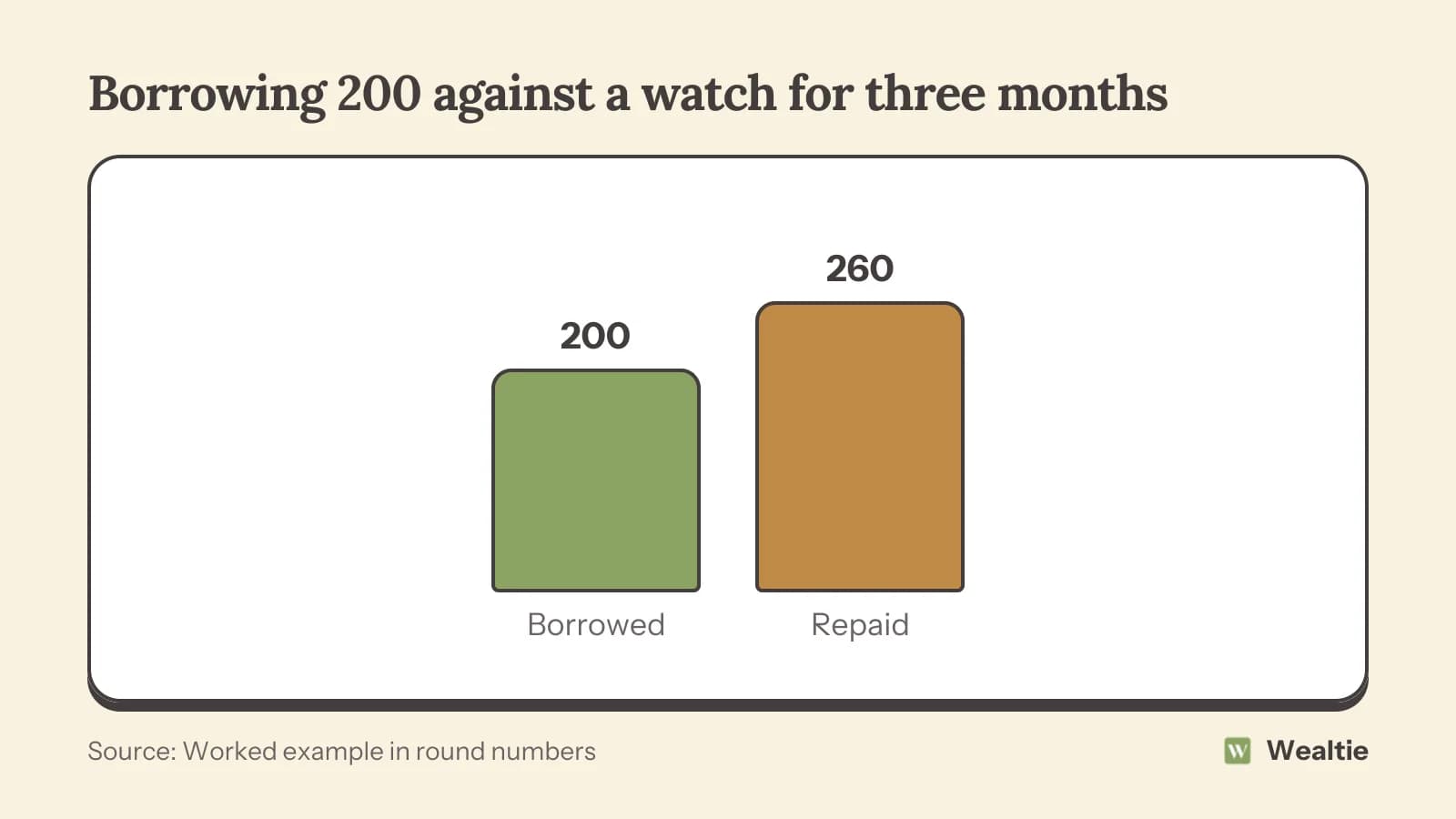
You borrow 200 against a watch worth 500. After three months, you repay 260, so the loan costs 60 in interest and fees. If you can't repay, you lose a watch worth 500 to cover a 200 loan. The amount lent is usually well below the item's value, since the pawnbroker needs to be able to sell it at a profit if you don't come back.
How does a pawn shop loan work?
The item is valued
The pawnbroker checks the item and offers a loan based on what they could sell it for, not what you paid for it.
You agree the terms
You'll be told the loan amount, the interest and fees, the repayment date and what happens if you don't repay. Rules vary by country, and in many places pawnbrokers must give you this in writing.
You repay to get the item back
Repay the full amount by the deadline, and the item is returned. Some pawnbrokers let you pay only the interest to extend the loan, but this adds to the cost.
If you don't repay
The pawnbroker sells the item. In some places, if it sells for more than you owe, you're entitled to the difference. Ask about this before you sign, and keep your paperwork somewhere safe, since you'll need the ticket to collect your item.
What are the risks?
The main risk is losing something you value, sometimes something with sentimental worth that can't be replaced. The cost of borrowing is high compared with most loans. Extending the loan by paying only interest can leave you paying for months without reducing what you owe. And because the loan is quick and easy, it can become a habit.
What are the alternatives to a pawn shop loan?
Sell the item outright
If you don't need the item back, selling it may get you more money than a pawn loan. How to sell things you don't use covers how to get a fair price.
Borrow from a credit union or community lender
These often offer small loans at much lower cost. Payday loan alternatives covers fairer ways to borrow.
Ask for more time
If you're short for a bill, contact the company. Many will agree a payment plan or a short delay.
Look for help
Local charities, community groups and free debt advice services can help in a crisis. How to save money on a low income has practical ideas.
How do you avoid needing a pawn shop loan?
A small emergency fund is the best protection. Even a little set aside each week builds a buffer for unexpected costs. How to build an emergency fund covers how to start. If you're being offered a loan that seems too easy, check it carefully. How to avoid money scams covers warning signs.
How do you track a loan in Wealtie?
If you've taken a pawn loan, note the repayment date and amount, and set a monthly budget that leaves room to repay it on time. Logging spending in expense categories helps you find where to cut back so you can get your item back.
Questions people ask
A pawn shop loan lends you money against a valuable item you leave with the shop. You get the item back when you repay the loan and fees.
It's expensive. In a worked example, borrowing 200 for three months costs 260 to repay.
The pawnbroker keeps and sells your item. In some places, you may be owed any amount above what you owed.
Selling the item outright, borrowing from a credit union or community lender, asking for more time on bills or seeking free advice.
This article is general information, not financial, tax or legal advice. Your situation is your own; check the numbers that apply to you before you act on them.