Budgeting: Payday loan alternatives when you're short before payday
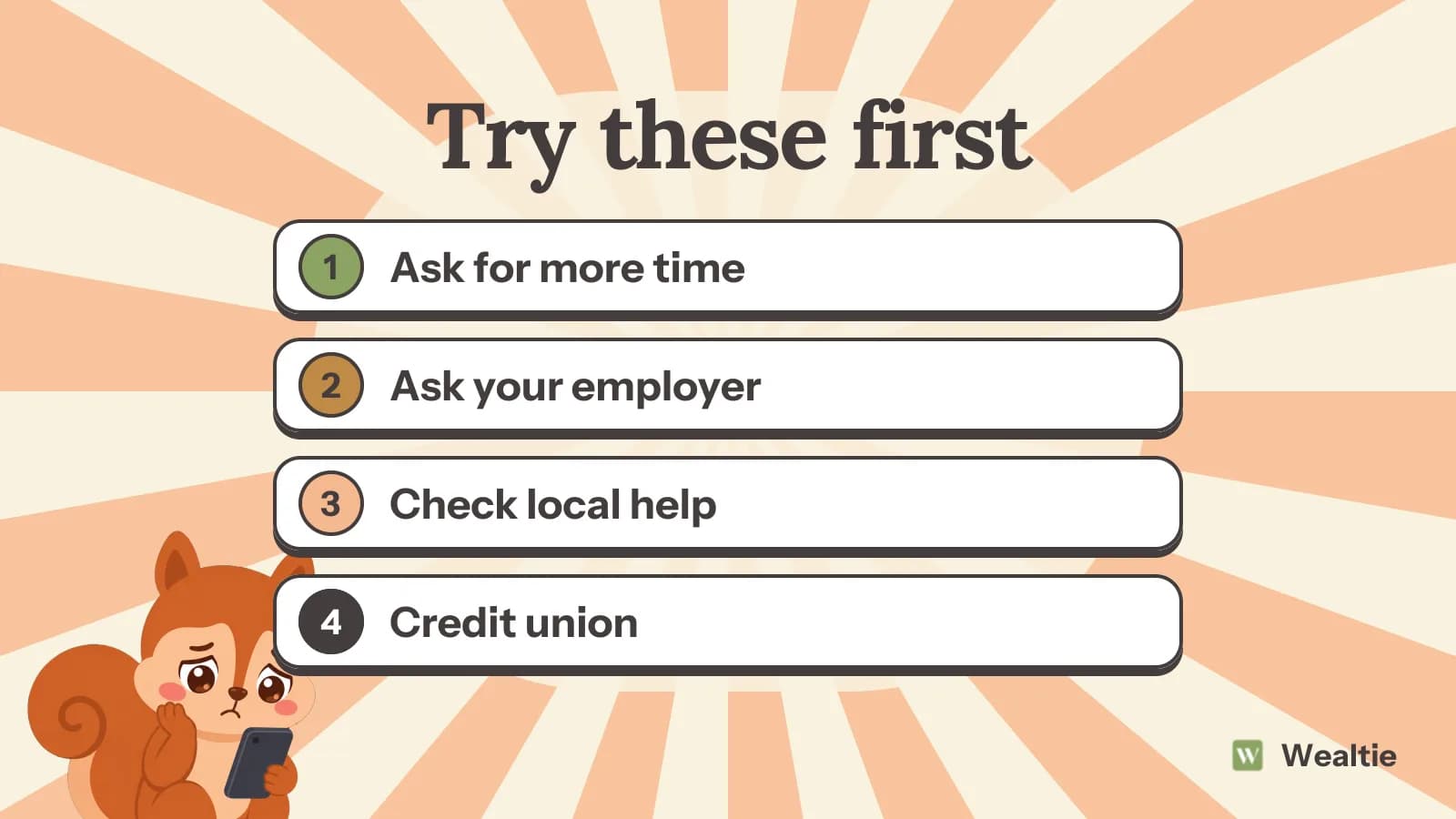
Payday loan alternatives start with asking for more time from the people you owe, then help from your employer, local support schemes, and lower-cost borrowing like a credit union. Most cost far less than a payday loan.
 By Wealtie Team · 3 min read
Key takeaways
- Ask the people you owe for more time before borrowing, since many will agree a short delay or a payment plan.
- Some employers offer pay advances, hardship loans or access to wages already earned.
- Credit unions and community lenders often lend small amounts at much lower cost than payday lenders.
- If you're short every month, fix the cause, since repeated borrowing makes the gap bigger.
What are the alternatives to a payday loan?
Several, and most are cheaper. Payday loans are quick, but they're usually one of the most expensive ways to borrow, and repaying one often leaves you short again the next month. Before you take one, work through the options below, roughly in order, and note what each would cost.
Can you ask for more time?
Often, yes, and it costs nothing. If the shortfall is because a bill is due before payday, contact the company and ask whether you can pay a few days later, or spread the payment. Many energy, water, phone and other providers will agree a short delay or a payment plan, especially if you ask before the due date.
If the gap is about rent, talk to your landlord early, and put any agreement in writing. Explaining and offering a date is far better than missing a payment without a word.
Can your employer help?
Some employers offer pay advances, small hardship loans, or access to wages you've already earned before payday. Ask HR or your manager. It can feel awkward, but many employers would rather help than have staff borrowing at high cost.
If you're owed money, like expenses or overtime, ask whether it can be paid sooner. Check the terms of any advance, since it'll come out of your next payslip and leave that month shorter.
What local support might be available?
Depending on where you live, there may be emergency grants or loans from local authorities, food banks, charities that help with bills, or hardship funds from energy companies. These are designed for exactly this situation. A local advice service can tell you what's available. Many energy companies also have hardship funds or can move you to a payment plan, so ask before your next bill is due.
If your income has dropped, check whether you're now entitled to benefits you weren't claiming before. Food banks and community pantries can also take pressure off the food budget for a week, freeing money for a bill.
What lower-cost borrowing is there?
If you need to borrow, look at:
- Credit unions and community lenders, which often lend small amounts at much lower cost
- An arranged overdraft, which may be cheaper for a few days than a payday loan, though check the charges
- Borrowing from family or friends, with a clear plan to repay
Ask any lender for the total amount repayable and the date it's due, and only borrow what you need to cover the gap. Avoid unlicensed lenders entirely, and be wary of anyone offering loans through social media. If you borrow from family or friends, agree the amount and the repayment date and write it down, so the loan doesn't strain the relationship.
Can you find the money another way?
Sometimes. Selling something you don't need, picking up an extra shift, or pausing non-essential spending for the days until payday can close a small gap. Returning something you bought recently and don't need can also bring money back quickly. If the gap is 200 and payday is ten days away, cutting eating out and shopping for those ten days might cover a good part of it.
Use what's already in the cupboards before doing a big shop, and look for any refunds or money owed to you. Some subscriptions can be paused for a month, which helps if they renew before payday.
What if you're short every month?
Then the fix is the budget, not another loan. Repeated borrowing makes each month tighter, because part of your pay goes on repaying the last loan. Look at the timing of bills, the biggest fixed costs, and whether income covers essentials. How to stop living paycheck to paycheck has a step-by-step plan.
Building a small buffer, even 100, is one of the best ways to break the cycle. Once it's there, a surprise bill a few days before payday doesn't need a loan at all. Free debt advice from a non-profit can help if you've got several debts.
How can Wealtie help you avoid running short?
Set your monthly limit in the budget tracker, and Budget Health compares how much of the limit you've used with how much of the month has passed, warning you mid-month while there's still time to adjust. The Budget Remaining budget widget shows what's left on your home screen.
Questions people ask
Ask the people you owe for more time, ask your employer about an advance, check local support, or borrow from a credit union or community lender.
Some employers offer pay advances or hardship loans. Ask HR or your manager.
Usually, yes. Credit unions and community lenders often lend small amounts at much lower cost.
Fix the cause: look at bill timing, fixed costs and income, and build a small buffer so you don't need to borrow each month.
This article is general information, not financial, tax or legal advice. Your situation is your own; check the numbers that apply to you before you act on them.



