Budgeting: How to plan a Passover budget for the Seder and the week
A Passover budget covers the Seder meal and a week of kosher-for-Passover food, which often costs more than usual groceries. In a worked example, a family hosting 12 guests spends about 650 over the holiday.
 By Wealtie Team · 3 min read
Key takeaways
- A Passover budget covers the Seder and a week of special groceries.
- Kosher-for-Passover products often cost more than everyday versions.
- Sharing hosting and cooking from scratch keep costs down.
- Planning the week's meals avoids last-minute expensive buys.
What does a Passover budget cover?
Passover is one of the most important festivals in the Jewish calendar, lasting seven or eight days depending on tradition. It begins with the Seder, a festive meal with family and friends where the story of the Exodus is retold, and it continues with a week of eating without leavened grain products, known as chametz. For many families, that means buying special kosher-for-Passover foods for the whole week, as well as preparing a large meal for guests.
A Passover budget helps you plan these costs together, so the holiday stays joyful without straining your finances. The main costs are:
- The Seder: ingredients for a festive meal for family and guests
- Kosher-for-Passover groceries: food for the rest of the week
- Matzah and wine: central to the Seder and the holiday
- Preparation: cleaning, table settings and any new kitchen items
How much does Passover cost?
Here's a worked example for a family hosting 12 people at the Seder, in round numbers that work in any currency:
| Item | Cost |
|---|---|
| Seder meal ingredients | 250 |
| Kosher-for-Passover groceries for the week | 200 |
| Matzah and wine | 100 |
| Table, cleaning and extras | 100 |
| Total | 650 |
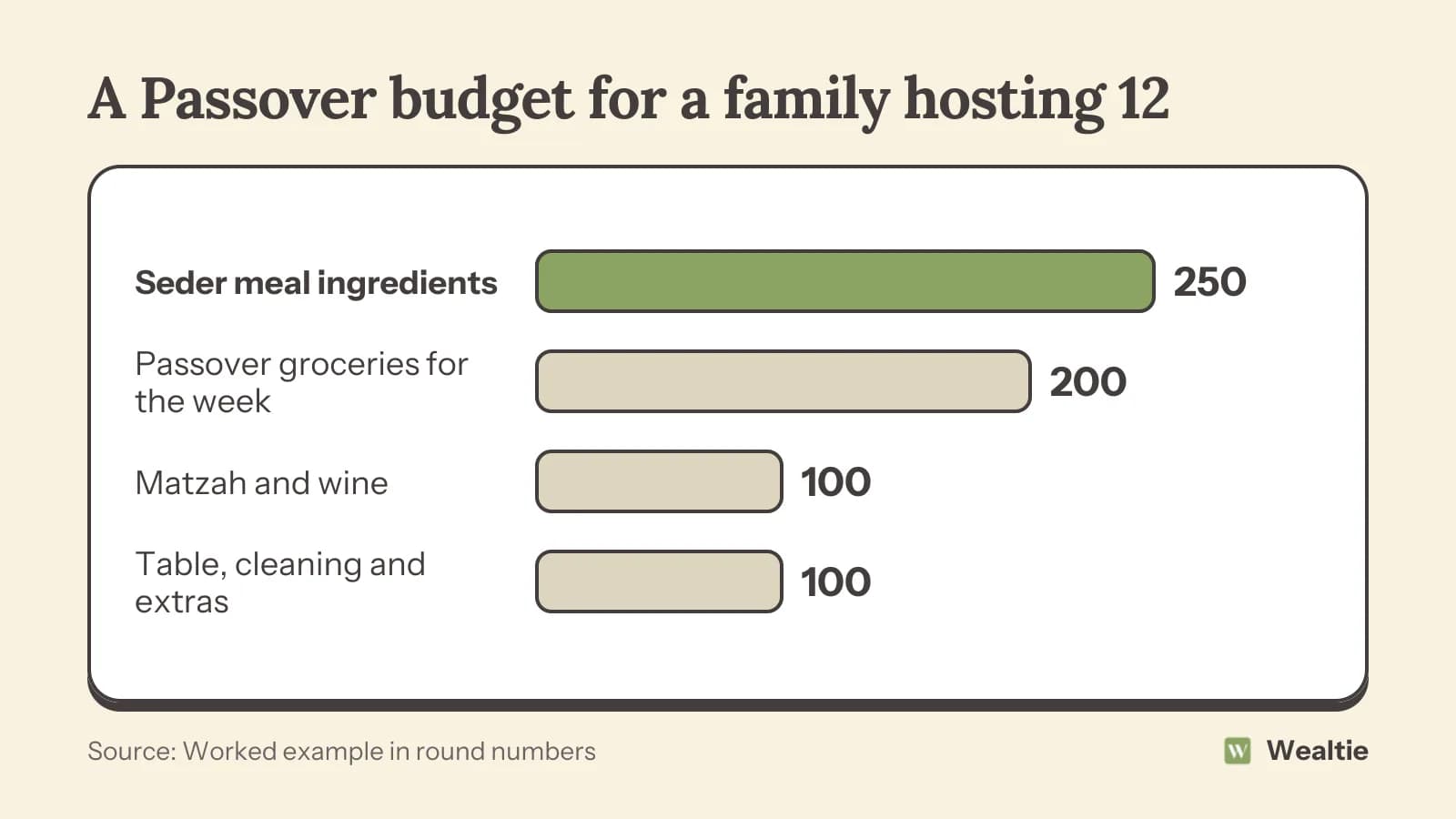
The Seder itself works out at about 20 per guest. Families who host two Seders, or who buy many specialist products for the week, will spend more. Costs vary a lot by location, community and how strictly families observe the dietary rules.
Why does Passover food cost more?
Products certified as kosher for Passover are made under special supervision and often in smaller quantities, which makes them more expensive than everyday versions. Specialist items like Passover cakes, biscuits and snacks can cost much more than their usual equivalents. Fresh produce, eggs, meat and fish are often similar in price to the rest of the year, so meals built around them tend to be more affordable.
How do you plan the Seder on a budget?
Agree the guest list early
Knowing numbers early helps you plan quantities and avoid overbuying.
Share the hosting
Many families ask guests to bring a dish, the wine or dessert. Sharing the work and the cost makes hosting easier. How to host a dinner on a budget has ideas for feeding a crowd.
Cook from scratch
Homemade dishes like soups, roasted vegetables and simple desserts cost much less than prepared or catered items.
Buy matzah and staples early
Shops often have offers on matzah and Passover staples in the weeks before the holiday. Buying early also avoids running out.
Plan the Seder plate and table
Many families reuse their Seder plate, wine cups and table decorations every year, which keeps ongoing costs low.
How do you keep the whole week affordable?
Plan the week's meals
Plan meals for the whole holiday, not just the Seder. Leftovers from the Seder can become lunches and dinners for the next days. How to plan meals on a budget covers weekly planning.
Focus on naturally suitable foods
Eggs, potatoes, vegetables, fruit, meat and fish make filling meals without needing expensive specialist products.
Limit specialist snacks
Passover cakes and snacks are tempting but pricey. Baking a few treats at home can be cheaper.
Shop around
Prices for Passover products can vary between shops. Comparing a few, or buying with friends in bulk, can help. How to save money on groceries has more tips.
How do you save for Passover?
Passover falls in spring each year. Setting aside a small amount each month, like 55 for 12 months to reach 650, means the cost is ready when the holiday arrives. Planning alongside other spring costs, like Easter for mixed families or school holidays, helps avoid a tight month. The Hanukkah budget covers planning for another festival later in the year.
If you're new to hosting, start simple. A traditional Seder doesn't need an elaborate menu, and many families have a few dishes they make every year, which makes shopping and cooking easier to plan. Keeping notes on what you bought, how much was eaten and what was left over helps you plan quantities more accurately next year, which saves money and reduces waste.
Community Seders are another option. Many synagogues and community groups hold shared Seders, sometimes at a modest cost per person. They can be a good choice for students, people living far from family or anyone who'd rather not host. Some families alternate between hosting and attending a community Seder to spread the cost over the years.
Finally, think about the extras. New dishes, special serving plates or a full set of Passover cookware can add a lot in the first year. Building up items gradually, and storing them carefully between years, keeps the cost manageable.
How can Wealtie help you plan the holiday?
Set a budget for Passover and log the Seder shop, the week's groceries and extras in their own expense categories. Comparing this year's total with last year's helps you plan more accurately next time.
Questions people ask
In a worked example, a family hosting 12 guests at the Seder spent about 650 on the meal, a week of groceries, matzah, wine and extras.
They're made under special supervision, often in smaller quantities, so they usually cost more than everyday versions.
Agree the guest list early, ask guests to bring a dish or wine, cook from scratch and buy matzah and staples on offer.
Plan meals for the whole week, use Seder leftovers, build meals around eggs, vegetables and meat and limit specialist snacks.
This article is general information, not financial, tax or legal advice. Your situation is your own; check the numbers that apply to you before you act on them.