Budgeting: How to host dinner on a budget and still feel generous
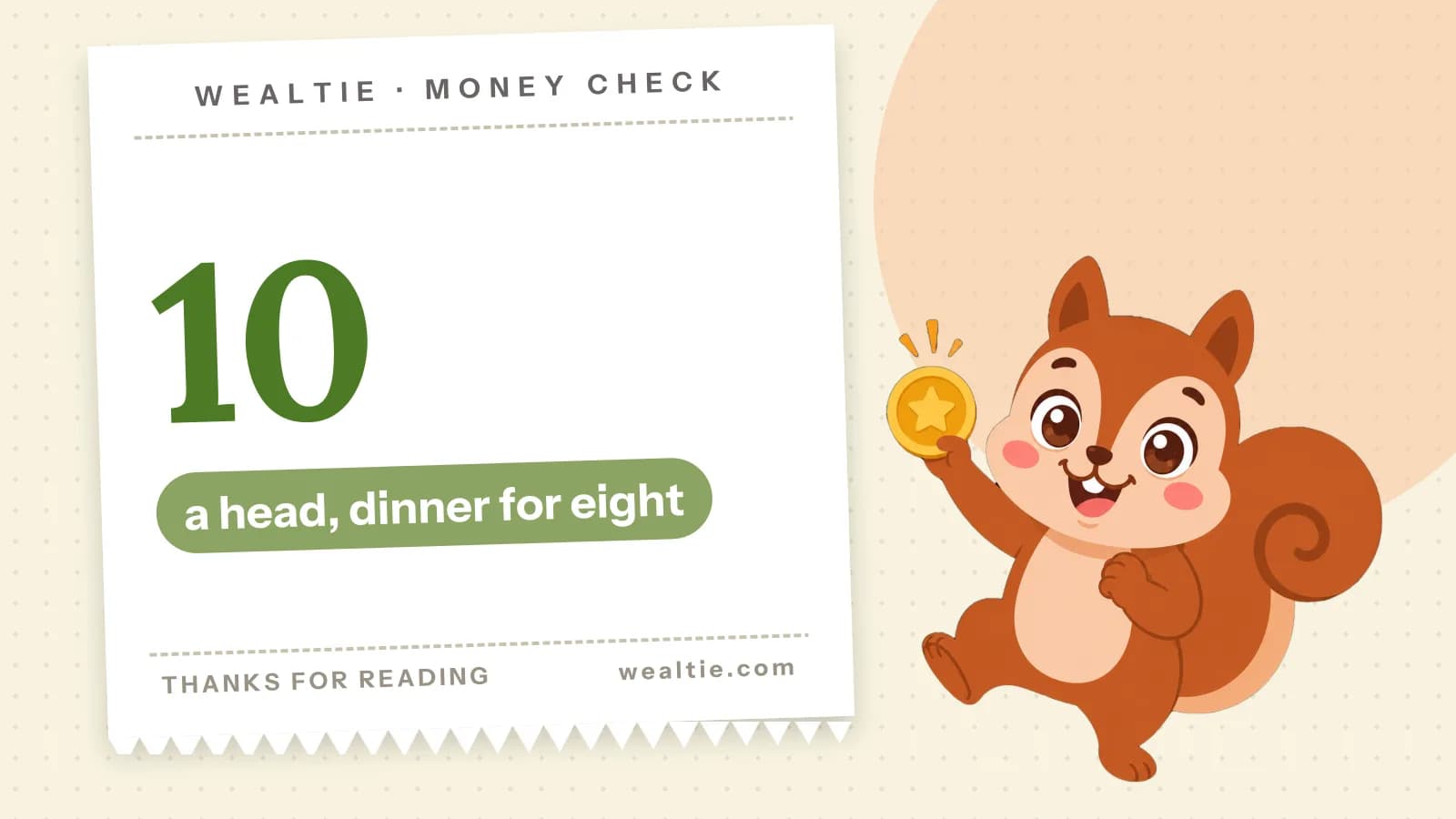
To host dinner on a budget, build the menu around one main dish made from cheap staples, keep drinks simple and let guests bring something. In a worked example, dinner for eight comes to about 80, or 10 a head.
 By Wealtie Team · 3 min read
Key takeaways
- Build the menu around one main dish made from inexpensive ingredients, like a stew, curry, pasta bake or roast vegetables.
- In a worked example, dinner for eight costs about 80, or 10 a head.
- Asking guests to bring a drink or dessert spreads the cost and is a normal thing to do.
- Set a total before you shop and buy from a list.
How do you host dinner on a budget?
Plan one generous main dish built on cheap ingredients, keep everything else simple, and share the load. People remember the company and the food being warm and plentiful, not how much it cost. A simple menu also gives you more time with your guests, which is the point of the evening. A clear budget also stops the last-minute extras that push a dinner from reasonable to expensive.
What does dinner for eight cost?
Here's a worked example in round numbers that work in any currency:
| Line | Amount |
|---|---|
| Main dish, like a large curry or stew | 30 |
| Sides and bread | 15 |
| Dessert | 12 |
| Drinks | 18 |
| Candles and napkins | 5 |
| Total | 80 |
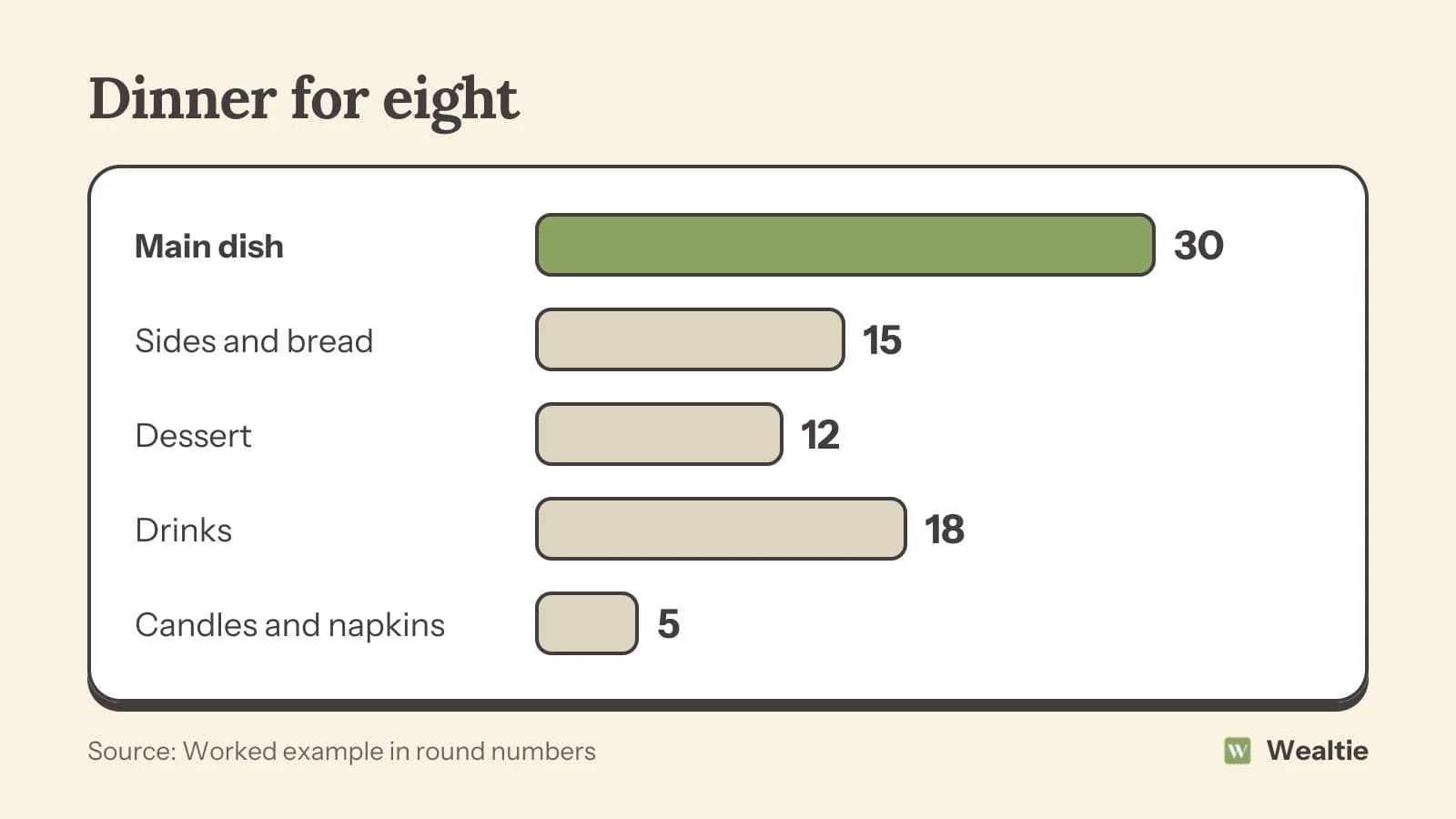
That's 10 a head. Write the menu and shopping list together, with a price next to each item, and you'll see the total before you shop. Swap a joint of meat for a vegetable or bean-based dish and the main can cost far less. Add wine for everyone and it can double.
Which dishes stretch furthest?
Ones that are cheap to make in large amounts and easy to serve:
- A big pot of curry, chilli or stew with rice
- Pasta bake or lasagne
- Roast vegetables with a grain and a sauce
- A whole roast chicken or two, with plenty of sides
- Build-your-own tacos or wraps
They can be made ahead, so you're not cooking while guests arrive, and leftovers keep well. Choose a dish you've made before, since a new recipe for eight people is a risk if it goes wrong. Pick one main, not several. A single dish done well beats three that stretch your budget and your time.
How do you keep drinks affordable?
Keep them simple. Offer one wine, a jug of something non-alcoholic, and water. A big jug of homemade lemonade or iced tea costs very little and looks generous. If guests offer to bring something, a bottle is the easiest thing to say yes to.
Drinks are often where a dinner budget goes over, so set an amount for them before you shop. If you'd like cocktails, choose one and make a jug.
Is it OK to ask guests to bring something?
Yes. Most guests like to help, and a potluck or "bring a dessert" dinner is normal. Make it specific, like asking one person for dessert and another for bread or a salad, so you don't end up with four bottles of wine and no pudding.
If someone has dietary needs, ask what they'd enjoy, and consider a main dish that suits everyone, so you're not cooking twice. For bigger gatherings, a shared meal where everyone brings a dish takes most of the cost and work off the host.
How do you avoid overspending at the shop?
Plan the menu, write a list and stick to it. Check the cupboards first, since spices, rice and pasta are often already there. Buy seasonal vegetables, which are cheaper and taste better. Supermarket own-brand works well for most ingredients.
Buy bread and fresh herbs on the day and everything else a day or two before, so you're not making expensive last-minute trips. Borrow extra chairs or plates instead of buying them. Skip extras you don't need. Fancy napkins, themed decorations and several cheeses add up fast. A few candles and a tidy table are enough, and nobody will notice what's missing.
How do you make it feel special without spending more?
Little touches that cost almost nothing: a playlist, lit candles, a dessert served in nice glasses, a handwritten place card. Being relaxed matters most, and that's easier when you're not worrying about the bill. Prepare as much as you can before guests arrive, so you can spend the evening with them. A big pot also means lunch for a couple of days afterwards, which adds to the value of the dinner.
What about the holiday season?
December can bring several dinners in a few weeks. Give hosting its own line in the December budget, and plan the dinners together, so you can reuse ingredients and leftovers. The Christmas budget puts hosting alongside gifts and travel.
How do you plan hosting in Wealtie?
Log the shop in an Entertaining or Groceries category, so your expense categories show what each dinner costs. A monthly limit in the budget tracker shows what's left for the rest of the month, and Budget Health warns you mid-month if your pace would take you over.
Questions people ask
Make one main dish from inexpensive ingredients, keep drinks simple and ask guests to bring a dessert or bread. A worked example for eight costs about 80.
Curries, stews, chilli, pasta bakes and roast vegetables with a grain are cheap to make in large amounts and easy to serve.
No. Most guests like to help, and asking for something specific avoids duplicates.
Set a total before you shop. About 10 a head is achievable with a simple menu and shared drinks.
This article is general information, not financial, tax or legal advice. Your situation is your own; check the numbers that apply to you before you act on them.