Budgeting: How to plan a Hanukkah budget for eight nights of celebration
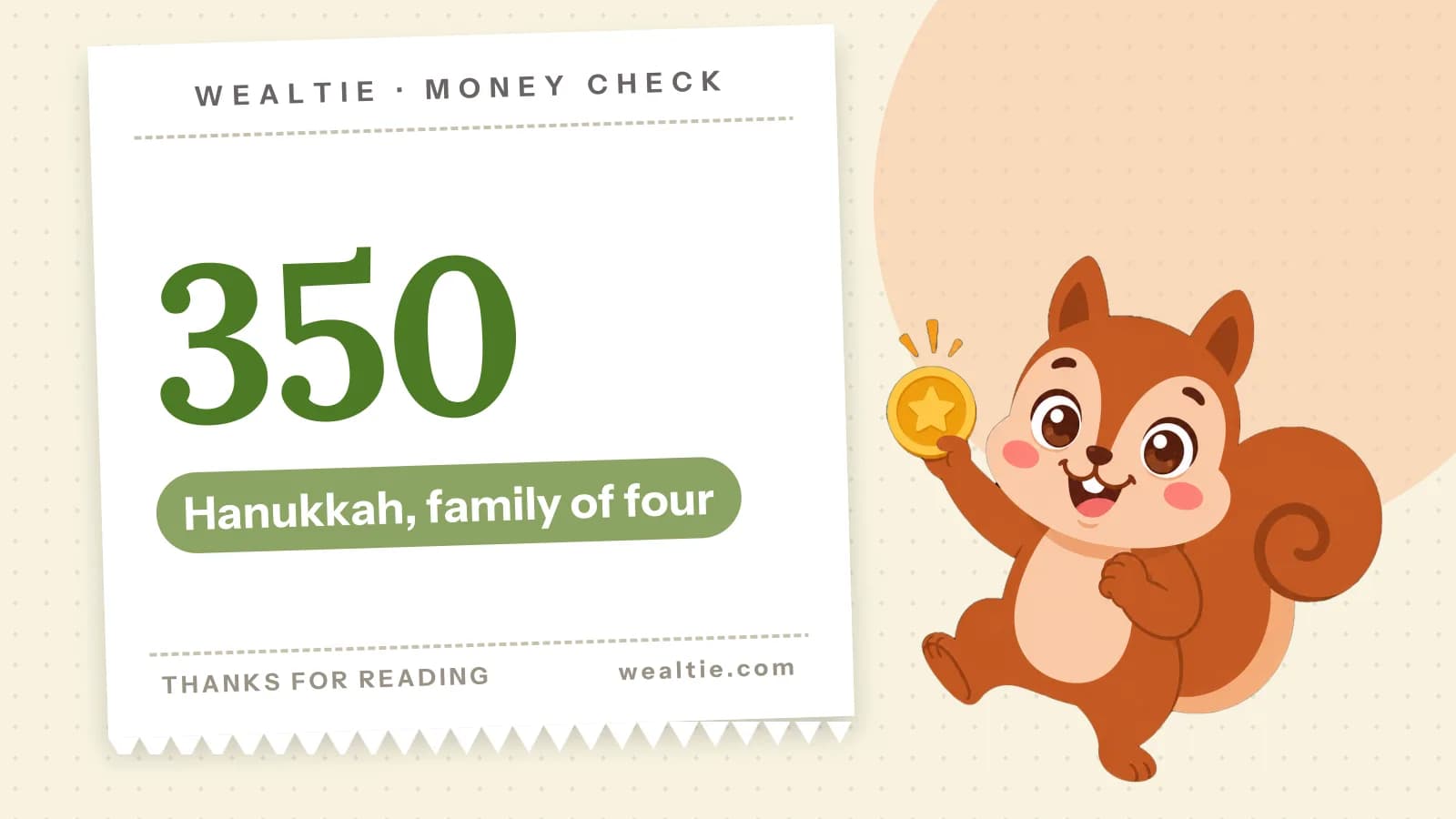
A Hanukkah budget covers gifts across the eight nights, candles, festive food, gatherings and giving. In a worked example, Hanukkah for a family of four costs about 350, and planning a gift for each night in advance stops costs adding up night by night.
 By Wealtie Team · 3 min read
Key takeaways
- A Hanukkah budget covers gifts across eight nights, food, candles, gatherings and giving.
- In a worked example, Hanukkah for a family of four costs about 350.
- Planning a gift theme for each night, with some small or homemade ones, keeps gift costs down.
- Hanukkah often falls near other holidays, so planning ahead avoids a December squeeze.
How do you plan a Hanukkah budget?
Plan the eight nights as a whole, set an amount for gifts, food and giving, and save in the months before. Hanukkah celebrates light and resilience, with candles, festive foods, games and time together. Many families give gifts, and with eight nights, it's easy for costs to build up night by night. A plan keeps the festival joyful and meaningful.
Traditions vary between families, so shape the plan around how you celebrate.
What does Hanukkah cost?
Here's a worked example for a family of four, in round numbers that work in any currency:
| Cost | Amount |
|---|---|
| Gifts across eight nights | 200 |
| Festive food and gatherings | 90 |
| Candles and decorations | 20 |
| Giving | 40 |
| Total | 350 |
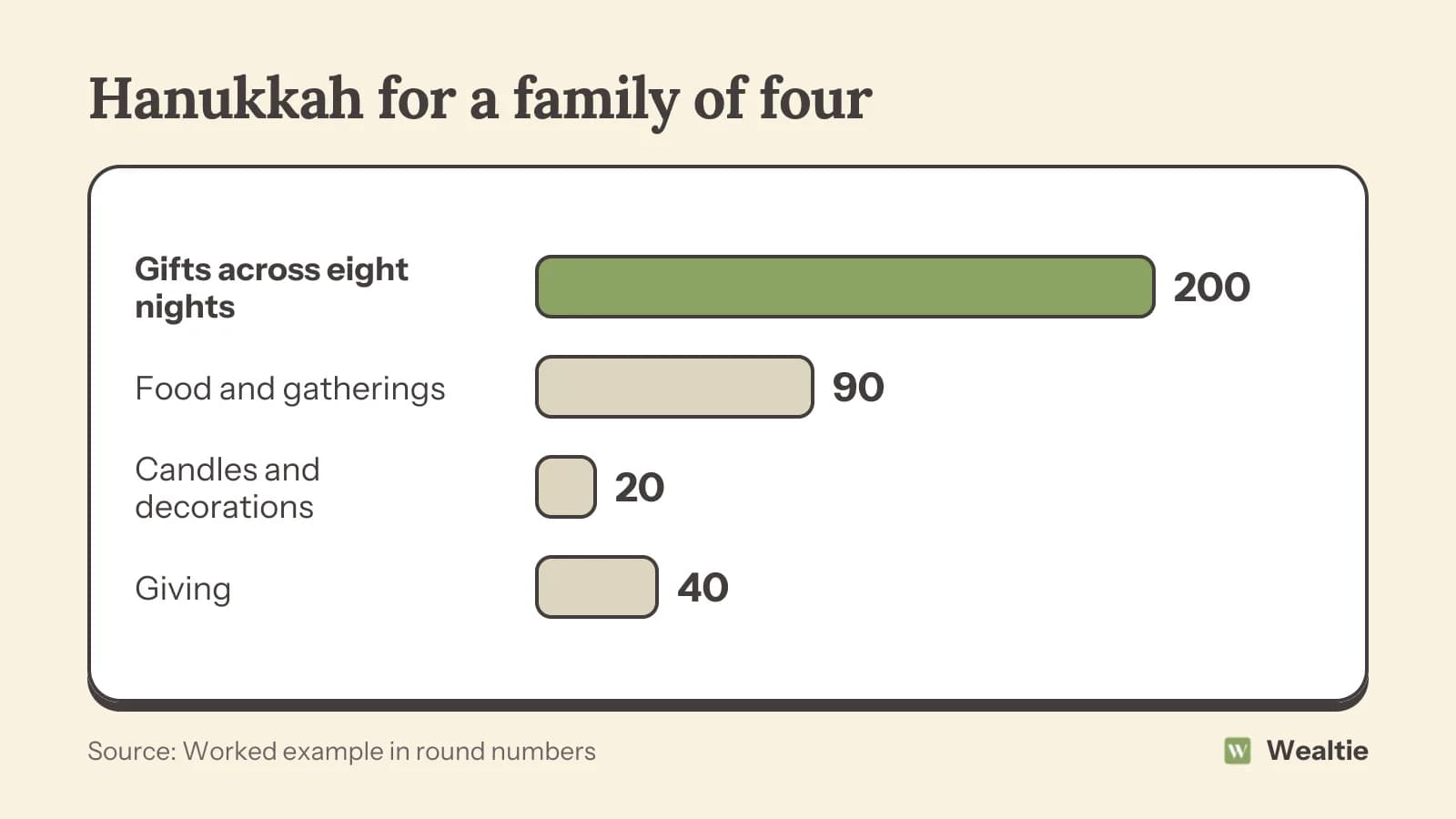
Your figures will depend on family size, how many nights include gifts, and whether you host gatherings.
How do you plan gifts for eight nights?
Not every night needs a big gift. Many families mix a few larger gifts with smaller ones, or give a themed gift each night. Some ideas:
- A night for books
- A night for a homemade or handwritten gift
- A night for a family experience, like a film or games evening
- A night for giving to others, like choosing a charity together
- A night for chocolate coins and a dreidel game
- One or two nights for a bigger gift
Planning the theme for each night in advance lets you set a budget per night and avoid last-minute shopping. It also keeps the focus on the celebration rather than the number of presents.
Gifts from the wider family
Grandparents, aunts and uncles may also give gifts, and children can end up with more than anyone planned. Talking with family before the holiday about who gives what, or agreeing that relatives give one shared gift, avoids duplicates and keeps the total sensible. It also takes pressure off relatives who'd like to give but have less to spend.
How do you keep festive food affordable?
Make it at home and share it. Latkes, doughnuts and other festive foods can be made in batches at home for much less than buying them, and cooking together is part of the fun. Potato, flour, oil and eggs are inexpensive staples. Frying for eight nights uses plenty of oil, so buy a large bottle rather than several small ones, and plan which nights you'll make the bigger fried dishes. Sharing a gathering with other families, with each bringing a dish, spreads the cost.
How to host dinner on a budget has ideas for feeding a group.
What about candles and decorations?
Candles are an ongoing cost each year, but they're modest. A menorah, decorations and other items can be kept and used for many years. Adding one or two new pieces each year, or making decorations with children, keeps costs low.
Gelt and games
Chocolate coins and a dreidel are inexpensive traditions that children love. Buying gelt in a bigger bag, rather than several small ones, is usually cheaper, and a dreidel can be used every year. Playing for coins, nuts or raisins makes an evening's entertainment that costs almost nothing.
How do you include giving?
Many families make giving part of Hanukkah. Choosing a charity together, or setting aside a small amount each night, teaches children about generosity. Decide the amount in advance and keep it in a separate pot, so it fits your budget. Some families put a coin in a charity box each night, which adds up over the eight nights and makes giving part of the ritual.
How do you save for Hanukkah?
Start a few months before. Divide your total by the months until Hanukkah and put that aside each month. A 350 Hanukkah saved over five months is 70 a month. Because Hanukkah often falls near other end-of-year holidays and events, planning ahead avoids a squeeze in December. A sinking fund is a simple way to save for costs like this that come round every year.
Why a simpler celebration still works
Lighting the candles, sharing food, playing games and spending time together are at the heart of Hanukkah, and none of them depends on spending a lot. Children often remember the traditions, the songs and the family time more than any single gift.
How do you track Hanukkah spending in Wealtie?
Add a savings account for holidays and move money into it each month as a transfer, which isn't counted as spending. During Hanukkah, log gifts and food in a Holidays or Gifts category, so your expense categories show what the festival costs. A monthly limit in the budget tracker keeps December on track.
Questions people ask
A worked example for a family of four comes to about 350, covering gifts, food, candles and giving. Your own figure will follow your family and traditions.
No. Many families mix a few larger gifts with small or themed ones, like books, homemade gifts or a family experience.
Plan a theme for each night, make festive food at home, share gatherings and reuse decorations.
A few months before. A 350 Hanukkah saved over five months is 70 a month.
This article is general information, not financial, tax or legal advice. Your situation is your own; check the numbers that apply to you before you act on them.