Budgeting: Is a packaged bank account worth the monthly fee?
Is a packaged bank account worth it? Only if you'd use the bundled insurance and perks, since the monthly fee adds up to a significant amount each year.
 By Wealtie Team · 3 min read
Key takeaways
- A packaged bank account is only worth it if you'd use the bundled benefits.
- Add up what you'd pay for each benefit separately.
- Check exclusions, like age limits and existing conditions on travel insurance.
- Many people pay for benefits they never use.
What is a packaged bank account?
A packaged bank account is a current account that charges a monthly fee in return for a bundle of extras. These often include travel insurance, mobile phone insurance, breakdown cover, discounts or other perks. The idea is that buying them together through your bank is cheaper than buying each one separately.
Whether a packaged bank account is worth it depends entirely on whether you'd use the benefits. Here's a worked example for a year, in round numbers that work in any currency:
| Item | Value |
|---|---|
| Yearly account fee | 180 |
| Travel insurance you'd buy anyway | 80 |
| Phone insurance you'd buy anyway | 60 |
| Breakdown cover you don't need | 0 |
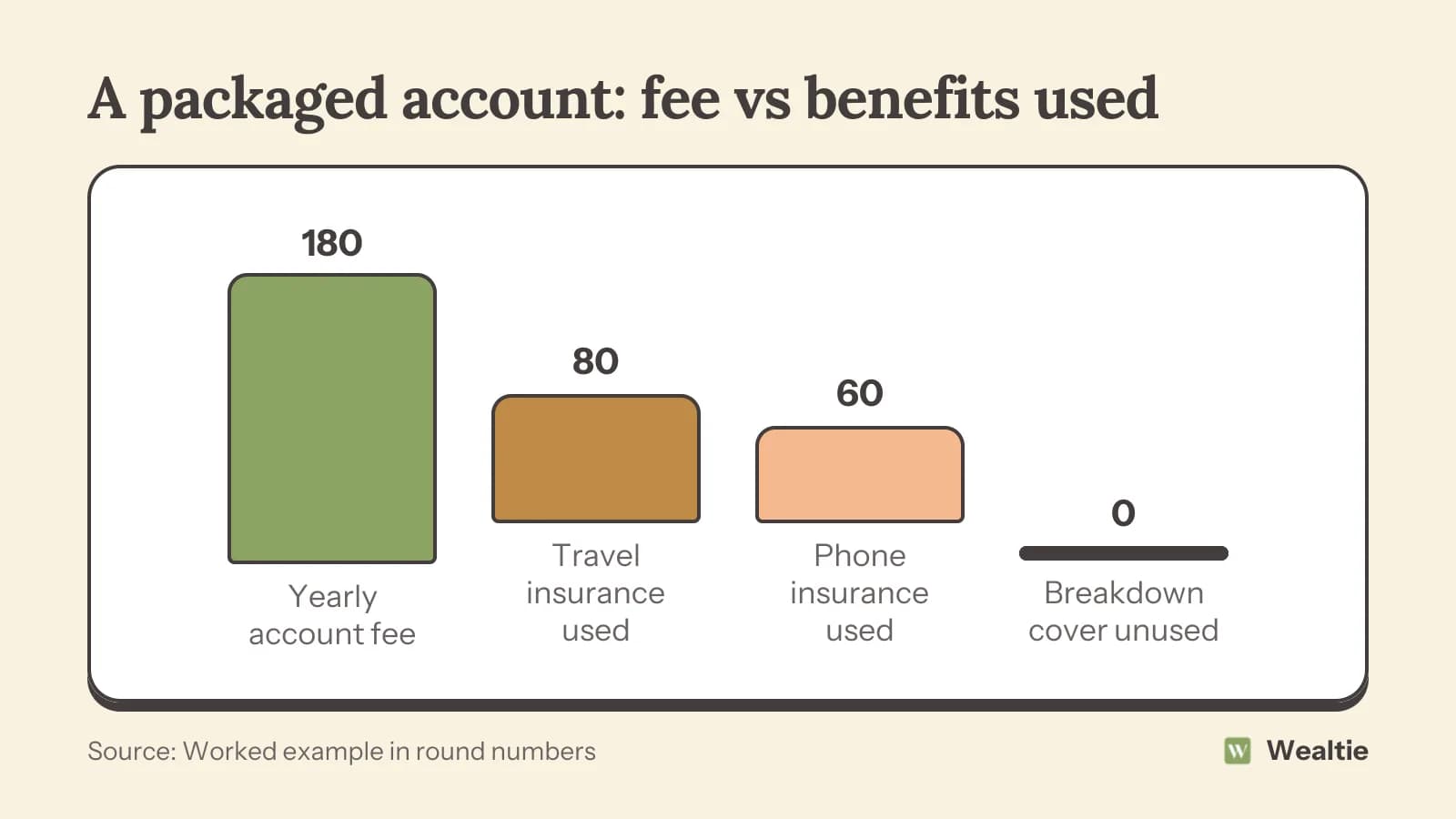
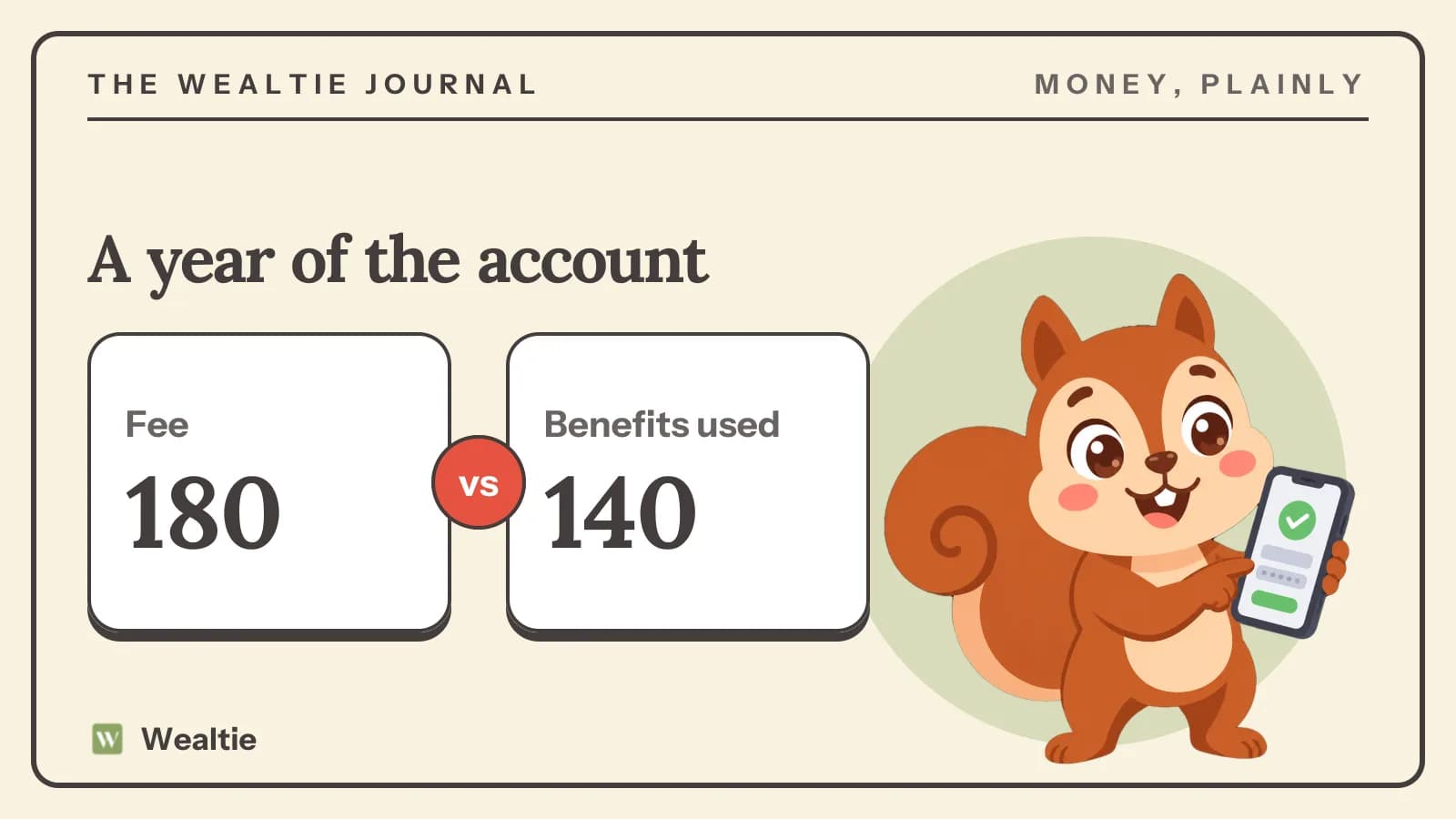
The account costs 15 a month, or 180 a year. The benefits you'd buy anyway are worth 140, since breakdown cover is no use if you don't drive. In this example, a free account plus buying the insurance you need separately would save 40 a year.
When is a packaged bank account worth it?
You'd buy several of the benefits anyway
If you'd buy travel insurance, phone insurance and breakdown cover separately, and the bundled versions meet your needs, the account may save money.
You travel often with family
Family travel insurance can be expensive, so a packaged account that covers everyone may be good value. Is travel insurance worth it? covers what to look for.
The cover is good quality
Bundled cover is only worth it if it's as good as what you'd buy separately.
When is it not worth it?
You don't use most of the benefits
Paying for breakdown cover without a car, or travel insurance when you rarely travel, wastes money.
You already have cover elsewhere
Many people have phone insurance through their contract or home insurance, or breakdown cover with their car insurance. Paying twice adds no value. Which insurance do you need? covers sorting out your cover.
The cover has exclusions that affect you
Travel insurance in packaged accounts may have age limits, exclude existing medical conditions or limit trip lengths. Phone insurance may require you to register your phone. Check the details.
How do you check if yours is worth it?
List the benefits
Write down every benefit the account includes.
Mark the ones you'd buy anyway
Be honest about what you'd pay for if the account didn't include it.
Price them separately
Get quotes for the benefits you'd use, and add them up.
Compare with the fee
If the total is less than the yearly fee, a free account is better value.
Check you're registered
Some benefits, like phone insurance, only work if you've registered your device. Make sure you've done this if you keep the account.
How do you switch if it's not worth it?
Many banks let you downgrade to a free account easily. If you'd rather move banks, a switching service can move your payments for you. How to switch bank accounts covers how. Before cancelling, arrange any insurance you still need so you're not left without cover. How to cut subscription costs covers reviewing other regular payments at the same time.
Your needs can change over time, so it's worth reviewing the account each year. A packaged account that made sense when you travelled often with children may be poor value once they've left home or you've stopped driving. Equally, someone who's just bought a car and plans more holidays might find the bundle becomes useful. Putting a yearly reminder in your calendar to check the benefits against your life keeps you from paying for cover you no longer need.
Some people opened packaged accounts years ago without realising they were paying a fee, or were sold benefits they couldn't use, like travel insurance that excluded their medical conditions. If you think you were mis-sold an account, you may be able to complain to your bank and ask for a refund. Rules vary by country, so check the guidance where you live.
If you decide to keep the account, make the most of it. Register your phone for insurance, carry the travel insurance details when you go away and use any discounts or perks that come with it.
Finally, compare the account with the best free accounts available. Some free accounts now offer useful features like spending notifications, savings pots and fee-free spending abroad, which may cover what you value without a monthly fee.
Ask your bank for a written list of every benefit and its terms. It makes comparing much easier and shows exactly what you're paying for.
How can Wealtie help you review account fees?
Add your account fee as a recurring transaction in Wealtie and log it in a bank fees expense category. Seeing what it costs each year makes it easier to compare with the benefits you use.
Questions people ask
Only if you'd use most of the bundled benefits. In a worked example, a 180 yearly fee bought benefits worth 140 to the account holder.
Common benefits include travel insurance, phone insurance, breakdown cover and discounts, in return for a monthly fee.
List the benefits, mark the ones you'd buy anyway, price them separately and compare the total with the yearly fee.
Many banks let you switch to a free account. Arrange any insurance you still need before you cancel.
This article is general information, not financial, tax or legal advice. Your situation is your own; check the numbers that apply to you before you act on them.