Income & freelancing: Are online courses worth it? How to judge before you pay
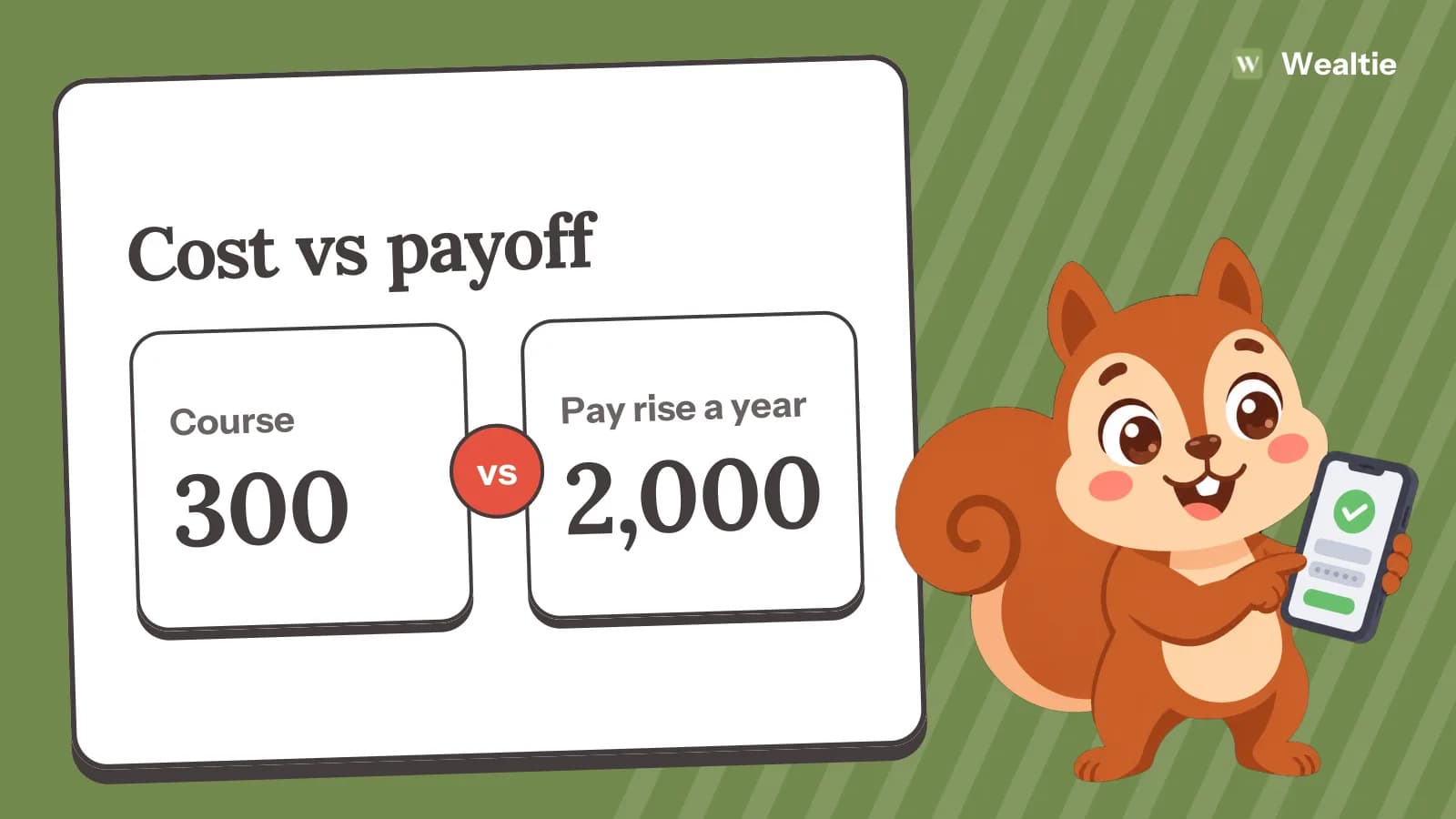
Are online courses worth it? They can be when they teach a skill you'll use from a credible source at a fair price, and in a worked example a 300 course that leads to a 2,000 raise pays for itself quickly.
 By Wealtie Team · 3 min read
Key takeaways
- Online courses are worth it when they teach a skill you'll use, from a credible source, at a fair price.
- In a worked example, a 300 course that leads to a 2,000 raise pays for itself quickly.
- Many skills can be learned free or cheaply before paying for a premium course.
- Watch for red flags like income promises and high-pressure sales.
Are online courses worth it?
They can be, if they teach you something you'll use and come from a credible source at a fair price. Online courses range from free lectures to expensive programmes promising a new career. Some are excellent value; others repackage free information at a high price. Judging which is which can save you a lot.
The key question is what the course will do for you: a new skill, a qualification an employer values, a pay rise, or the enjoyment of learning. Learning for fun is a perfectly good reason, as long as the price fits your budget.
How do course costs compare?
Here's a worked example of typical prices, in round numbers that work in any currency:
| Type | Cost |
|---|---|
| Free course | 0 |
| Low-cost course | 50 |
| Certificate course | 300 |
| Premium programme | 2,000 |
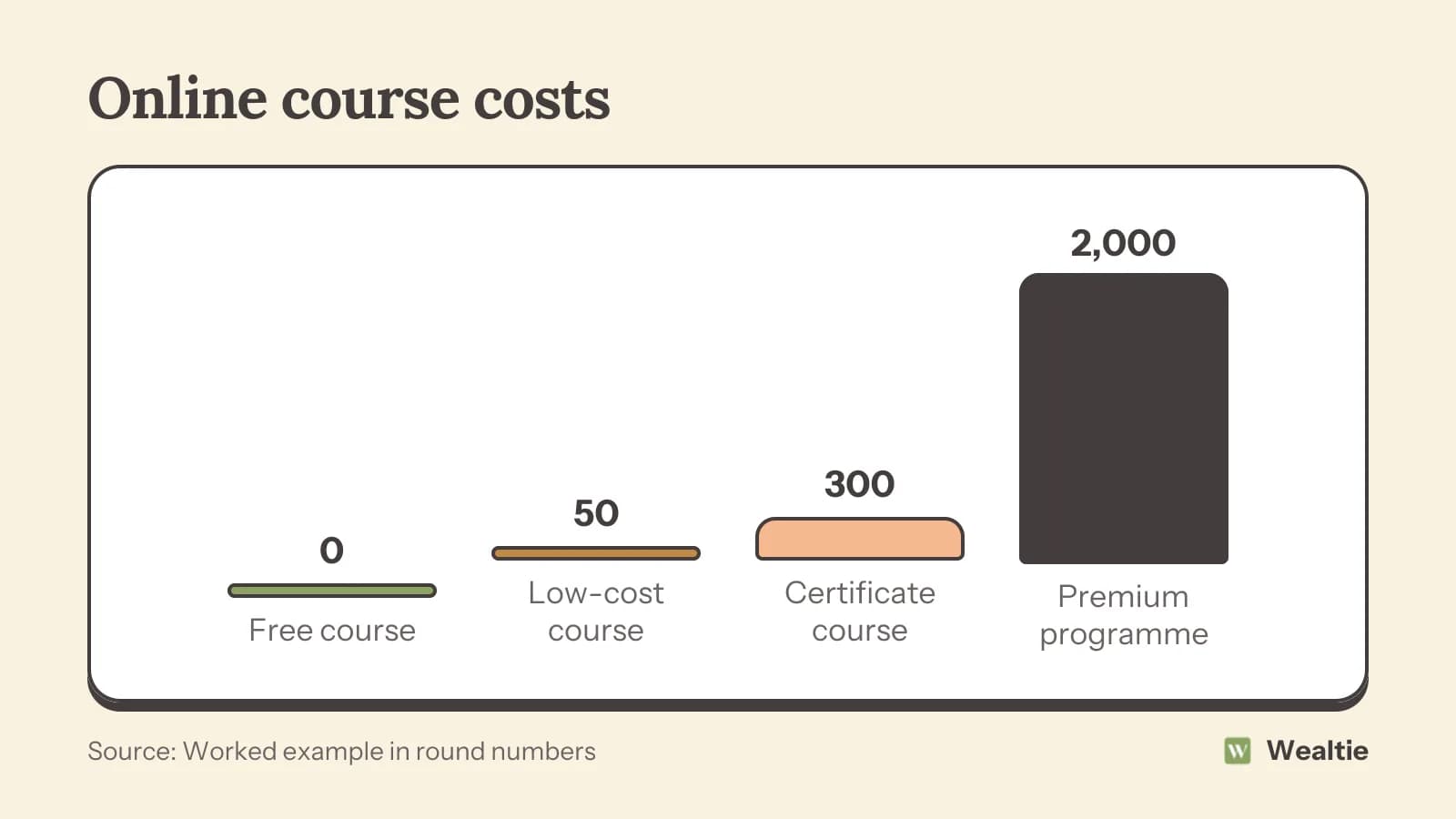
Price doesn't always match quality. A free course from a respected university can be better than a premium programme from an unknown provider. Some free courses charge only if you want a certificate, which lets you learn first and pay later if you need proof.
How do you judge whether a course is worth it?
Ask a few questions:
- What will I be able to do afterwards? Look for specific skills, not vague promises.
- Who teaches it? Check the teacher's experience and the provider's reputation.
- Is the qualification recognised? If you need it for a job, check that employers value it.
- What do past students say? Look for independent reviews, not only testimonials on the sales page.
- Can I try before I buy? Free lessons or a refund period reduce the risk.
Work out the payoff
If a course could lead to higher pay or new work, compare the cost with the benefit. In a worked example, a 300 course that helps you earn 2,000 more a year pays for itself in a couple of months. How to negotiate a pay rise helps you turn new skills into higher pay. If the payoff is enjoyment or confidence rather than money, that's worth something too; just make sure the price feels right.
Can you learn for free first?
Often. Many skills, from coding to design to languages, have excellent free resources: videos, articles, open university courses and library resources. Starting free lets you check your interest and the basics before paying. How to save money on books covers using libraries, which often offer free online learning too. Online communities and forums for your subject can also answer questions for free.
What are the red flags?
Be cautious of courses that:
- Promise high incomes or quick success
- Use countdown timers and pressure to buy now
- Hide the full price or push expensive add-ons
- Have no clear refund policy
- Rely only on testimonials you can't verify
These are common signs of courses that cost more than they deliver. If a course is expensive, look for the same topic elsewhere to see whether the content is unique.
How do you make sure you finish?
Many people buy courses and never finish them, which turns a good investment into a wasted one. Set a schedule, like two sessions a week, and treat them as appointments. Choose courses with a structure you'll follow, and start soon after buying, while you're motivated. Learning with a friend, or sharing progress with someone, makes it more likely you'll finish.
Ask your employer
Some employers pay for training related to your job. Ask before paying yourself, since a course that benefits your work may be covered. Some also allow time during work hours for learning.
Compare a course with other ways to learn
Books, mentoring, volunteering and learning on the job can teach some skills as well as a course, often for less. If your goal is a specific job, asking people already doing it which learning helped them most can save you from paying for something employers don't value.
How do courses fit with bigger plans?
If you're changing careers or going back to study, a course may be part of a larger plan. How to budget for a career change and how to budget as a mature student cover the bigger costs.
Before paying, look for a free taster lesson or a sample module. It shows how the course is taught and whether the teacher's style suits you, and it costs nothing to find out.
How do you track learning costs in Wealtie?
Give courses and learning their own line in your expense categories, so you can see what you spend. If a course leads to new income, log it in the income tracker, so you can see how the investment paid off.
Questions people ask
They can be when they teach a useful skill, from a credible source, at a fair price. Try free options first.
Check what you'll be able to do, who teaches it, whether the qualification is recognised and independent reviews.
Income promises, pressure to buy now, hidden prices, no refund policy and only unverifiable testimonials.
Some employers pay for training related to your job, so ask before paying yourself.
This article is general information, not financial, tax or legal advice. Your situation is your own; check the numbers that apply to you before you act on them.