Budgeting: How to budget as a mature student
To budget as a mature student, plan for course fees, living costs that often include rent or a mortgage and family, and any earnings you'll give up while studying. In a worked example, a year of part-time study costs about 4,500 in fees and extras, and funding, flexible work and careful planning make it manageable.
 By Wealtie Team · 3 min read
Key takeaways
- A budget as a mature student covers fees, living costs and any earnings you give up.
- In a worked example, a year of part-time study costs about 4,500 in fees and extras.
- Mature students often qualify for funding, grants or employer support, so check before you pay.
- Part-time study while working keeps income coming in, though it takes longer.
How do you budget as a mature student?
Plan for the course, your household and your income together. Going back to study as an adult is a big step, whether for a degree, a professional qualification or a career change. Unlike many younger students, mature students often have rent or a mortgage, children, a partner and a job to balance. A budget that covers all of it helps you finish the course without money worries taking over. It's also worth thinking about the long-term return, like better pay or more satisfying work, which can make the short-term costs worthwhile.
What does studying cost?
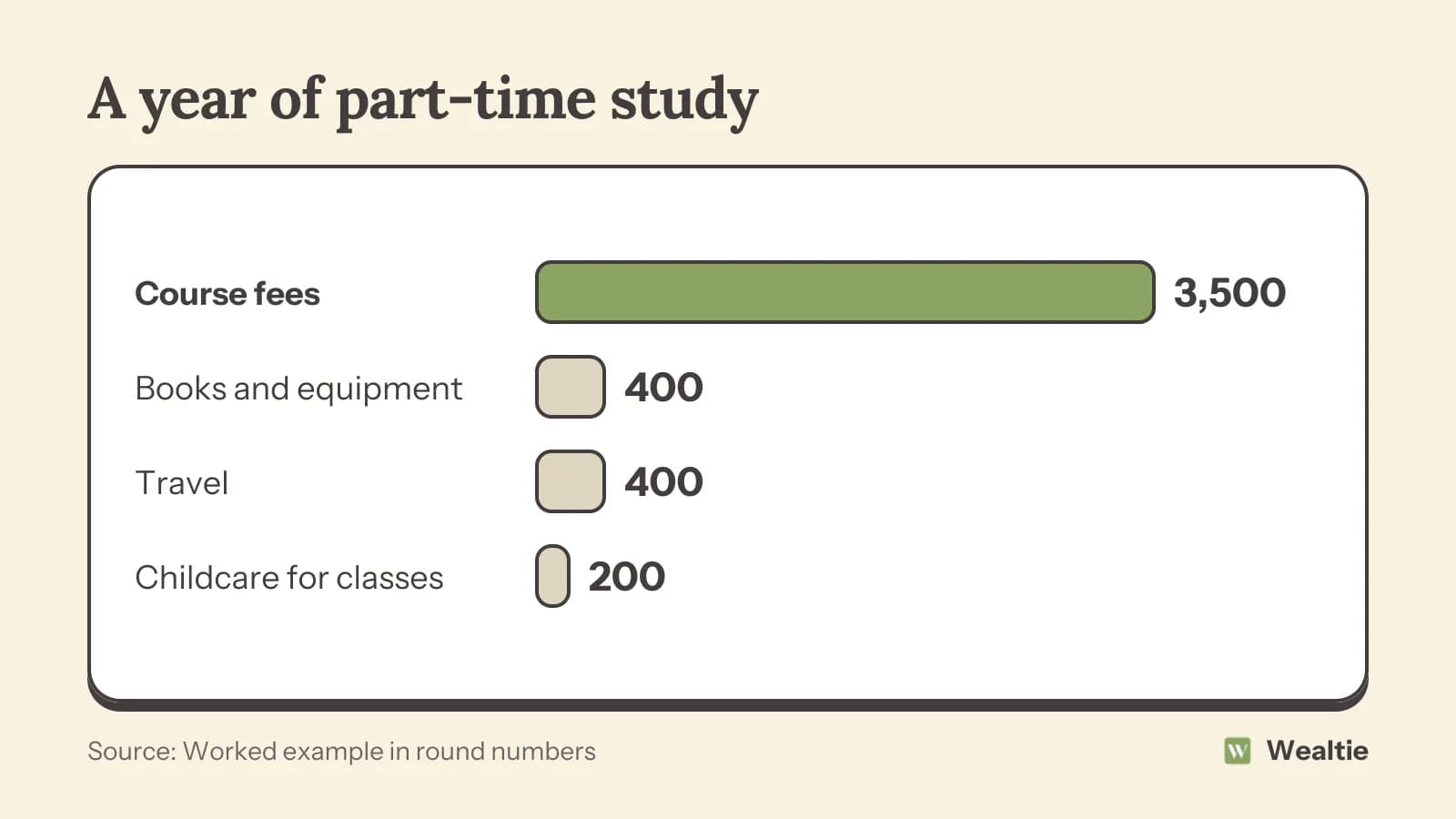
Here's a worked example for a year of part-time study, in round numbers that work in any currency:
| Cost | Amount |
|---|---|
| Course fees | 3,500 |
| Books and equipment | 400 |
| Travel to classes | 400 |
| Childcare for classes | 200 |
| Total | 4,500 |
Your own costs depend on the course, the institution and where you live. Full-time study, specialist equipment or placements can cost more. Some courses also charge for exams, registration or graduation, so check the full list before enrolling, and look for student discounts or refurbished options if you need a laptop.
What funding is available?
More than many people expect. Depending on where you live, mature students may be able to get:
- Student loans for fees and sometimes living costs, often available regardless of age
- Grants for adults on lower incomes, parents or carers
- Bursaries and scholarships from universities, colleges and charities
- Employer support, if the course relates to your job
- Funded courses for adults retraining in areas with skill shortages
Ask the student support or finance team at your chosen institution, since they know what's available. Apply early, since some funding has deadlines months before the course starts. If you take a loan, how to budget with student loan repayments covers repaying it later.
What about lost earnings?
This is often the biggest cost. If you reduce your hours or stop working to study, your income falls. In a worked example, dropping from five days to three costs 600 a month. Over a year, that's more than the fees. Work out your household budget on the lower income, and save before you start if you can. Some employers allow study leave or flexible hours for courses that benefit your work, which can reduce lost earnings.
Studying part-time
Part-time study lets you keep working and spread the cost, though it takes longer. Many courses offer evening, weekend or online options. Online courses can also save on travel and childcare, since you study from home.
How do you save on study costs?
Small choices add up over a course:
- Buy second-hand or digital textbooks, or use the library
- Check student discounts on software, travel and everyday spending
- Use free study spaces at your institution rather than paying for extras
- Share childcare with other student parents, or check for on-site childcare support
- Look for free online resources to supplement your course
How to save money on books has more tips.
Use your experience
Mature students often have work experience that counts towards a qualification, or skills that let them earn alongside study, like tutoring or freelance work in their field. Ask whether prior learning can shorten your course, which saves on fees and time.
How do you balance study, work and family?
Plan your time as carefully as your money. Agree with your household how study time will work, and who'll cover what. A realistic schedule helps you avoid paying for convenience, like takeaways or extra childcare, because time ran out. Many mature students find that planning meals and routines saves both time and money during busy terms. A small budget for treats and breaks helps you stay motivated over a long course.
How do you handle the household budget?
Talk it through with anyone you share finances with. Agree how long you'll live on a lower income, what you'll cut back on, and how you'll celebrate milestones without overspending. Planning for exam periods, when you may need extra childcare or fewer work hours, avoids last-minute costs. Students without a household of their own can find the college student budget useful, though mature students' costs are usually broader.
How do you track a study budget in Wealtie?
Give study costs their own line in your expense categories, so fees, books and travel add up in one place. A monthly limit in the budget tracker, with Budget Health, shows whether your household budget is holding on the lower income. If you save for fees in advance, a separate account keeps the money ready.
Questions people ask
Plan for course fees, household living costs and any lost earnings together, and check for funding before you start.
Often, yes. Loans, grants, bursaries and employer support may be available depending on where you live.
In a worked example, a year of part-time study costs about 4,500 in fees and extras, plus any lost earnings.
Part-time keeps income coming in and spreads the cost, while full-time is faster but usually means earning less.
This article is general information, not financial, tax or legal advice. Your situation is your own; check the numbers that apply to you before you act on them.