Budgeting: How to budget for a career change
To budget for a career change, plan for retraining costs, a possible drop in pay at the start and time between jobs, then build a savings cushion before you switch. In a worked example, retraining costs 3,000 and the new career starts 400 a month lower, so a cushion of about 8,000 covers the first year.
 By Wealtie Team · 3 min read

Key takeaways
- A budget for a career change plans for retraining, lower starting pay and time between jobs.
- In a worked example, retraining and lower pay add up to about 8,000 in the first year.
- Testing the new career part-time or retraining while employed lowers the risk.
- Check for funding, grants or employer support for retraining.
How do you budget for a career change?
Plan for three things: the cost of retraining, a possible drop in pay at first, and time between jobs. Changing careers can bring more satisfaction, better long-term pay or a better fit for your life. But the switch often costs money in the short term, especially if you're starting at a more junior level. A plan made before you leave your current job makes the change far less stressful.
What does a career change cost?
Here's a worked example of the first year, in round numbers that work in any currency:
| Cost | Amount |
|---|---|
| Lower pay, 400 a month for 12 months | 4,800 |
| Retraining | 3,000 |
| Total | 7,800 |
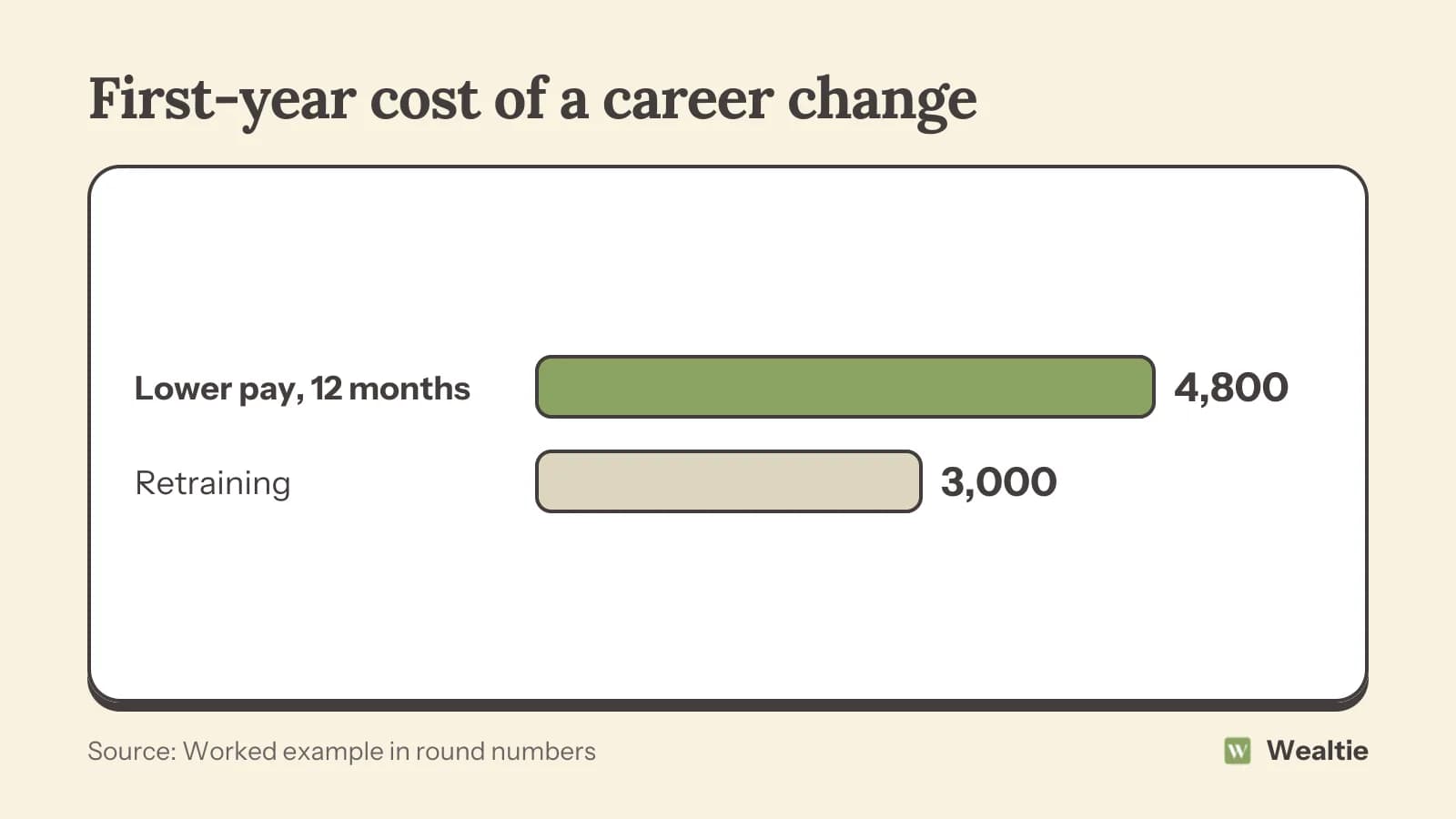
In this example, a cushion of about 8,000 covers the first year. If you'll have time between jobs with no income, add your monthly costs for those months too. Some career changes involve no pay drop at all, while others start much lower. Research typical starting pay in your new field. Some fields also need new clothes, tools or equipment, which add to the first-year cost.
How do you plan for retraining costs?
List everything: course fees, exams, books, equipment, travel and any professional memberships or licences. Then check for help:
- Employer support, if you're moving within your current organisation
- Government grants, loans or funded courses, available in some places for adults retraining
- Professional bodies, which sometimes offer bursaries
- Free or low-cost courses, online or through libraries and community colleges
Retraining part-time while still employed keeps your income coming in, though it takes longer and needs energy. Keep receipts for course costs, since some places allow tax relief on work-related training.
How do you prepare for lower pay?
Test it before you switch. Work out your budget on the new pay, and try living on it for a few months while still in your current job, saving the difference. In the worked example, saving 400 a month for six months builds 2,400 towards your cushion and shows you whether the new budget works. How to deal with a pay cut covers adjusting your spending. If your new field pays by the hour or by project, look at typical monthly earnings, not just rates.
Look at long-term pay too
A lower starting salary can be worth it if pay grows faster in the new career. Look at what people earn after a few years, not just at the start. Once you've built experience, how to negotiate a pay rise helps you move up.
How do you lower the risk?
Try the new career before committing fully. Ways to test it:
- Volunteering or shadowing someone in the field
- Freelancing or side work in the new area
- A short course before a full qualification
- Moving to a related role in your current organisation first
Each one helps you check that you like the work before giving up a stable income. If you're moving into self-employment, how to save before going freelance covers building a buffer.
Talk to people in the field
Conversations with people already doing the job tell you more about pay, progression and hidden costs than any job advert. Many people are happy to share their experience over a coffee or a short call.
How do you build your cushion?
Save steadily before you switch. Keep the cushion in a separate account, apart from your emergency fund, so you know what's available for the transition. Cut back on non-essentials for a while, put any bonuses or pay rises straight into the fund and avoid new long-term commitments, like a bigger loan, until you're settled. Paying down high-interest debt before the switch lowers your monthly costs during the transition. How to build an emergency fund covers keeping a separate safety net.
What about your household?
If you share finances, talk it through early. A career change affects everyone in the household, especially if income drops for a while. Agree how long you're prepared to live on less and what you'll cut back on. Having the numbers in front of you makes the conversation easier and builds support for the change. Setting a review date, like six months in, gives everyone a point to check how it's going.
How do you track a career change budget in Wealtie?
Add a savings account for the transition and move money into it as a transfer, which isn't counted as spending. Update your monthly income goal when your pay changes, and track spending in your expense categories. A monthly limit in the budget tracker shows whether your budget works on the new income.
Questions people ask
Enough to cover retraining, any pay drop and time between jobs. In a worked example, about 8,000 for the first year.
Check employer support, government funding, bursaries and free courses, and consider retraining part-time while employed.
Live on the new pay for a few months while still employed, saving the difference.
Volunteer, shadow someone, freelance, take a short course or move to a related role first.
This article is general information, not financial, tax or legal advice. Your situation is your own; check the numbers that apply to you before you act on them.