Income & freelancing: How to budget with a part-time job while studying
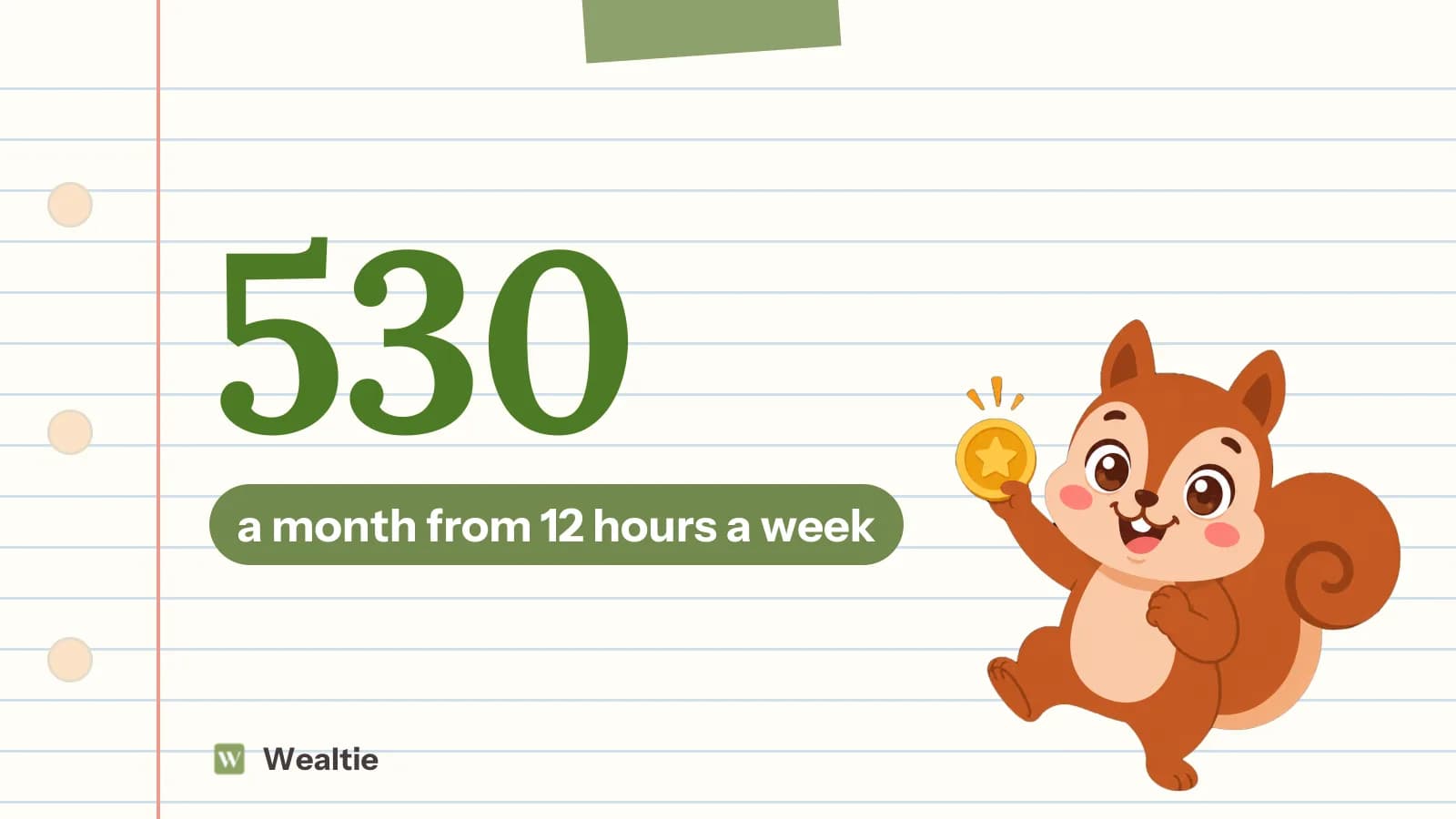
Budgeting with a part-time job while studying means planning around shifts that change, keeping enough time for study and putting some earnings aside for quieter weeks. In a worked example, 12 hours a week at 11 an hour adds about 530 a month to a student budget.
 By Wealtie Team · 3 min read
Key takeaways
- A part-time job while studying adds income but needs careful time and money planning.
- In a worked example, 12 hours a week at 11 an hour adds about 530 a month.
- Plan your budget around a low month, since shifts change.
- Protect study time; extra hours aren't worth failing a module.
How do you budget with a part-time job while studying?
Plan around a realistic, lower-end figure for your earnings, and protect your study time. Your degree is the main reason you're at university, so work should fit around it. A part-time job while studying can make student life far more comfortable, cover rent or reduce how much you borrow. But shifts often change from week to week, and exams, deadlines and holidays can all affect how much you work. A budget built for that variation keeps you steady. It also helps you decide how many hours you need to work.
How much can a part-time job add?
Here's a worked example, in round numbers that work in any currency:
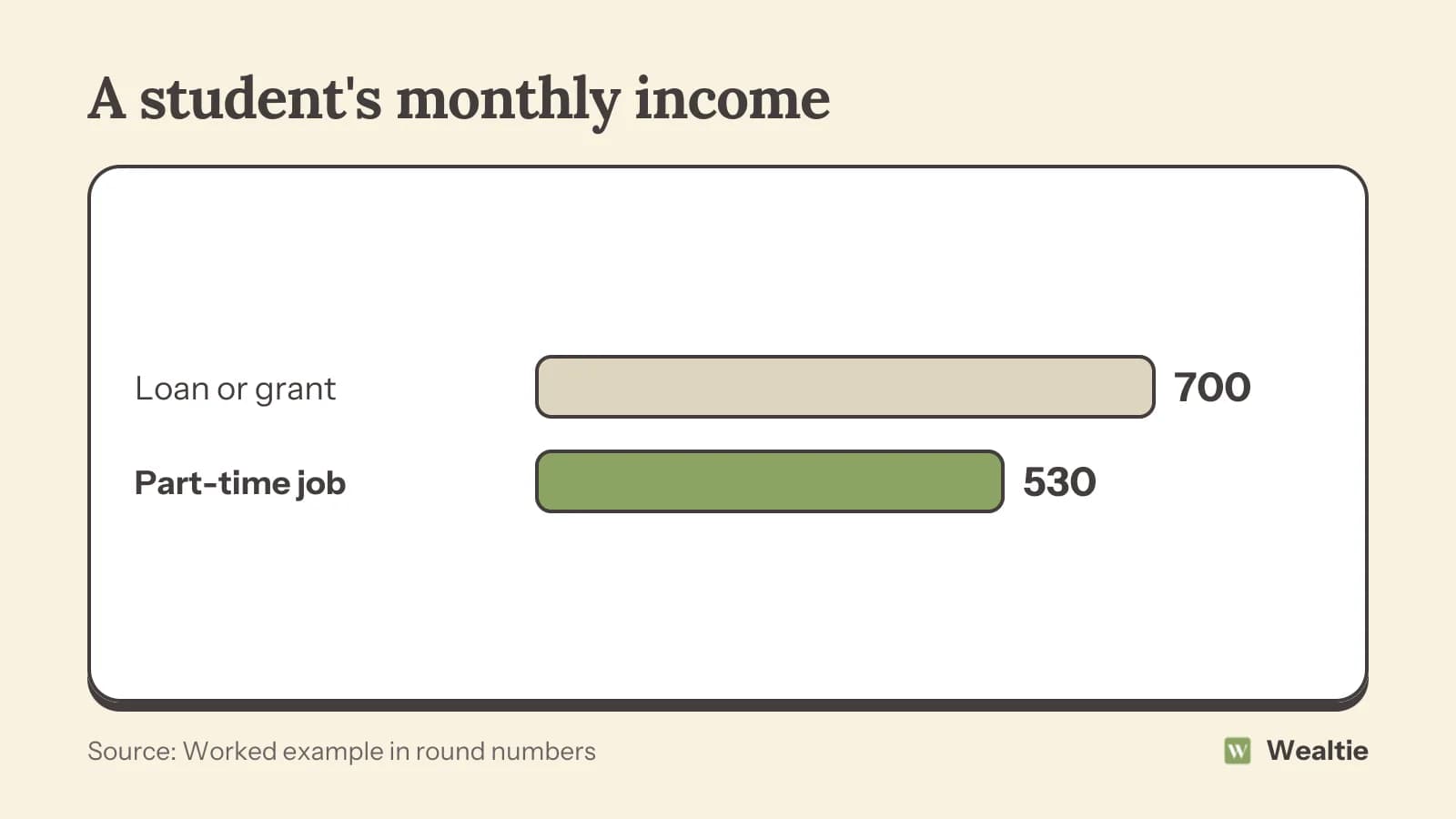
In this example, a student receives 700 a month from a loan or grant and works about 12 hours a week at 11 an hour, adding about 530 a month. Your own figures depend on your pay rate, hours and location. Even a few hours a week can make a noticeable difference to how comfortable student life feels.
How many hours should you work?
Enough to help your budget without hurting your studies or health. Many universities suggest a limit on weekly hours during term. Think about your timetable, how demanding your course is and how much time you need for assignments and rest. Exam periods and deadlines may mean working less. If you're an international student, check any limits on work in your visa.
Choose flexible work
Jobs on campus, in hospitality, retail or tutoring often offer flexible shifts that fit around lectures. Employers used to students may be understanding about exam periods. Telling your manager about exam dates early helps them plan around you.
How do you budget with changing shifts?
Base your budget on a low month, not your best one. Cover rent and essentials from your loan or the lowest earnings you can count on, and treat extra shifts as a bonus for savings or treats. That way, a quiet week doesn't leave you short. How to budget with seasonal income has more ideas for income that changes.
Keep a buffer
Putting a little from each payslip into savings builds a cushion for weeks with fewer shifts or when you need time off for exams. Even 20 a week adds up to a useful buffer by the end of term.
How do you make your earnings count?
Give your earnings a purpose. Some students use their job to cover rent or food, so the loan stretches further. Others use it to avoid an overdraft or save for a summer trip or the costs after graduating. Deciding in advance stops the money disappearing into extra nights out. Many students find it helps to keep job earnings in a separate account.
Think about future jobs too
A part-time job can do more than pay the bills. Work related to your course, or roles that build skills like customer service or organisation, can strengthen your CV for graduate jobs. If you can choose between similar jobs, the one that helps your future may be worth more.
What about tax?
Depending on where you live and how much you earn, you may or may not pay income tax. Check your payslip to make sure the right amount is deducted, and claim back any overpaid tax. How to read your payslip explains the details.
What about tips?
If you work in hospitality, tips can make up part of your income. They're useful but unpredictable, so don't rely on them for essentials. How to budget with tips covers this.
What about holidays?
Many students work more in the holidays and less during term. Saving holiday earnings to cover term-time costs smooths your income across the year. If you go home for the summer, check whether you can transfer to a branch near home or find temporary work there.
Look after your wellbeing
Working too many hours can affect sleep, health and grades. If you notice you're always tired or falling behind, cutting back a shift may be worth more than the money. A slightly tighter budget is easier to fix than a failed module.
How do you track a student job in Wealtie?
Log each payslip in the income tracker, and set a monthly income goal based on your typical earnings. Track spending in your expense categories, so you can see how your job and loan together cover your costs.
Questions people ask
In a worked example, 12 hours a week at 11 an hour adds about 530 a month.
Enough to help your budget without hurting studies or health. Check your university's guidance and any visa limits.
Base your budget on a low month, and treat extra shifts as a bonus for savings.
Sometimes, depending on where you live and how much you earn. Check your payslip and claim back any overpaid tax.
This article is general information, not financial, tax or legal advice. Your situation is your own; check the numbers that apply to you before you act on them.