Budgeting: How to save money on books and still read as much as you like
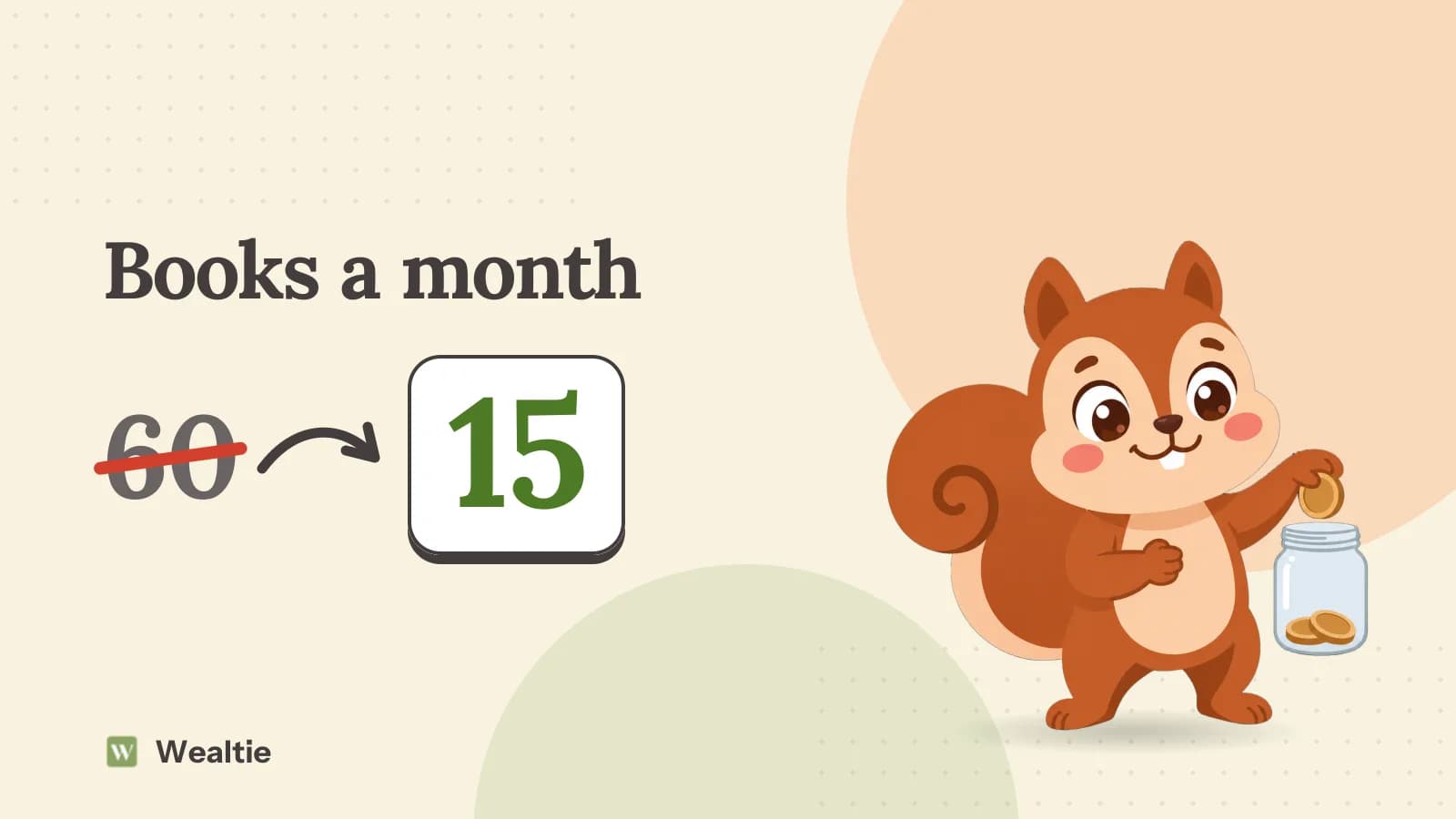
To save money on books, use the library and its apps, buy second-hand, swap with friends and wait for sales on new releases. In a worked example, a reader buying four new books a month spends 60, against about 15 by borrowing and buying used.
 By Wealtie Team · 3 min read
Key takeaways
- Libraries lend books, ebooks and audiobooks for free, often through an app.
- In a worked example, four new books a month cost 60, against about 15 by borrowing and buying second-hand.
- Second-hand shops, swaps and community bookshelves are cheap or free sources.
- Waiting for sales or paperback editions saves on new releases.
How do you save money on books?
Borrow first, buy second-hand next, and buy new only when it matters to you. Books can become a surprisingly big expense for keen readers, especially with new releases and audiobooks. But there are plenty of ways to read just as much for much less, and how to save money on a hobby applies the same thinking to other pastimes. Reading is one of the cheapest hobbies there is once you use the free options.
How much do you spend on books?
Add up a few months of books, ebooks and audiobook subscriptions, plus any magazine subscriptions, which add up quietly. Here's a worked example in round numbers that work in any currency, for someone reading four books a month:
| Source | All new | Mixed |
|---|---|---|
| Book 1 | 15 | Library, free |
| Book 2 | 15 | Library, free |
| Book 3 | 15 | Second-hand, 4 |
| Book 4 | 15 | Ebook on sale, 11 |
| Month | 60 | 15 |
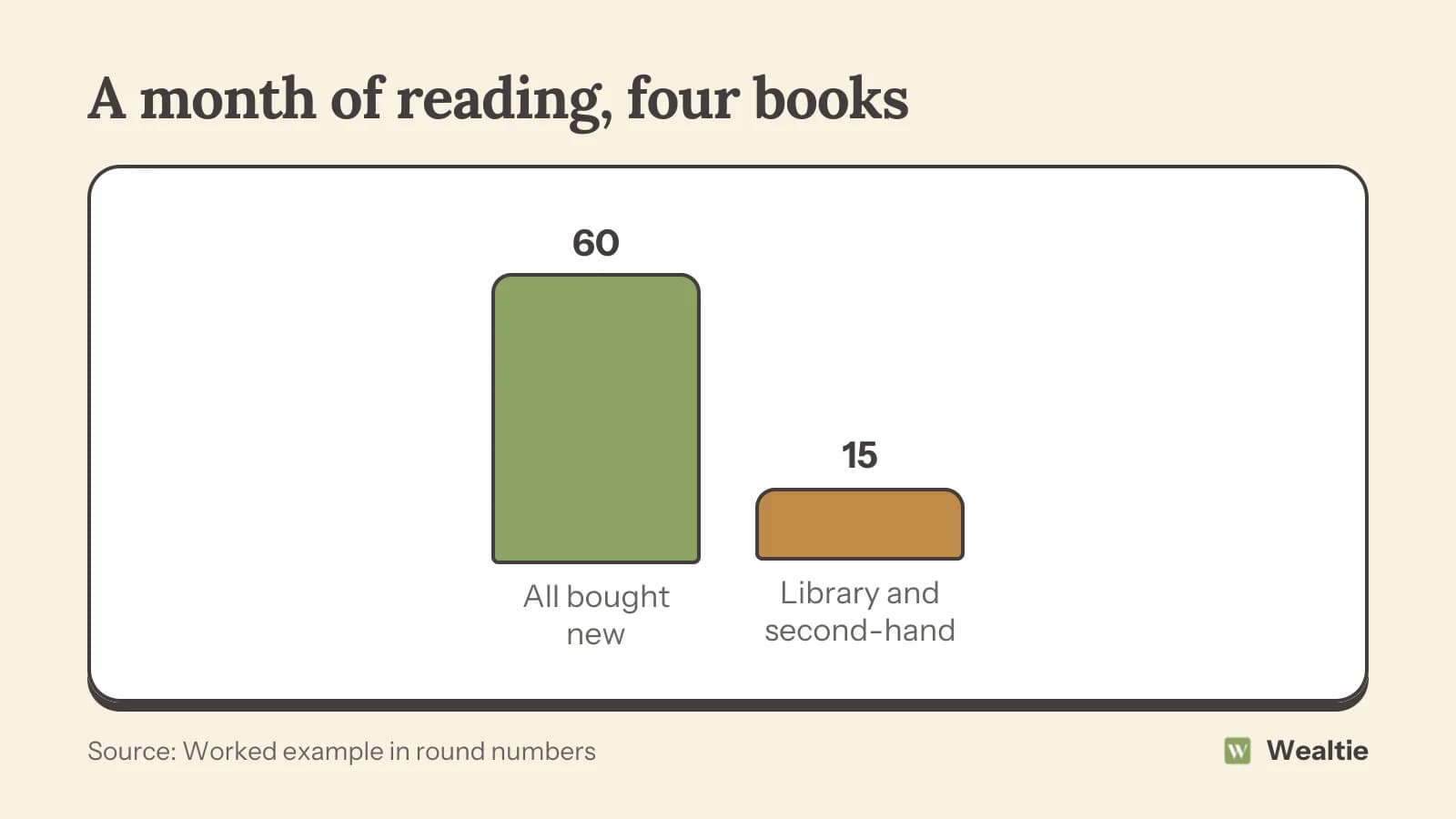
That's 45 a month, or 540 a year, for the same amount of reading.
How can the library help?
More than many people realise. Most libraries lend books, ebooks and audiobooks for free, often through an app you can use on your phone. You can usually reserve new releases, though you might wait a while for popular ones. Libraries often have magazines, newspapers and events too.
Join your local library, download its app and see what's available. If they don't have a book, ask them to buy it, since many take requests. Many people are surprised how much they can read without buying anything.
Where can you buy cheaply?
Second-hand sources are often very cheap:
- Charity shops and second-hand bookshops
- Online marketplaces for used books
- Library sales of withdrawn books
- Car boot sales and markets
- Community bookshelves and little free libraries, where you can take and leave books
Swapping with friends is free and a good way to find recommendations. Collecting second-hand books locally saves the postage online sellers charge, and selling or donating books you won't read again funds the next ones. Some bookshops run loyalty schemes with a free book after a number of purchases. Some groups run book swaps or clubs where members trade.
How do you save on new releases?
Wait for the paperback, which is usually cheaper than the hardback, or for a sale. Ebooks are often discounted, and price alerts on wish-listed titles can tell you when they drop. Pre-ordering only makes sense if you'll definitely read it straight away.
Book gift cards make good presents to ask for. For audiobooks, compare subscription costs with how many you listen to. If you listen to one a month or less, the library's audiobook app might cover you for free.
How do you avoid buying books you won't read?
Keep a wish list and borrow before you buy. If you love a borrowed book and want to own it, buy it then. A shelf of unread books is money spent on reading you didn't do. Before buying a new one, ask whether there's something unread at home. Some readers keep a simple rule: no more than one unread book on the shelf at a time.
What about ebook readers and subscriptions?
An e-reader can save money if you read a lot, since ebooks are often cheaper and libraries lend them free. Ebook subscription services suit heavy readers who read the titles included, so check the catalogue before you pay. For occasional readers, the library app and the odd sale ebook usually cost less. Many classics are free as ebooks, since older books are often out of copyright.
How do you keep a reading habit going cheaply?
Join or start a book club that shares copies or reads library titles, set a monthly amount for books, and keep a list of what you want to read next so you're not browsing and buying on impulse. Reading the books you already own first is the cheapest option of all.
What about textbooks?
They can be expensive. Check whether the library or your college has copies, buy older editions if the course allows, buy second-hand from previous students, or rent for a term. Sell them on when you're done, and check whether an older edition differs enough to matter for your course.
How do you track book spending in Wealtie?
Give books their own line in your expense categories, or include them in a hobbies category, so you can see what reading costs over a year. A share of your monthly limit in the budget tracker keeps it in view.
Questions people ask
Use your local library and its app for books, ebooks and audiobooks, swap with friends and use community bookshelves.
Borrow from the library first, buy second-hand, swap with friends and wait for paperbacks or sales on new releases.
Only if you listen to enough to justify the cost. If you listen to one a month or less, the library's audiobook app may be enough.
Check the library, buy second-hand or older editions if allowed, rent for a term and sell when you're done.
This article is general information, not financial, tax or legal advice. Your situation is your own; check the numbers that apply to you before you act on them.