Budgeting: Moral licensing: why being good leads to splurging
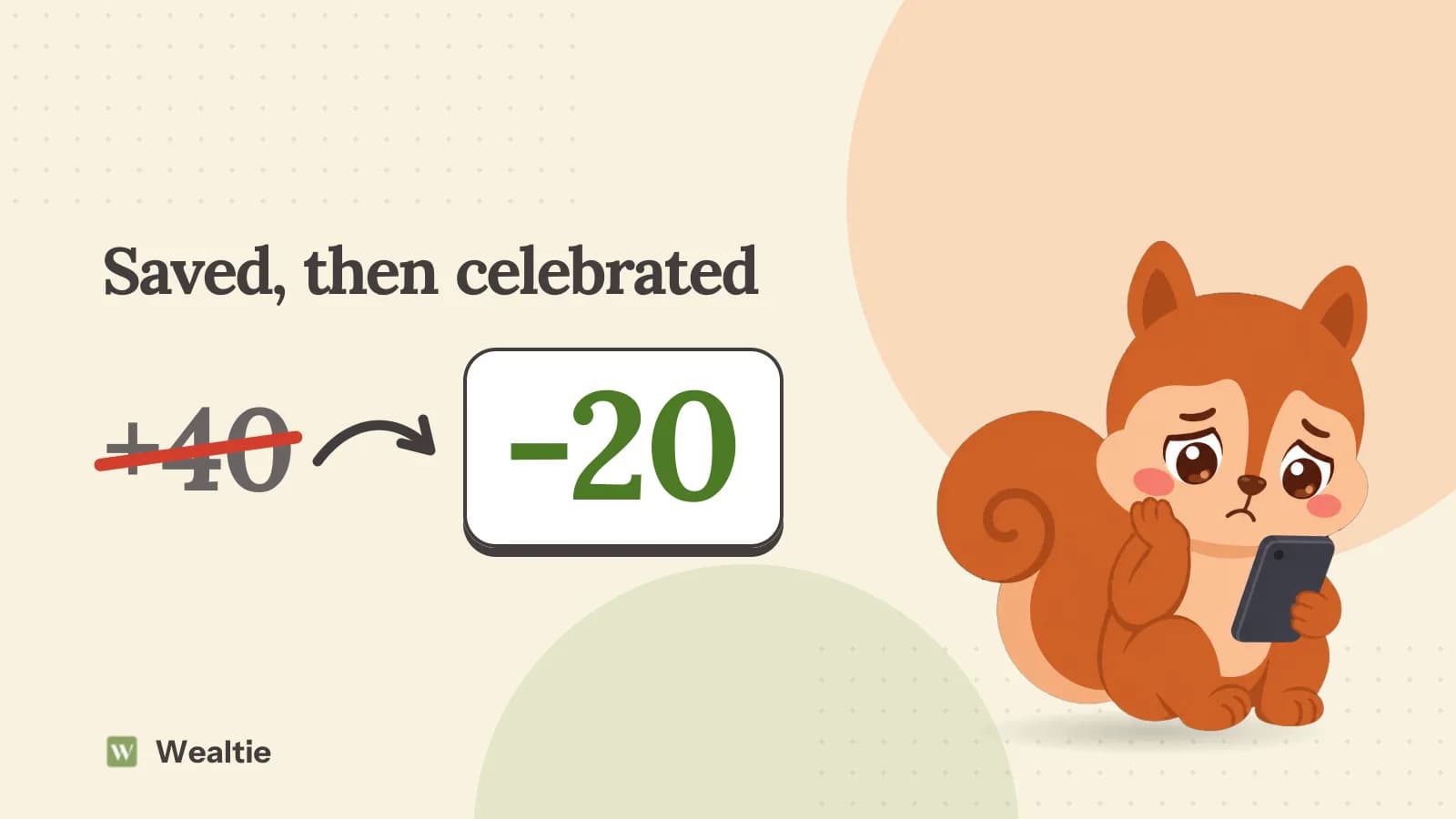
Moral licensing is the feeling that after doing something good, you've earned a treat, which can quietly undo your progress. In a worked example, a week of packed lunches saves 40, then a 60 dinner out to celebrate leaves you 20 worse off.
 By Wealtie Team · 3 min read
Key takeaways
- Moral licensing makes good behaviour feel like permission to splurge.
- Treats can cancel out savings without you noticing.
- Plan rewards in advance and keep them smaller than the saving.
- Tie rewards to goals that don't undo the progress.
What is moral licensing?
Moral licensing is the tendency to feel that doing something good gives you permission to do something less good afterwards. Psychologists Benoît Monin and Dale Miller described it in 2001, and researchers Uzma Khan and Ravi Dhar later showed how it affects shopping: people who felt they'd done something virtuous were more likely to choose an indulgent purchase. Going to the gym makes the cake feel earned. Sticking to a budget all week makes a big weekend feel deserved.
Treats aren't bad. The problem is when the reward costs more than the good behaviour saved, so you end up worse off than if you'd done nothing.
How does moral licensing cost money?
Here's a worked example, in round numbers that work in any currency. You take packed lunches to work all week and save 40. To celebrate, you go out for a dinner that costs 60.
| A week of good habits | Amount |
|---|---|
| Saved on packed lunches | 40 |
| Spent on a celebration dinner | 60 |
| Net result | 20 worse off |
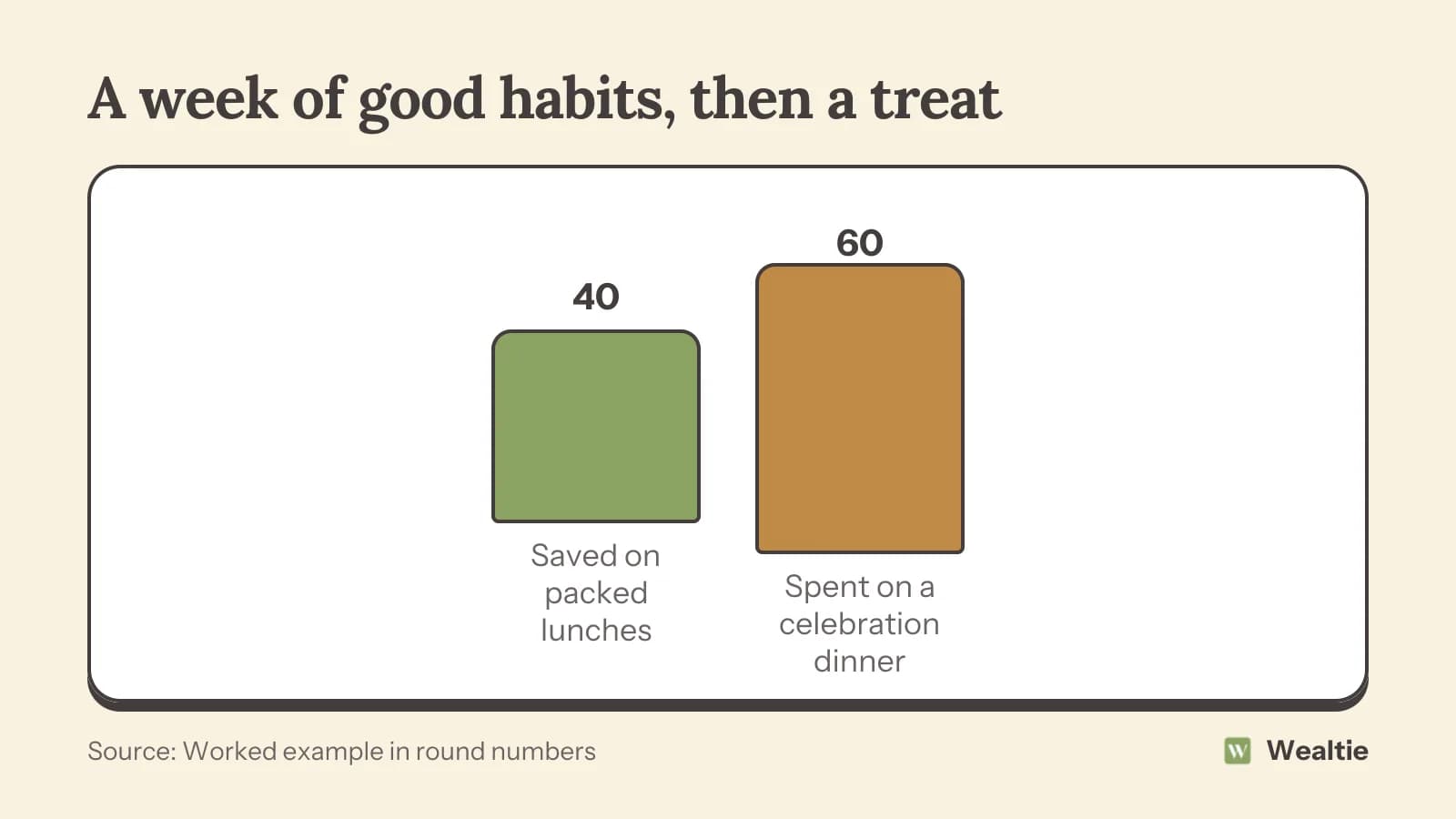
The good habit saved 40, but the reward cost 60, leaving you 20 worse off than if you'd bought lunch every day and stayed in. It's easy to miss, because each decision felt sensible on its own.
Where does moral licensing show up?
After a no-spend challenge
A week or month of not spending can end in a big shopping trip that wipes out the savings. The no-spend challenge covers ending one without a splurge.
After paying off debt
Clearing a card can feel like a reason to celebrate with spending, sometimes on the same card.
After exercise or healthy eating
Healthy choices can lead to buying treats, takeaways or new kit as a reward.
After a pay rise or bonus
Getting more money can feel like permission to spend more on everything.
After a sale purchase
Saving money on one item can make it feel fine to buy another.
How do you stop moral licensing undoing your progress?
Plan rewards in advance
Decide what your reward will be before you start, and make sure it costs less than you'll save. A coffee for a week of packed lunches works. A dinner out might not.
Make rewards free or cheap
A walk, a film at home, a bath or time with friends can feel just as rewarding without the cost.
Celebrate with progress
Move part of the saving into your goal, then use a small amount for a treat. Seeing your savings grow can be rewarding in itself. How to set financial goals covers choosing goals that motivate you.
Notice the thought
When you catch yourself thinking "I deserve this", pause and check whether the treat fits your plan. Naming the pattern makes it easier to resist.
Budget for fun
Having a set amount of fun money each month means treats are planned, not reactive. Discretionary spending covers how much to allow.
Is it ever fine to treat yourself?
Yes. Treats help you stick with good habits long term, and a budget with no room for fun is hard to keep. The aim isn't to stop rewarding yourself, but to make sure rewards support your goals rather than cancel them out. Emotional spending covers other feelings that drive spending.
It's worth watching for the words you use in your head. Phrases like "I've been good all week", "I deserve it" or "I've earned this" often come just before a licensing purchase. Noticing them gives you a moment to decide whether the treat is part of your plan or a reaction to feeling virtuous.
Shared habits can help. If you and a partner are both saving, agree on rewards together and keep them in proportion. It's easier to stick to a small, planned treat when someone else is in on it, and it turns rewards into something you enjoy together rather than a solo splurge.
Think about the size of your goals, too. Very strict budgets can make moral licensing more likely, since the pressure builds until a big release. Building small, regular treats into the budget, like a weekly coffee or a monthly meal out, can stop the urge to splurge after a long stretch of saving.
Finally, track the effect over a few months. If your savings aren't growing as expected despite good habits, look at what happens after your good weeks. You may find a pattern of rewards that's easy to adjust.
How can Wealtie help you see the pattern?
Log spending in expense categories like eating out and treats, and set a monthly budget for them. If a good week is often followed by a spike in treat spending, you'll see it in your categories and can plan smaller rewards.
Questions people ask
Moral licensing is the feeling that doing something good gives you permission to do something less good, like splurging after saving.
Rewards can cost more than the good habit saved. In a worked example, saving 40 on lunches then spending 60 on dinner left someone 20 worse off.
Plan rewards in advance, keep them cheaper than the saving, choose free treats and budget a set amount for fun.
No. Rewards help habits stick, as long as they cost less than you saved and support your goals.
This article is general information, not financial, tax or legal advice. Your situation is your own; check the numbers that apply to you before you act on them.