Budgeting: What is discretionary spending, and how do you control it?
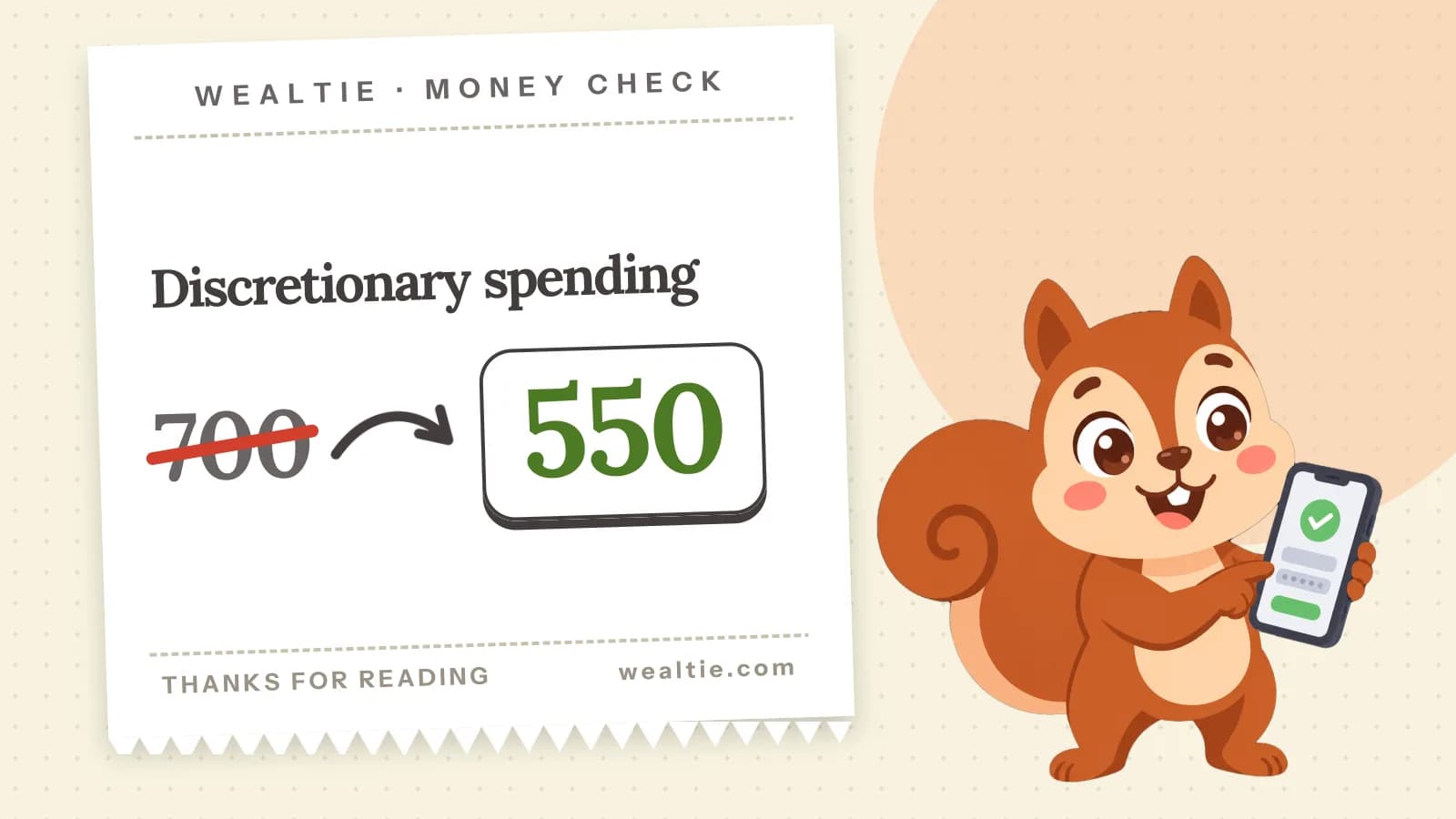
Discretionary spending is money you choose to spend on things you could live without, like eating out, hobbies and treats. It's usually where budgets slip, and in a worked example trimming it from 700 to 550 a month frees up 1,800 a year without giving up anything that matters most.
 By Wealtie Team · 3 min read
Key takeaways
- Discretionary spending is money spent by choice on things you could live without.
- In a worked example, trimming it from 700 to 550 a month frees up 1,800 a year.
- It's where budgets usually slip, because it's flexible and easy to overlook.
- Keep the things you value most and cut what you barely notice.
What is discretionary spending?
Discretionary spending is money you choose to spend on things you want rather than need. Eating out, takeaways, clothes beyond the basics, hobbies, entertainment, holidays, subscriptions and treats all count. It's the opposite of essential spending, like rent, bills and groceries, which you have to pay to live.
There's nothing wrong with discretionary spending. It's often what makes life enjoyable. But because it's flexible, it's also the part of a budget most likely to grow without you noticing. A few small purchases a week can add up to a large monthly total.
What are examples of discretionary spending?
Common examples include:
- Restaurants, takeaways and coffee out
- Clothes, shoes and accessories beyond what you need
- Streaming services and other subscriptions
- Hobbies, sports and entertainment
- Holidays and days out
- Gifts and celebrations beyond the basics
- Upgrades, like a newer phone or nicer furniture
Some costs are a mix. Food is essential, but premium groceries or extras on top are discretionary. A phone is often essential, but the latest model is discretionary. Splitting these mixed costs into an essential part and an extra part makes your budget clearer.
Why does discretionary spending matter for your budget?
Because it's where most of your choices are. Essential costs are mostly fixed in the short term, so when money's tight, discretionary spending is the quickest place to adjust. It's also where small, frequent purchases add up to large totals.
Here's a worked example of a month of discretionary spending after a little trimming, in round numbers that work in any currency:
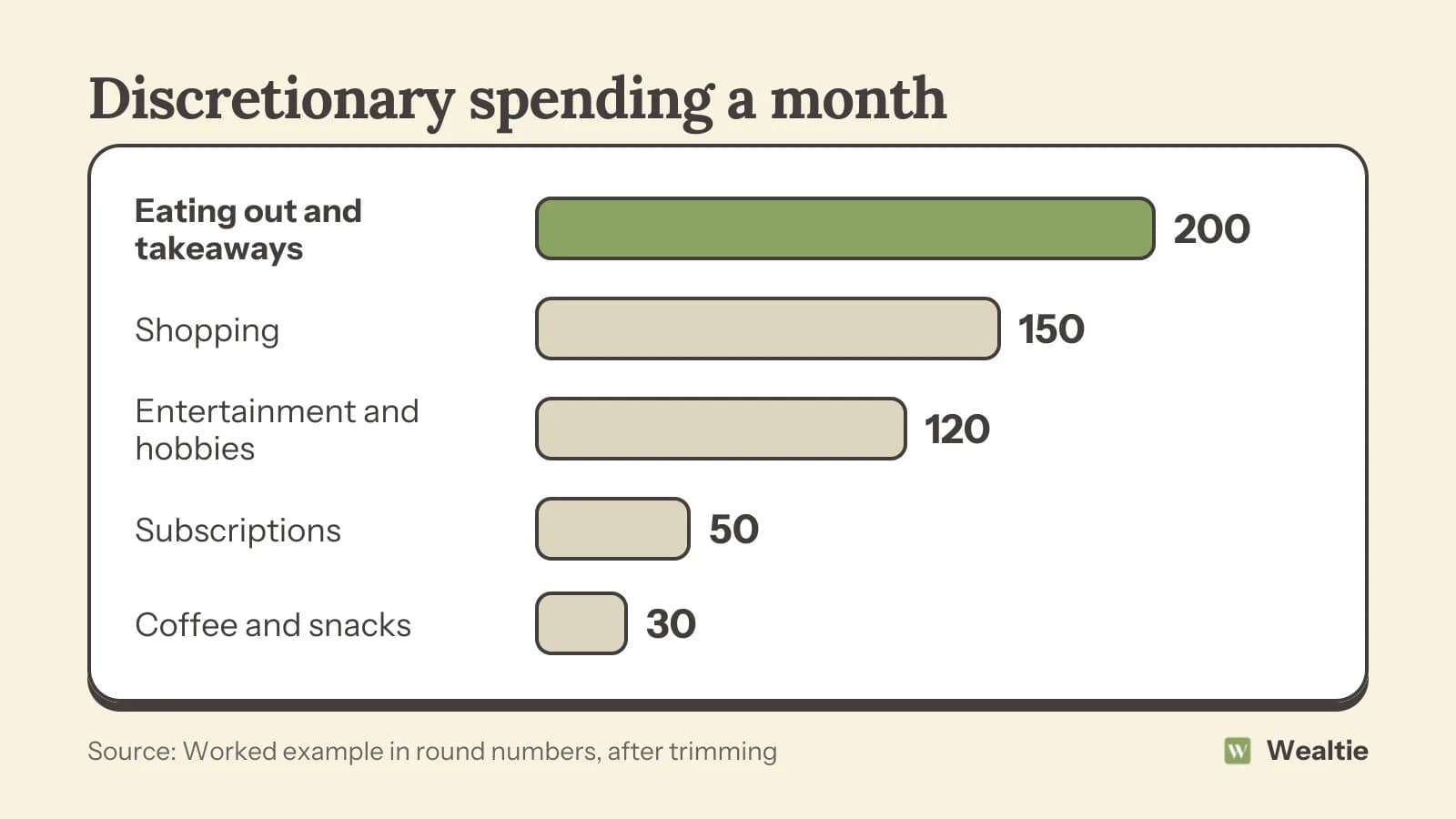
In this example, the household cut discretionary spending from 700 to 550 a month by eating out a little less and dropping a couple of subscriptions. That frees 150 a month, or 1,800 a year, for savings or debt. None of the things they enjoyed most were cut; they kept a weekly meal out and their favourite hobby.
How do you control discretionary spending?
Give it a limit, and choose on purpose:
- Track it. Seeing what you spend in each category is often enough to change habits.
- Set a monthly amount for discretionary spending as a whole, or for each main category.
- Keep what you love. Decide which discretionary spending matters most to you, and protect it.
- Cut what you barely notice. Unused subscriptions and impulse buys are easy wins.
- Pause before buying. Waiting a day before unplanned purchases stops many you'd regret.
How to stop overspending has more ideas, and how to cut subscription costs covers one of the easiest areas to trim.
Use a spending money system
Some people move their discretionary budget into a separate account or set it as a weekly amount. When it's gone, it's gone until next week. It makes the limit concrete and removes the need to track every purchase in detail. Cash or a separate card for discretionary spending works well for people who find app tracking easy to ignore.
Watch the small, frequent purchases
The biggest discretionary costs are often not single big purchases but small ones repeated many times: a coffee, a snack, a delivery fee. Adding up one category for a month, like coffee and snacks, usually shows where the easiest savings are, and changing one habit can free up a surprising amount.
How much discretionary spending is reasonable?
Whatever fits after essentials, savings and debt repayments. Some people aim for a set share of their income, but the right amount depends on your income, costs and goals. How much spending money per month helps you find a realistic figure. Reviewing it every few months, or when your income changes, keeps it in line with your goals.
How do you cut back without feeling deprived?
Swap rather than stop. Most people don't need to give up everything they enjoy; small, planned swaps usually save enough. Cook a favourite takeaway at home, meet friends for a walk instead of a meal, or rotate subscriptions rather than keeping them all. Small swaps keep the enjoyment while lowering the cost. How to save money eating out has ideas for one of the biggest discretionary categories. Planning a treat in advance, like a meal out at the end of the month, also makes it more enjoyable than a spur-of-the-moment purchase.
How do you track discretionary spending in Wealtie?
Set up expense categories for your main discretionary areas, like eating out, shopping and entertainment, so you can see what each costs. Pro lets you nest categories, so you can group all discretionary spending under one heading. A monthly limit in the budget tracker, with Budget Health, shows whether you're on pace.
Questions people ask
Money you choose to spend on things you want rather than need, like eating out, hobbies and subscriptions.
Restaurants, takeaways, clothes beyond basics, subscriptions, hobbies, holidays and upgrades.
Track it, set a monthly limit, keep what you love, cut what you barely notice and pause before buying.
Whatever fits after essentials, savings and debt repayments. The right amount depends on your income and goals.
This article is general information, not financial, tax or legal advice. Your situation is your own; check the numbers that apply to you before you act on them.