Budgeting: Mobility scooter cost: buying, running and insuring one
Mobility scooter cost ranges from modest for small portable models to much more for road-legal scooters, and batteries are the biggest running cost. In a worked example, a mid-sized scooter costs 1,500 plus about 250 a year to run.
 By Wealtie Team · 3 min read

Key takeaways
- Mobility scooter cost depends on size, range and whether it's road-legal.
- Batteries are the main running cost and need replacing every few years.
- Second-hand scooters can save a lot but need checking carefully.
- Insurance is worth considering for theft, damage and liability.
How much does a mobility scooter cost?
A mobility scooter can give someone with limited mobility the freedom to go shopping, visit friends and get out and about independently. Mobility scooter cost varies a lot by type. Small, portable scooters that fold or come apart to fit in a car boot are the cheapest. Mid-sized scooters are sturdier and have a longer range. Larger, road-legal scooters can travel on roads in some places, go further and handle rougher ground, and cost the most.
In round numbers that work in any currency, a small portable scooter might cost around 700, a mid-sized scooter 1,500 and a large road-legal scooter 3,000. Second-hand scooters can cost much less, like 600 for a mid-sized model. Prices vary by brand, features and where you buy.
What does a scooter cost to run?
Here's a worked example of yearly running costs for a mid-sized scooter:
| Running cost | Per year |
|---|---|
| Battery replacement, spread over 2 years | 100 |
| Servicing | 80 |
| Insurance | 50 |
| Electricity | 20 |
| Total | 250 |
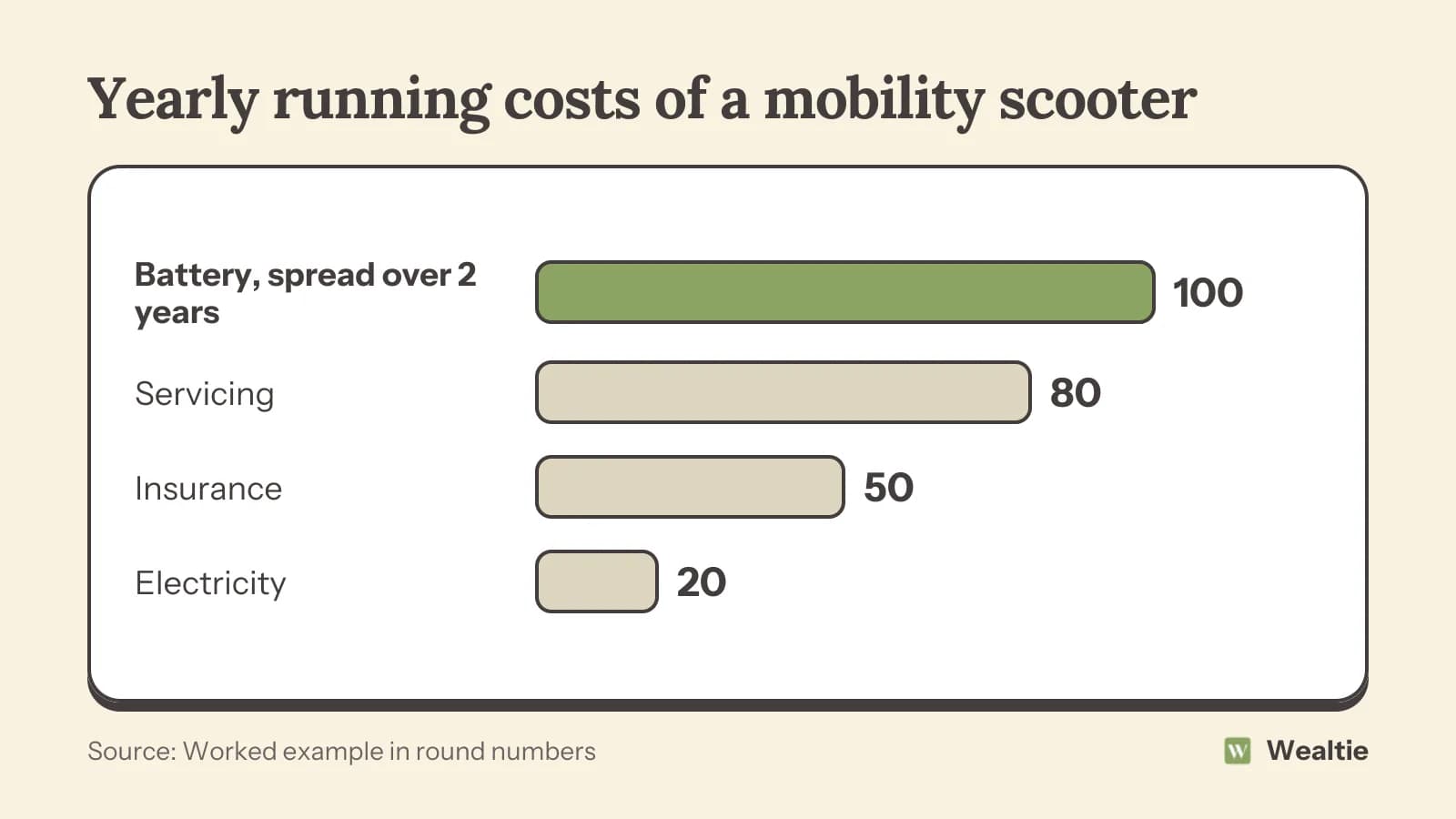
Batteries are the biggest running cost. They usually need replacing every couple of years, depending on use and care. Servicing keeps brakes, tyres and electrics safe. Charging uses very little electricity.
Which type of scooter is right?
Portable scooters
Light and foldable, these are good for trips by car, shopping and smooth pavements. They have a shorter range and are less comfortable on rough ground.
Mid-sized scooters
A good balance of comfort, range and stability for everyday use on pavements.
Road-legal scooters
Larger scooters with lights and higher speeds that can be used on roads where allowed. They need storage space and may need registering, depending on local rules.
An assessment from a mobility specialist, or a test drive at a showroom, helps you choose the right type for how and where it will be used.
Should you buy new or second-hand?
New
New scooters come with warranties and the latest features. Some sellers include servicing for the first year.
Second-hand
Used scooters can save a lot, since many are sold after little use. Check the battery age, tyres, brakes and frame, and ask for service records. Buying from a dealer that sells reconditioned scooters with a warranty gives more peace of mind.
Renting
Some shopping centres and charities lend scooters for the day, and some suppliers rent them by the week or month, which suits short-term needs or holidays.
Is insurance worth it?
Mobility scooter insurance usually covers theft, accidental damage, breakdown and liability if you injure someone or damage property. It's often inexpensive, and in some places it's recommended or required for road use. Which insurance do you need? covers deciding which policies are worth paying for.
Is there help with the cost?
Depending on where you live, there may be schemes that help people with disabilities lease or buy mobility equipment, charities that offer grants, or tax relief on equipment for disabled people. Check local options before paying in full. Some sellers offer monthly payment plans. If you use one, check the total cost and terms. Buy now, pay later covers the risks of spreading costs.
To keep running costs down, charge batteries as the manufacturer recommends, store the scooter somewhere dry, keep tyres at the right pressure and book regular servicing. Looking after the battery is the biggest way to make it last longer and avoid early replacement.
How does it fit into later-life budgeting?
A scooter can replace taxi trips and help someone stay independent, which can save money as well as improve quality of life. Living without a car covers other ways to get around without driving, and how to budget for caring for parents covers wider care costs.
Think about where the scooter will be stored and charged. It needs a dry, secure space with a power socket, like a garage, shed or hallway. Storing it outside under a cover can shorten battery life and invite theft. If space is tight, a portable scooter that comes apart may be easier, even if its range is shorter.
Try before you buy. Many showrooms offer test drives, and some will bring a scooter to the home so you can check it fits through doors and around corners. Making sure the person feels confident and comfortable using it matters more than any feature on the specification sheet.
Finally, plan for the future. Needs can change, so ask whether the scooter can be sold back or part-exchanged later, and keep service records to help with resale.
How can Wealtie help you track the cost?
Log the scooter, batteries, servicing and insurance in a mobility expense category, and add insurance as a recurring transaction. Seeing the yearly total helps you plan for battery replacements before they're needed.
Questions people ask
In round numbers, a portable scooter might cost about 700, a mid-sized one 1,500 and a large road-legal scooter 3,000.
In a worked example, batteries, servicing, insurance and electricity came to about 250 a year.
It can save a lot. Check the battery age, tyres, brakes and service history, or buy reconditioned from a dealer with a warranty.
It's often recommended and sometimes required for road use. It covers theft, damage and liability for a modest cost.
This article is general information, not financial, tax or legal advice. Your situation is your own; check the numbers that apply to you before you act on them.