Saving: Could you live without a car? How to work out the savings
Living without a car can save a lot once you add up what the car costs each month, including insurance, servicing and the money tied up in it. In a worked example, a car costs 350 a month, while public transport, a bike and occasional rentals cost about 150, saving about 2,400 a year.
 By Wealtie Team · 3 min read

Key takeaways
- Living without a car can save a lot once you count every car cost.
- In a worked example, a car costs 350 a month against about 150 without one, saving about 2,400 a year.
- Depreciation, the value a car loses each year, is a real cost even though you don't pay it monthly.
- Try a month without driving before deciding.
Is living without a car possible for you?
For many people, yes, and the savings can be large. A car is convenient, but it costs money every month whether you drive it or not: insurance, tax, servicing, parking and the value it loses each year. If you live somewhere with decent public transport, or you mostly make short trips, living without a car can free up a lot of money.
It depends on your life, and many people find the answer is somewhere in between. Families, rural areas and some jobs make a car hard to give up. The only way to know is to add up the costs. Many people underestimate what their car costs, since much of it is paid in large, occasional amounts like insurance and repairs.
What does your car cost each month?
Count everything. Here's a worked example, in round numbers that work in any currency:
| Cost | Monthly amount |
|---|---|
| Fuel, insurance, tax, servicing and parking | 250 |
| Depreciation | 100 |
| Total with a car | 350 |
| Transport pass | 80 |
| Car rentals and occasional taxis | 50 |
| Bike upkeep | 20 |
| Total without a car | 150 |
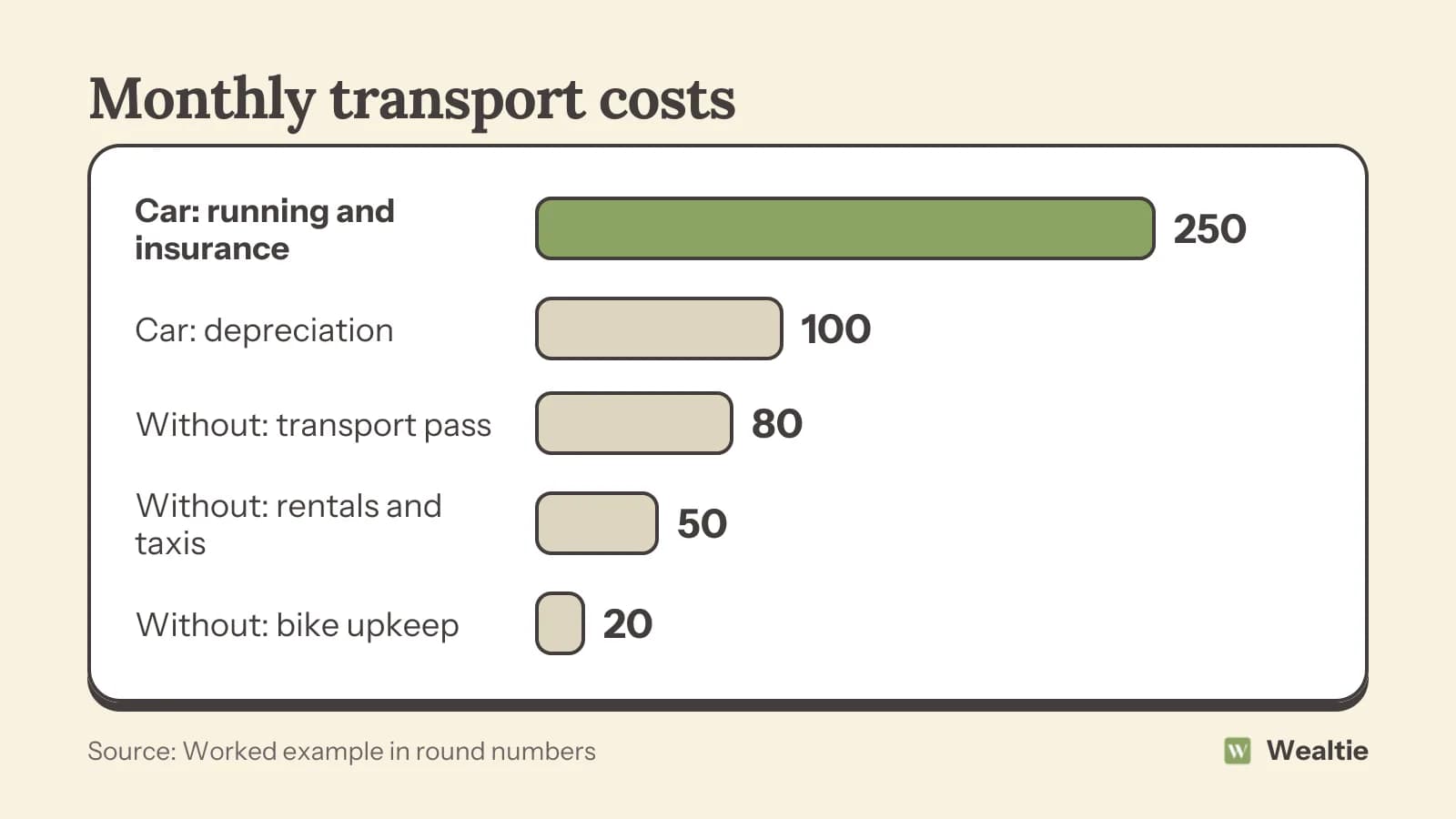
In this example, living without a car saves about 200 a month, or 2,400 a year. Your own figures depend on your car, where you live and how you'd get around instead.
Depreciation counts
Depreciation is the value a car loses over time. You don't pay it monthly, but you feel it when you sell. A car that loses 1,200 of value a year costs you 100 a month, even if it's paid off. Newer cars usually lose value fastest, so the saving from giving one up can be bigger than you'd expect.
How would you get around?
Most car-free households mix several options:
- Public transport for commuting and regular trips
- Walking and cycling for short journeys
- Car rental or car clubs for occasional longer trips or big shopping
- Taxis or ride-hailing for late nights or awkward journeys
- Lifts with friends or family, now and then
How to save money on taxis helps keep the occasional costs down. Car clubs, where you book a nearby car by the hour, are often cheaper than traditional rental for short trips.
What would you do with the money?
Selling a car can release a lump sum, and giving it up frees monthly money. In a worked example, selling a car for 6,000 and saving 200 a month could build an emergency fund, pay off debt or fund a goal. Decide in advance, so the savings don't quietly disappear into other spending. Setting up a monthly transfer for the amount you used to spend on the car makes the saving visible.
What are the trade-offs?
Living without a car has downsides. Journeys can take longer, weekly shopping needs planning, and some trips become harder or more expensive. Visiting family far away, or trips with young children, often need the most planning. Bad weather and late nights can be tricky. For some people, these trade-offs are worth the savings; for others, they're not. Being honest about how you'd cope matters more than the money alone.
Plan your shopping
Without a car, shopping changes. Online grocery delivery, smaller and more frequent trips on foot, or a shopping trolley or bike panniers make it manageable. Delivery fees can be lower than the cost of fuel and parking, especially if you shop less often.
Try it first
Leave the car at home for a month and use the alternatives. Keep a note of what you spend and what was hard. You'll see whether it works for your life before you sell. If you need the car for one regular trip, look for an alternative for that trip specifically, like a lift share or a different route.
What if you can't give it up completely?
Many households cut back rather than go car-free. Swapping two cars for one, or a bigger car for a smaller one, can save a lot. Driving less, by walking short trips or commuting by bike or train, lowers fuel and wear. How much car can you afford helps you right-size your car, and how to cut commuting costs covers getting to work for less. Living closer to work, shops or a station when you next move can make going car-free much easier.
How do you track transport costs in Wealtie?
Log every car and transport cost in your expense categories, so you can see the true monthly cost. If you try a car-free month, compare your transport spending with a normal month to see the real difference before deciding. A monthly limit in the budget tracker keeps the new transport mix on plan.
Questions people ask
In a worked example, about 200 a month, or 2,400 a year, after paying for public transport, rentals and a bike.
Fuel, insurance, tax, servicing, parking and depreciation. In a worked example, about 350 a month.
Mix public transport, walking, cycling, car rentals or car clubs, and occasional taxis.
Yes. Leave the car at home for a month and track what you spend and what's hard.
This article is general information, not financial, tax or legal advice. Your situation is your own; check the numbers that apply to you before you act on them.