Income & freelancing: How to get your employer to pay for training
Getting your employer to pay for training can save you thousands, as long as you show how it helps the business and check the repayment terms. In a worked example, an employee saves 2,400 on a course their employer funds.
 By Wealtie Team · 3 min read
Key takeaways
- Ask your employer to pay for training by showing how it helps the business.
- Many employers have a training budget that goes unused.
- Check repayment clauses before you sign.
- Study time and exam fees are worth asking for too.
Can you get your employer to pay for training?
Many employers are willing to pay for training, courses and qualifications, especially when they help you do your job better or prepare for a bigger role. Some have a set training budget for each employee, which often goes unused because nobody asks. Others decide case by case. Either way, asking your employer to pay for training can save you a lot of money and help your career at the same time.
Here's a simple worked example, in round numbers that work in any currency:
| A 2,400 course | You pay |
|---|---|
| You pay | 2,400 |
| Employer pays | 0 |
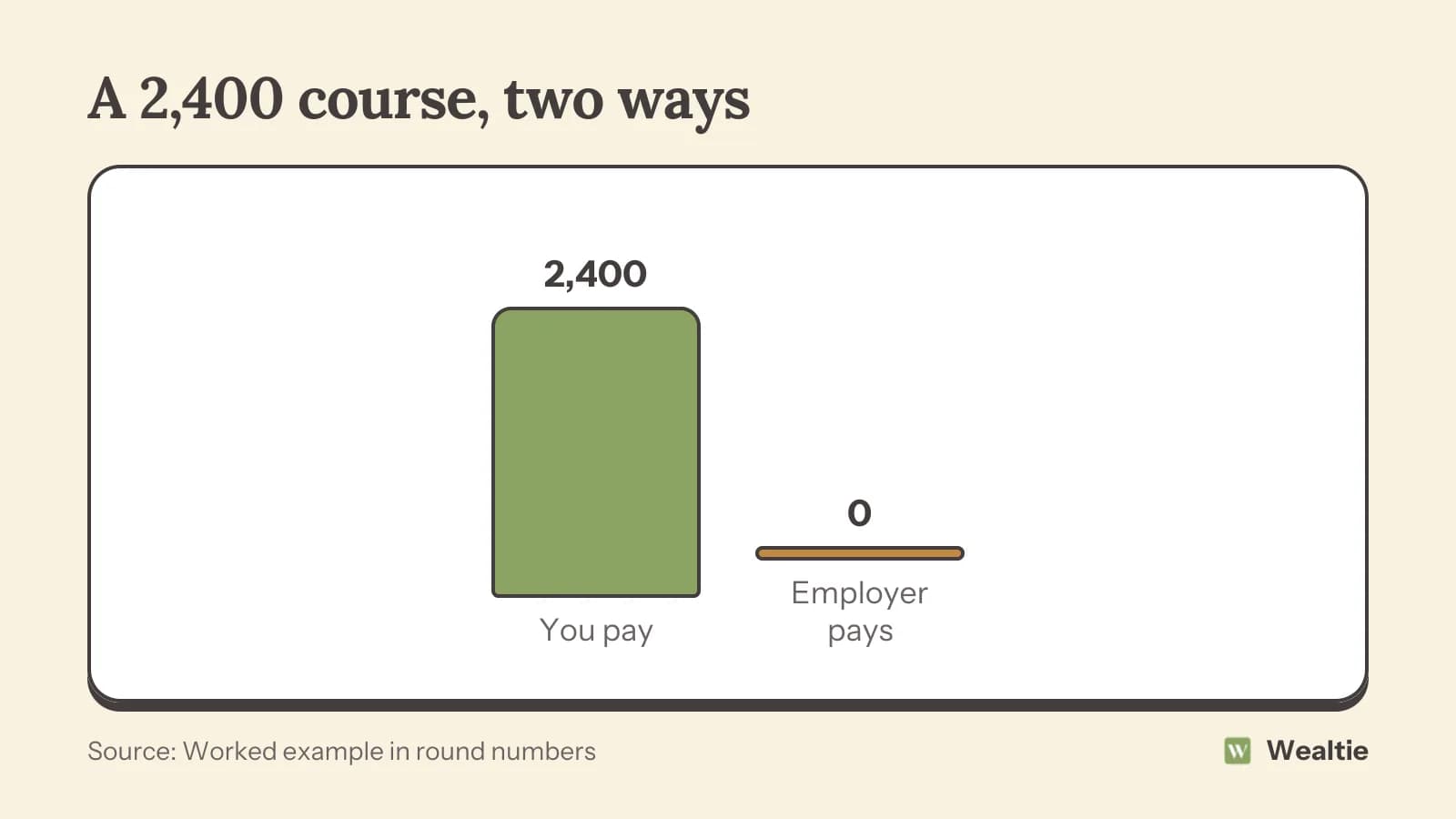
That's 2,400 you keep, plus any study time your employer allows during working hours. Even if your employer only pays part of the cost, it still makes the training more affordable.
What training might your employer pay for?
Job-related courses
Courses that build skills you use in your current role are the easiest to get funded.
Professional qualifications
Certifications and qualifications recognised in your industry often benefit both you and the business.
Degrees and longer programmes
Some employers fund part-time degrees or management programmes, usually with conditions.
Conferences and workshops
Short events can be easier to approve, since they cost less and bring new ideas back to the team.
Online learning
Many companies pay for online learning platforms or individual courses.
How do you build the case?
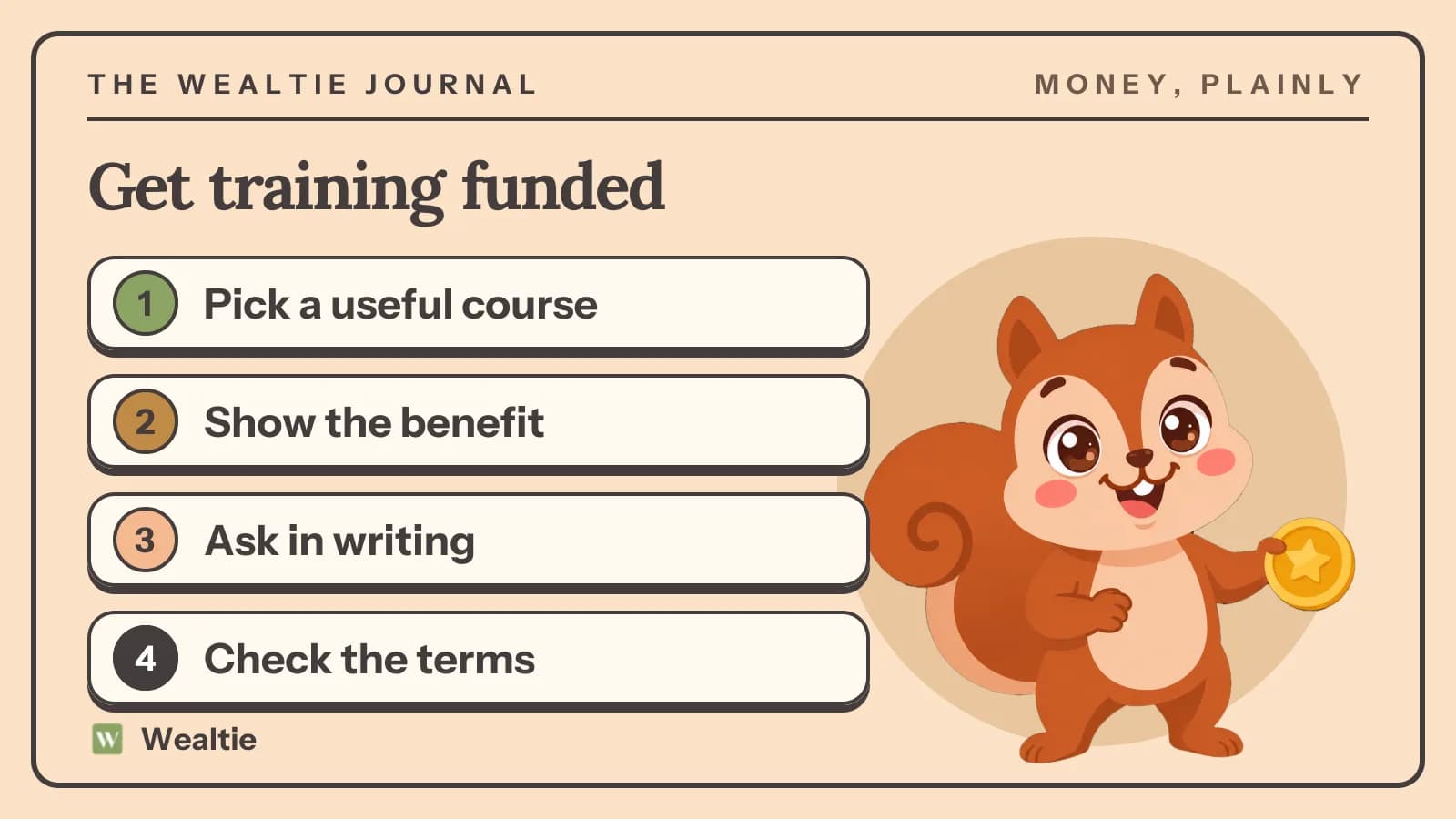
Choose training that fits the business
Pick a course that relates to your role or a role you could grow into. Think about the problems it would help you solve.
Show the benefit
Explain how the training will help the business, like saving time, improving quality, bringing skills in-house instead of hiring outside help, or preparing you to take on more responsibility.
Know the cost
Have the full price ready, including exam fees, materials and travel, and any time off you'd need. Showing you've researched cheaper options helps.
Offer to share what you learn
Offering to train colleagues or present what you've learned spreads the value and makes the request more appealing.
Ask at the right time
Performance reviews, development conversations and the start of a new budget year are good moments to ask.
Put it in writing
Follow up a conversation with a short written request covering the course, the cost, the benefit and the time needed.
What should you check before agreeing?
Repayment clauses
Some employers ask you to repay the cost if you leave within a set time. For example, you might repay in full if you leave within a year, and half within two years. Make sure you understand the terms before you sign.
Study time
Ask whether you can study or attend classes during working hours, and whether exam days are paid.
Exam resits
Check who pays if you need to resit an exam.
Tax
In some countries, employer-funded training related to your job is tax-free, while other benefits may be taxed. Check the rules where you live.
What if your employer says no?
Ask what would make it possible, like a cheaper course, a later start date or a shared cost. You could also suggest a trial: a shorter course first, with a longer one if it goes well. If training matters to you and your employer won't support it, that's useful to know when you compare job offers in future. Training budgets are part of the value of workplace benefits that's easy to overlook.
How does training help your pay?
New skills and qualifications give you a stronger case for a pay rise or promotion. How to negotiate a pay rise covers using new skills to ask for more.
Keep a record of the training you complete, along with certificates and what you learned. It's useful at your next review, when applying for a new job or when asking for more training in future. Showing that past training led to results, like a project delivered faster or a new service the team can offer, makes the next request much easier to approve.
If you're self-employed, there's no employer to ask, but the same thinking applies. Choose training that helps you earn more or work more efficiently, keep the receipts and check whether it can be claimed as a business expense where you live. Treating your own development as an investment, with a yearly budget, keeps your skills current without the cost catching you out.
How can Wealtie help you track training costs?
If you pay for any part of training yourself, log it in its own expense category so you can see what your development costs each year, and set a yearly budget for it. Logging any pay rise that follows as income shows how the training paid off.
Questions people ask
Many employers pay for training that helps you do your job better or prepares you for a bigger role. Some have a set budget for each employee.
Choose a course that fits the business, explain the benefit, know the full cost, offer to share what you learn and put the request in writing.
It's an agreement to repay some or all of the training cost if you leave within a set time after the course.
In some countries, job-related training paid by your employer is tax-free. Check the rules where you live.
This article is general information, not financial, tax or legal advice. Your situation is your own; check the numbers that apply to you before you act on them.