Money as a couple: How to budget for maternity leave before the baby arrives
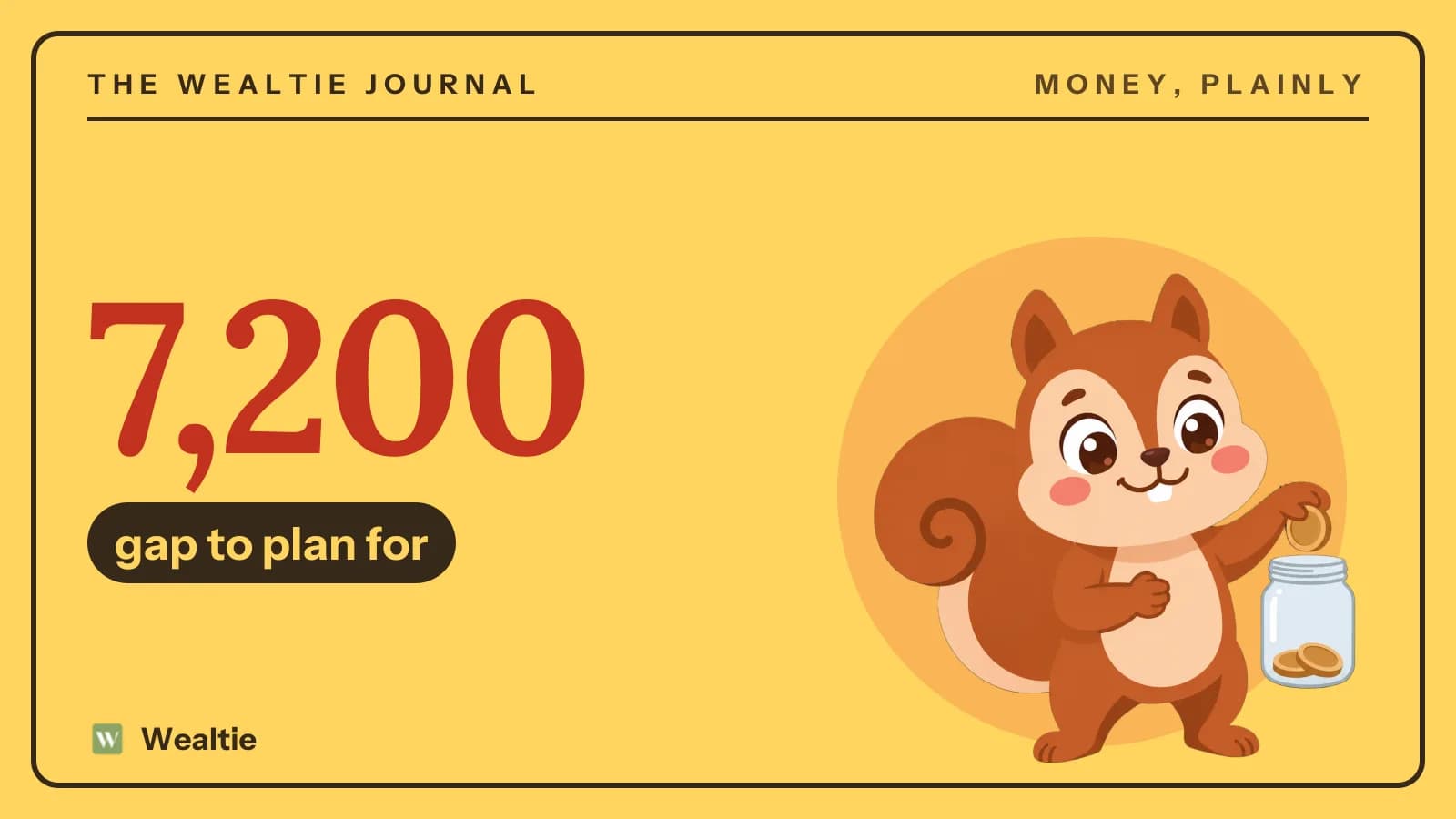
A maternity leave budget starts with your pay month by month during the leave, then the gap against your normal take-home, then a plan to cover it. In a worked example, a 9-month leave leaves a gap of 7,200, which is about 600 a month saved for a year beforehand.
 By Wealtie Team · 3 min read
Key takeaways
- Find out exactly what you'll be paid during leave, month by month, from your employer and your country's rules.
- In a worked example, a nine-month leave leaves a gap of 7,200 against normal take-home.
- Saving about 600 a month for a year before the leave covers that gap.
- Some costs fall during leave, like commuting, and baby costs rise, so plan both sides.
How do you plan a maternity leave budget?
Find out what you'll be paid in each month of the leave, compare it with what you take home now, and plan for the difference. Leave pay often changes partway through, so a month-by-month view is much more useful than one average figure.
The same approach works for any parental leave, adoption leave or shared leave.
What will you be paid during leave?
It depends on your country's rules and your employer's policy, which can be more generous than the legal minimum. Ask your employer for their policy in writing, and check what the government pays and for how long. Find out:
- How much you'll get in each period of the leave
- Whether pay is taxed, and whether pension contributions continue
- Whether you need to repay anything if you don't return
- What your partner is entitled to
Keep copies of letters about leave pay, in case anything goes wrong. Many people find leave pay drops in stages. Here's a worked example of a nine-month leave, in round numbers that work in any currency:
| Period | Take-home | Gap against 2,400 normal |
|---|---|---|
| Months 1 to 3 | 2,000 | 400 a month |
| Months 4 to 6 | 1,400 | 1,000 a month |
| Months 7 to 9 | 800 | 1,600 a month |
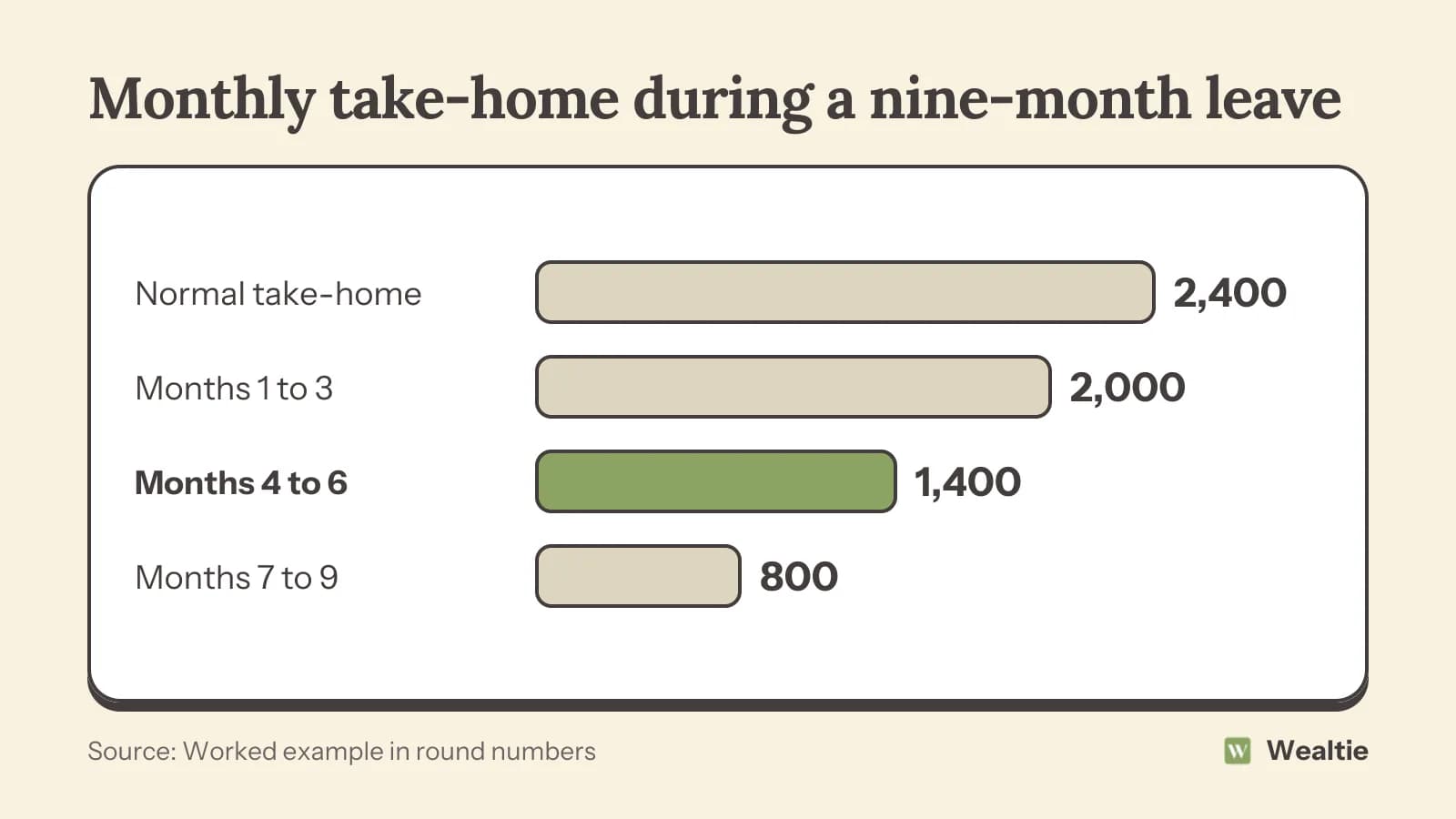
The total gap is 9,000. Some costs fall during leave, like commuting. If commuting was 200 a month, that's 1,800 saved over nine months, leaving a net gap of 7,200.
How much should you save beforehand?
Divide the gap by the months you've got before leave starts. A 7,200 gap with a year to go is 600 a month. With six months, it's 1,200 a month, which is much harder, so starting early helps.
Keep the leave fund separate from your emergency fund. The emergency fund's still needed for the unexpected, which a new baby tends to bring. How to build an emergency fund helps if you haven't got one yet.
Which costs change when the baby arrives?
Some go up and some go down. Up: nappies, formula if you use it, clothes, childcare later, and possibly heating and electricity with someone at home all day. Down: commuting, work lunches, work clothes, and often eating out.
How to budget for a baby lists the new costs in detail. Add the new ones to your leave budget and take off the ones that stop.
What can you do before the leave starts?
A few things help a lot:
- Live on the leave income for a few months while you're still working, and save the rest
- Pay down any high-interest debt, so you're not paying interest on a lower income
- Cut fixed costs where you can, like subscriptions and phone plans
- Buy the big baby items second-hand where it's safe, and accept hand-me-downs
- Check what benefits or tax credits you'll be entitled to once the baby arrives
- Look into childcare costs and waiting lists early, since places can need booking months ahead
Buy big items like a car seat or pram early enough to use offers and second-hand finds, instead of paying full price in the last week.
If you've got a partner, decide together how household costs will be shared during the leave, so the person on leave isn't left short.
How do you keep it fair between partners?
Treat the leave as a household decision with shared costs. The person on leave shouldn't use up their own savings to cover shared bills while the other carries on as before. Agree how much each puts into the joint account during the leave, and keep some personal money for both.
Combining finances after marriage and the stay-at-home parent budget go through ways to share fairly.
What about pensions?
Check what happens to pension contributions during leave, since they can fall if pay falls, and ask whether your employer keeps paying its share. If you can, keep contributions going, or plan to make them up later. A gap of a year can add up over a career, and it's easier to fix while it's small.
How do you plan maternity leave in Wealtie?
Add a savings account for the leave fund and move money in each month as a transfer, which isn't counted as spending. During leave, update your monthly income goal to the leave pay, and set the budget tracker limit to match. If you share finances, a shared account lets you both see household costs, with the owner on Pro and the other person on any plan. The shared accounts page has more.
Questions people ask
Work out the gap between your normal take-home and your leave pay, month by month, then subtract costs that will stop. A worked example comes to 7,200.
Base the budget on your actual leave pay for each period, add new baby costs, remove costs that stop, and use savings to cover the gap.
As early as possible. A 7,200 gap is 600 a month over a year, or 1,200 a month over six months.
It's fair to agree how shared costs will be covered during the leave, so the person on leave isn't using their own savings for household bills.
This article is general information, not financial, tax or legal advice. Your situation is your own; check the numbers that apply to you before you act on them.