Money as a couple: How to date on a budget without seeming cheap
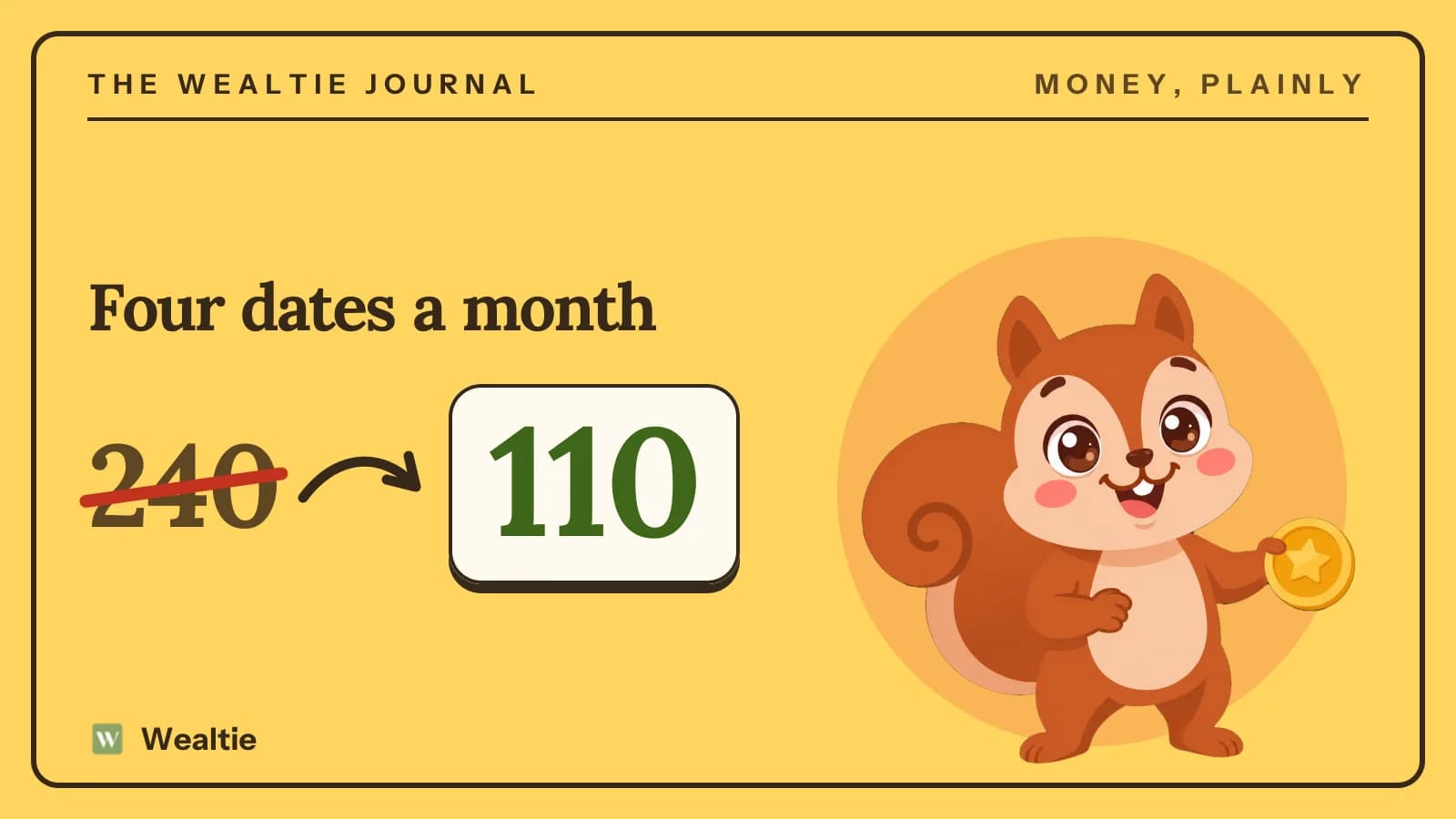
Dating on a budget works best with a monthly amount for dates, a few ideas that cost little, and an easy way to talk about splitting the bill. In a worked example, four dates a month drop from 240 to 110 with cheaper plans.
 By Wealtie Team · 3 min read
Key takeaways
- Set a monthly amount for dates, so dating doesn't eat into money for bills or savings.
- In a worked example, four dates a month drop from 240 to 110 by mixing low-cost dates with one dinner.
- Plenty of good dates cost little: walks, markets, free events, cooking together.
- Talk about splitting early and lightly; offering to split is normal and rarely seen as cheap.
How do you date on a budget?
Decide how much you can spend on dates each month, and choose plans that fit. Dating can get expensive quickly when every date is dinner and drinks. A clear amount also takes the guesswork out of saying yes to a plan. But most people care far more about the company and the conversation than the bill, and a thoughtful low-cost date often goes better than an expensive one.
How much does dating cost?
Here's four dates a month, in round numbers that work in any currency:
| Date | Before | After |
|---|---|---|
| Date 1 | Dinner and drinks, 60 | Dinner, 60 |
| Date 2 | Dinner and drinks, 60 | Coffee and a walk, 10 |
| Date 3 | Dinner and drinks, 60 | Market and street food, 20 |
| Date 4 | Dinner and drinks, 60 | Cooking at home, 20 |
| Month | 240 | 110 |
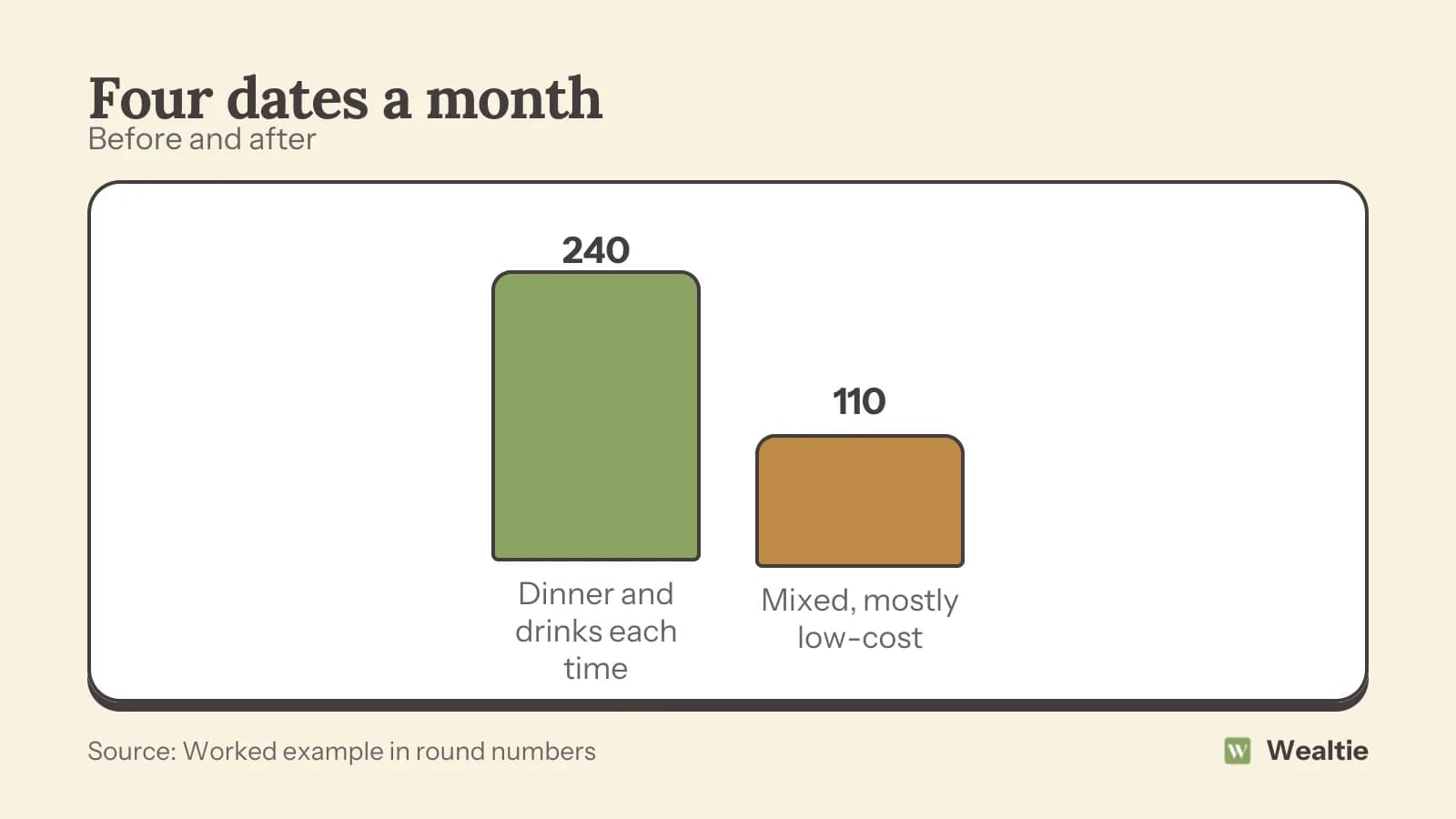
That's 130 a month saved, and the dates arguably got more varied. Most people remember the conversation, not the menu.
What are good cheap dates?
Plenty, depending on where you live and the season:
- A walk somewhere scenic, with a coffee
- A picnic in a park
- A free museum, gallery or local event
- A market with street food
- Cooking a meal together
- A quiz night or open-mic at a local bar, where you can make one drink last
- A bike ride or a hike
Look for free nights at museums, outdoor cinema in summer, or local festivals. Weekday dates often cost less than weekend ones, and places are quieter. Early dates in particular don't need to be expensive. A coffee or a walk is a relaxed first meeting, with less pressure on both of you, and it's easy to keep going if it's going well or end politely if not.
Who should pay?
There's no single rule, and expectations vary. Many people now split the bill, take turns, or let whoever suggested the date pay. Offering to split is normal and rarely seen as cheap. If one person always pays, it can create pressure on both sides.
If money's tight, it's fine to suggest a cheaper plan or say you'd like to split. Something like "how about we get coffee and walk along the river?" is a perfectly good invitation. Choosing a place you can afford takes the stress out of the bill. If you'd rather pay for a date you planned, say so warmly, and keep an eye on balance over time.
What about dating apps?
Subscriptions and add-ons can add up. Many apps work well on the free version. If you pay, check what you're paying for and whether you're using it. Cancel subscriptions you've stopped using, and check for automatic renewals. How to cut subscription costs has a quick method. Set a monthly limit for app spending, like any other subscription.
How do you keep dating from hurting your budget?
Give it a monthly amount, like any other spending. If you're dating a lot, a set amount stops it creeping into money for bills or savings. When the month's dating money is gone, suggest something free. Planning dates for times when things are cheaper, like lunch, helps, as long as one cheap drink doesn't turn into several. How much spending money per month helps you fit it in.
How do you handle dates when you earn different amounts?
Agree what's comfortable for both, and choose plans that fit the lower budget most of the time. The higher earner might pay more often or suggest the occasional treat, but it helps to talk about it instead of assuming. Taking turns to choose dates within a set budget keeps it fair and fun.
If one person always pays, the other can feel indebted. If costs are always split equally, the lower earner can feel stretched. A quick conversation early on avoids both, and splitting a bill is easy to forget, so settle up the same day.
What about money once things get serious?
Talk about it naturally as the relationship grows. Different money habits are a common source of friction, and it's easier to understand each other early. How someone treats money in the first months tells you a lot. How to talk about money with a partner has ways to start without making it awkward.
How do you track dating costs in Wealtie?
Give dates their own line in your expense categories, or log them under Going Out, so you can see what they cost each month. A share of your monthly limit in the budget tracker keeps it in view.
Questions people ask
Set a monthly amount for dates, mix low-cost plans like walks and markets with occasional dinners, and offer to split the bill.
A walk with coffee, a picnic, a free museum or event, a market with street food, or cooking a meal together.
There's no single rule. Splitting, taking turns or whoever suggested it paying are all common, and offering to split is rarely seen as cheap.
Many work well on the free version. If you pay, check you're using what you pay for and cancel unused subscriptions.
This article is general information, not financial, tax or legal advice. Your situation is your own; check the numbers that apply to you before you act on them.