Money as a couple: Financial red flags in a relationship, and what to do about them
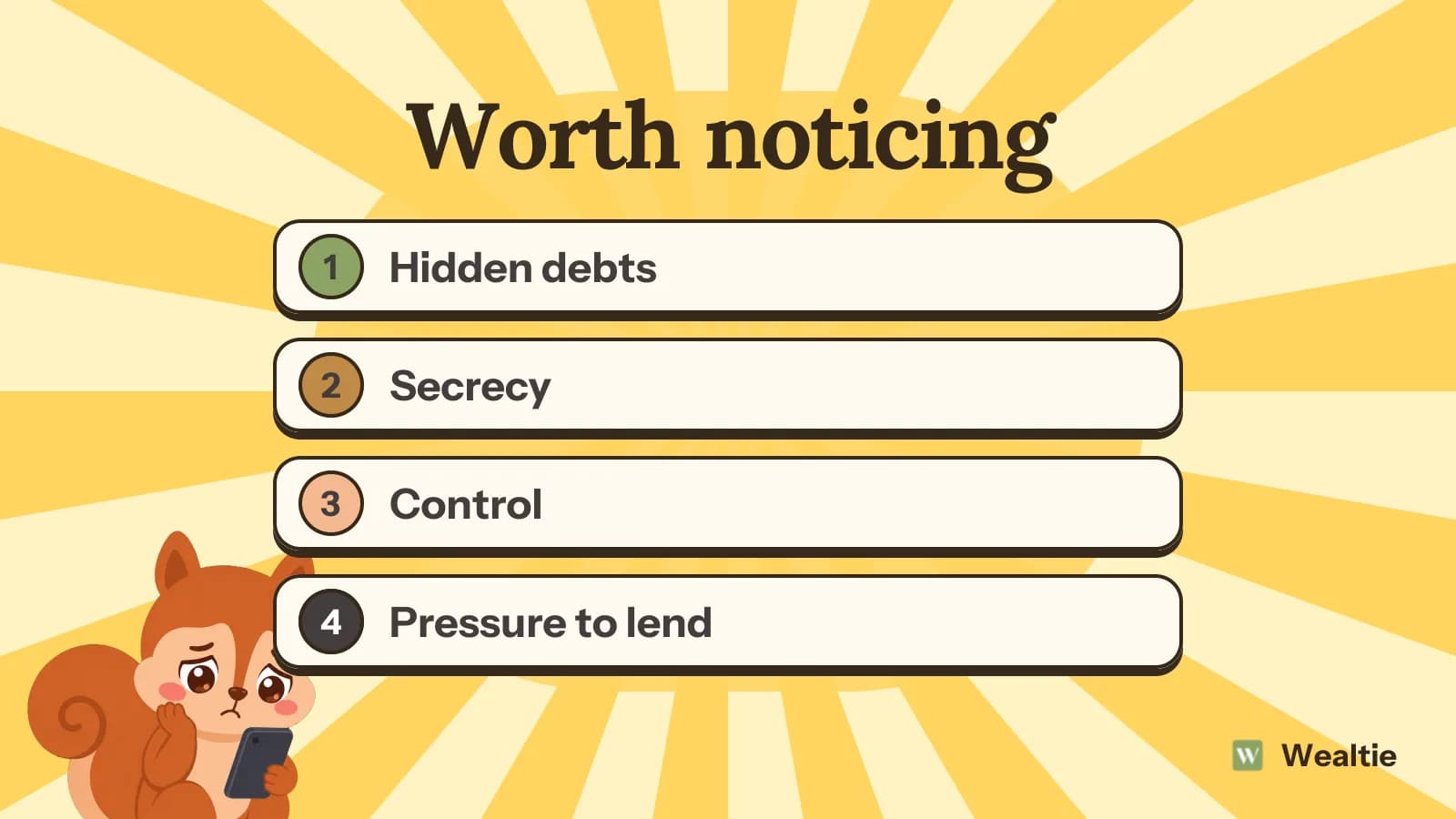
Financial red flags in a relationship include hidden debts or spending, refusing to talk about money, controlling a partner's access to money, and repeated pressure to lend. Some are habits you can work through together, and some are signs of something more serious.
 By Wealtie Team · 3 min read
Key takeaways
- Common financial red flags include hidden debts, secret spending and refusing to talk about money.
- Controlling a partner's access to money, or monitoring every purchase, can be a form of financial abuse.
- Many money differences are habits you can work through by talking openly and agreeing shared numbers.
- If you feel controlled or unsafe, support services can help, and you don't have to handle it alone.
What are financial red flags in a relationship?
Patterns around money that can cause problems if they're not dealt with. Some are about habits and communication, and can be worked through together. Others are about control, and are more serious. Noticing them early, and talking about them, helps you understand which you're dealing with. The lists below are a guide, not a checklist, since context matters a lot.
Which red flags are about habits?
These are common and often fixable with honest conversation:
- Refusing to talk about money, or changing the subject every time
- Very different spending habits, like one person saving everything and the other spending freely
- Vagueness about income or bills, where one person doesn't know what the other earns or owes
- Repeated late payments or missed bills, without a plan to fix them
Different habits aren't a problem in themselves. Most couples have some. Look at your own habits too, since red flags work both ways, and a conversation that starts with yourself is easier to have. The issue is when they're not discussed. How to talk about money with a partner has ways to start.
Which red flags are about honesty?
These need a more serious conversation:
- Hidden debts, like cards or loans you only find out about later
- Secret spending, with purchases hidden or lied about
- Secret accounts that hide money from a partner when finances are meant to be shared
- Lying about income or what things cost
Honesty about money matters more as finances become linked, like when you move in, marry or buy a home. A hidden debt can affect a shared mortgage application or household budget. If you find something hidden, ask about it calmly and directly, and listen to the reason before deciding what it means. Debts from before the relationship aren't a red flag in themselves. Hiding them is.
Which red flags are about control?
These can be signs of financial abuse, and are serious:
- One partner controls all the money and the other has no access
- Being given an "allowance" and having to justify every purchase
- Being stopped from working, studying or having your own account
- Debts taken out in your name without your agreement
- Pressure to hand over your wages or savings
If any of these sound familiar, it's worth talking to someone you trust or a support service. Many countries have helplines for people experiencing financial or domestic abuse, and they can help you think through options safely. Keeping a small amount of money and important documents somewhere safe can help if you ever need to leave.
What about pressure to lend money?
A one-off request in a real emergency is different from repeated pressure, guilt or anger when you say no. If a partner regularly asks for money and doesn't repay, or you feel you can't refuse, that's worth taking seriously. Agreeing any loan in writing, with an amount and a date, keeps it from becoming a source of resentment.
How do you raise a concern?
Pick a calm moment, focus on the situation rather than blaming, and say how it makes you feel. Give your partner time to explain before reacting. Something like: "I found out about the card balance, and I feel worried because we're planning to buy a home. Can we talk about it?" Agree on next steps together, like a plan to pay a debt down or a regular money check-in.
If a conversation feels unsafe, don't have it alone. Get support first. A counsellor or mediator can help if conversations keep turning into arguments.
How do you build healthy money habits together?
Be open about income, debts and spending, agree shared numbers, and keep some personal money each that nobody has to justify. A regular money check-in makes money an ordinary topic, not a source of conflict. Questions to ask before marriage is a good place to start the conversation.
How can shared tools help?
Shared tools work best when both people agree to use them. In Wealtie, a shared account gives both of you the same view of shared costs, with owner, editor and viewer roles, and lets you keep personal accounts separate. The account owner needs Pro to invite, and the other person can be on any plan. The shared accounts page has more. Tools should support openness, not monitoring. A monthly limit in the budget tracker can help a couple agree on shared spending.
Questions people ask
Hidden debts or spending, refusing to talk about money, lying about income, controlling a partner's access to money, and repeated pressure to lend.
It's when one partner controls the other's access to money, for example by taking their wages, stopping them working or taking out debts in their name.
Pick a calm moment, focus on the situation rather than blame, say how you feel and agree next steps together.
Talk to someone you trust or a support service, which can help you think through options safely.
This article is general information, not financial, tax or legal advice. Your situation is your own; check the numbers that apply to you before you act on them.