Money as a couple: Living alone vs with roommates: what it costs each way
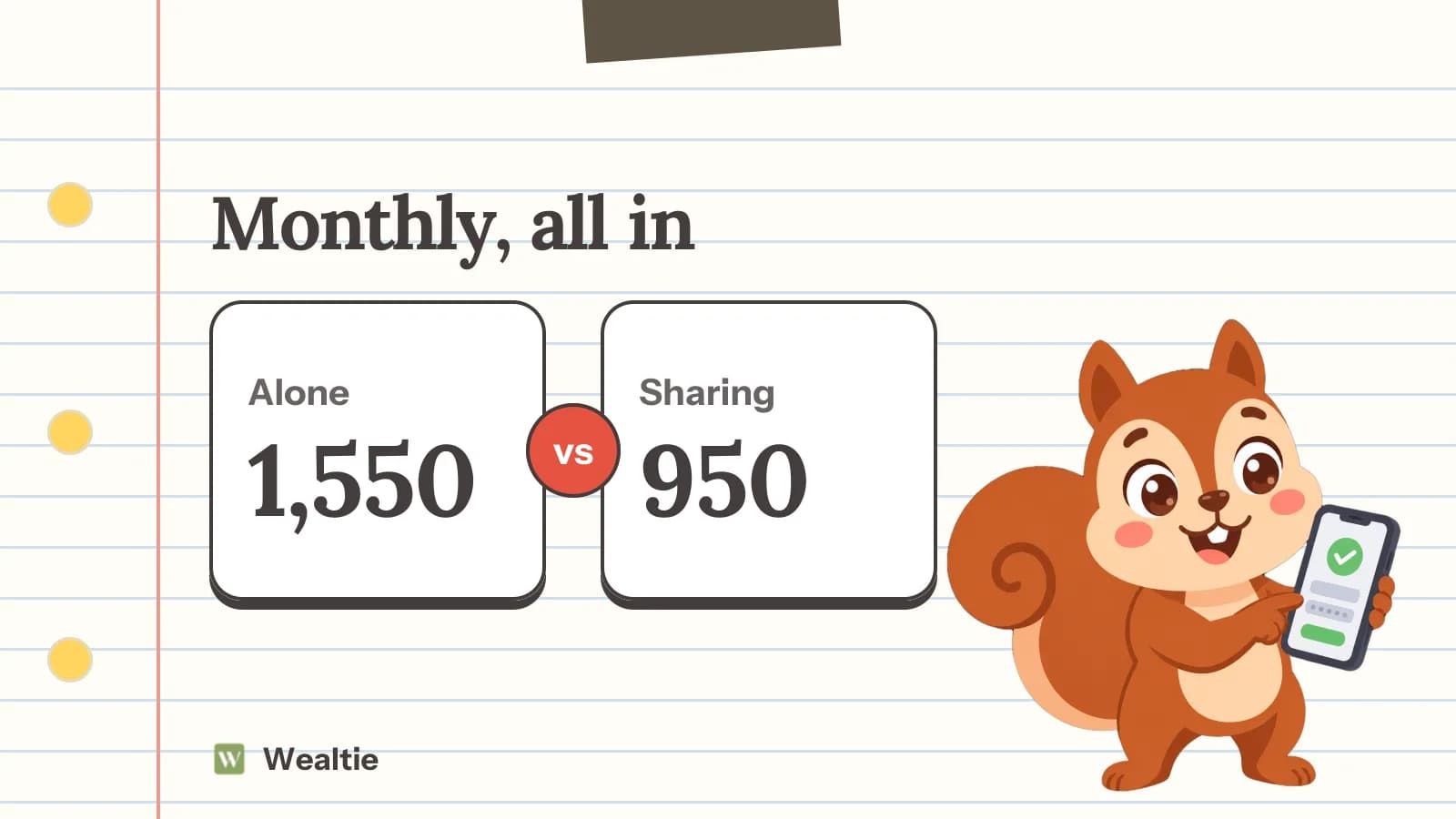
Living alone vs with roommates often comes down to about 600 a month in a worked example: 1,550 alone against 950 sharing, once rent and bills are split. The extra cost of living alone buys privacy and control, so the right choice depends on what that's worth to you.
 By Wealtie Team · 3 min read
Key takeaways
- Sharing usually costs much less, because rent and many bills are split.
- In a worked example, living alone costs 1,550 a month against 950 sharing with two others.
- The extra 600 a month buys privacy, quiet and control over your space.
- Sharing brings its own costs and risks, like disagreements over bills, so agree how money works up front.
Living alone vs with roommates: which is cheaper?
Almost always cheaper to share. Rent is split, and so are many bills, like energy, internet and household basics. The difference can be several hundred a month. Living alone costs more, but it buys privacy, quiet and complete control over your home, which many people value highly.
What does each cost?
Here's a worked example in round numbers that work in any currency, comparing a one-bedroom flat with a room in a three-person share:
| Monthly cost | Living alone | Sharing with two |
|---|---|---|
| Rent | 1,100 | 650 |
| Energy and water | 250 | 120 |
| Internet | 50 | 20 |
| Household basics | 150 | 60 |
| Shared food kitty | 0 | 100 |
| Total | 1,550 | 950 |
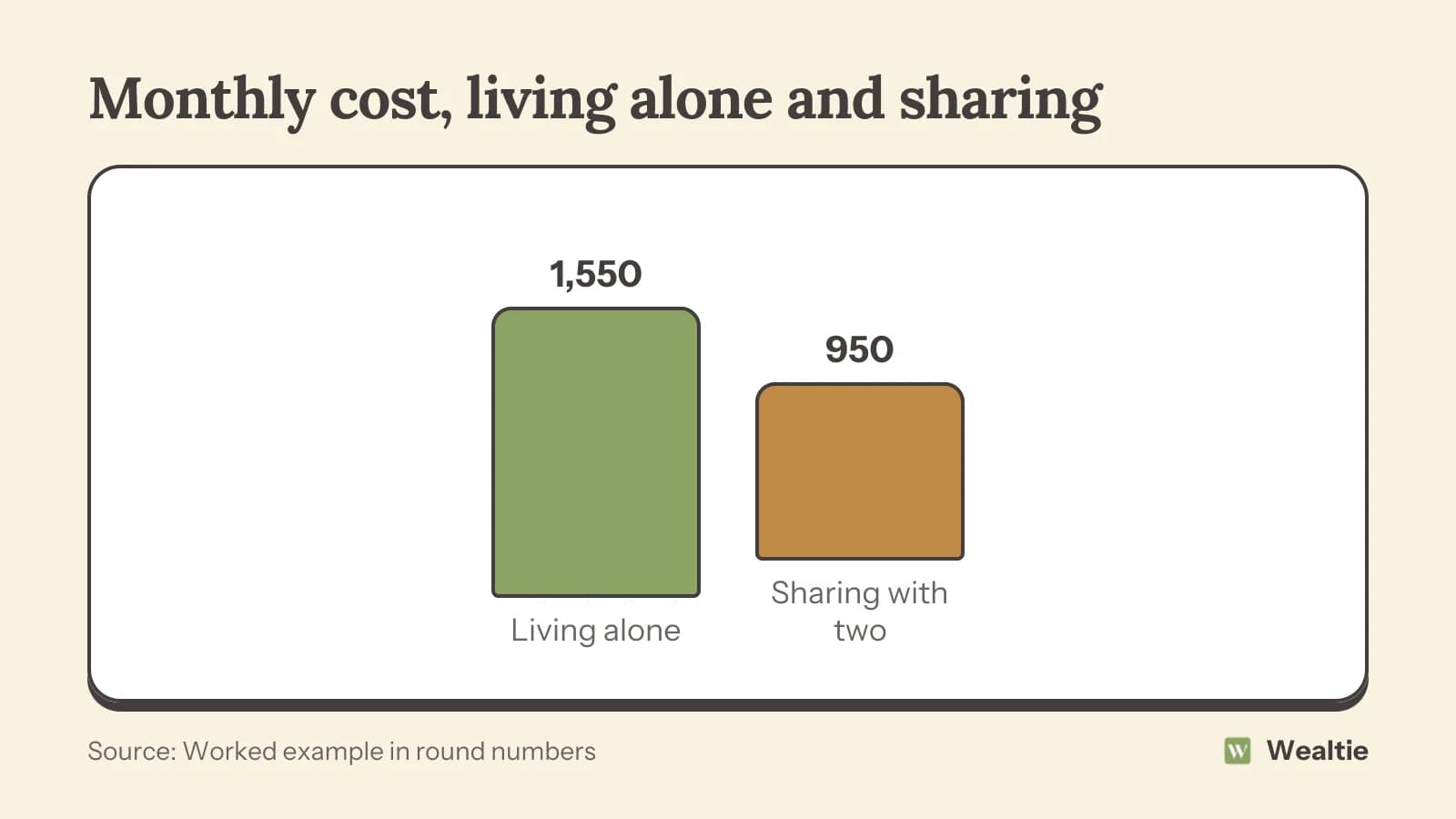
That's 600 a month, or 7,200 a year. Over three years of sharing, that's 21,600, which is a serious start on a home deposit or a full emergency fund, and a big reason many people share for longer than they expected to. Your own figures will depend on the city and the flats you're comparing. Some costs don't split, like your phone, personal insurance and your own food, so they're the same either way and are left out here.
What are you paying for when you live alone?
Privacy and control. No queue for the bathroom, no negotiating over noise, no disagreements about cleaning or bills. You choose the temperature, the decor and when people visit. For some people, that's worth every penny. For others, the company and the savings of sharing matter more, at least for a few years.
It also means carrying every cost alone. If the boiler breaks or the energy bill jumps, nobody else shares it. Some people find living alone makes them better with money, since every bill is theirs.
What are the hidden costs of sharing?
Mostly about people. Disagreements over bills, cleaning, guests or noise can be stressful, and a flatmate who doesn't pay their share leaves the others covering it. Agree how money works before you move in: who's named on each bill, when payments are due, and how shared costs are split.
How to split rent with roommates covers the setup. Choose flatmates carefully, since similar habits around cleaning and bills matter more than being friends.
Which suits you?
Ask yourself a few questions, and answer them honestly:
- How much does privacy matter to you, day to day?
- What could you do with the money saved by sharing?
- Do you work from home and need quiet space?
- Are you saving for a goal, like a deposit, where sharing would speed things up?
Many people share in their early years to save, then live alone or with a partner later. Trying a share for a year with a clear goal for the money saved, then reviewing, is a good way to decide. A few years of sharing at 600 a month less can build a large deposit.
What about living with a partner?
Moving in with a partner usually brings similar savings to sharing, with fewer of the downsides. The moving-in-together budget covers the conversation to have first. The savings can be even bigger, since two people often need only one bedroom.
How do you decide with your own numbers?
Get real prices for both options in the area you want, from current listings rather than memory: a one-bedroom flat and a room in a share. Add bills and household costs for each. Compare the monthly difference with your take-home pay and your goals. If the cost of living alone would leave nothing for savings, sharing for a while might be the better choice. The budget calculator shows how each option fits your take-home pay.
What about a studio or a smaller place?
If privacy matters but a one-bedroom flat costs too much, a studio or a smaller flat further out can close some of the gap. A studio might cost noticeably less than a one-bedroom, and bills are often lower in a smaller space. Living a little further from the centre, with good transport, can cut rent too. Count the extra travel time and cost before you decide, and compare the full monthly figure, not just the rent.
How do you manage shared costs in Wealtie?
A shared account gives everyone in the flat the same record of shared costs, with owner, editor and viewer roles. You can split expenses using current shares or custom amounts, to the cent. The account owner needs Pro to invite, and others can be on any plan. The shared accounts page has more.
Questions people ask
Sharing is usually much cheaper, because rent and many bills are split. A worked example shows 1,550 a month alone against 950 sharing with two others.
In a worked example, about 600 a month more, or 7,200 a year. Your figures depend on the area and the homes you compare.
Less privacy, and possible disagreements over bills, cleaning and noise. Agreeing how money works before you move in helps.
Sharing can speed up saving a lot, since the difference in costs can go straight to your deposit.
This article is general information, not financial, tax or legal advice. Your situation is your own; check the numbers that apply to you before you act on them.