Money as a couple: How to combine finances after marriage: three setups and the steps
To combine finances after marriage, first share the full picture, then pick a setup: everything joint, a joint account for shared costs plus your own, or separate accounts with an agreed split. Most couples land on the middle option.
 By Wealtie Team · 3 min read
Key takeaways
- Start by sharing everything: income, debts, savings, credit history and spending habits.
- The three common setups are all joint, a joint account plus personal accounts, and fully separate with an agreed split.
- Contributing to shared costs in proportion to income keeps things fair when you earn different amounts.
- Change the practical things in order: shared account, bills, savings, then documents like beneficiaries.
How do you combine finances after marriage?
Share the whole picture first, then choose a setup that suits you both, then change the practical things one at a time. There's no right amount of combining. Plenty of happily married couples keep some money separate.
What should you talk through first?
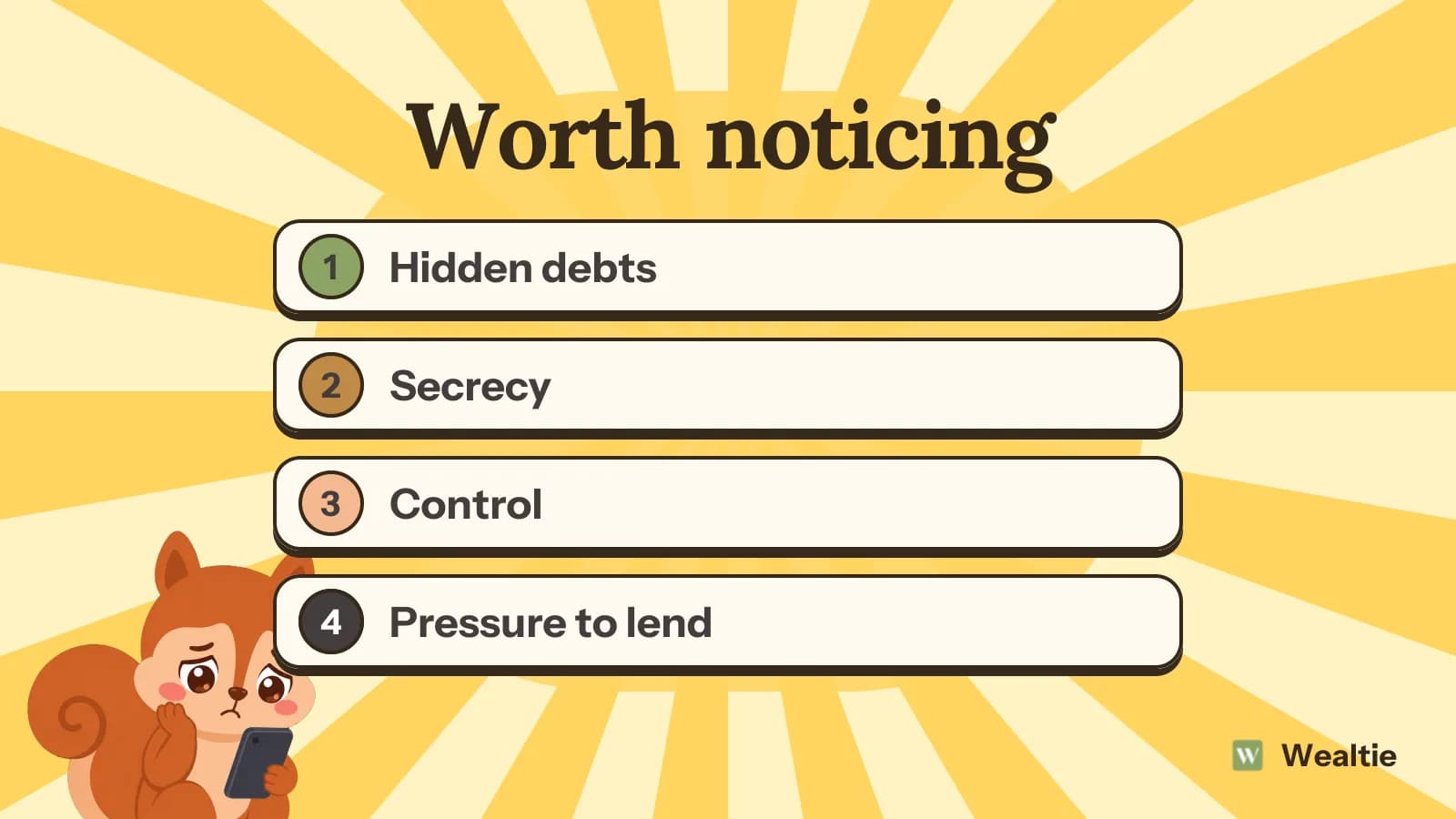
Everything, including the awkward parts:
- What each of you earns, and whether it's steady
- Debts, including student loans, cards and anything owed to family
- Savings and pensions
- Credit history, especially anything that might affect a joint mortgage
- What each of you spends without thinking about it
- What you're each saving toward
Debts are the part people put off. Before you share accounts, it's worth knowing what's out there, how you'll handle it, and whether it stays one person's responsibility. In many places a debt taken out in one name stays with that person, but rules differ, so check yours. Money questions to ask before marriage has a fuller list.
Which setup should you choose?
The one you'll both be comfortable with. Here are the three common ones:
| Setup | How it works | Suits couples who |
|---|---|---|
| All joint | All income goes in one account; all spending comes out | Have similar habits and full trust |
| Joint plus personal | Shared costs from a joint account; each keeps a personal account | Want shared bills and some independence |
| Separate with a split | Each pays agreed shares of shared costs | Have complex finances or want full separation |
Joint plus personal is the most common middle ground. Bills and shared goals are easy to see, and each of you has money you don't have to explain. Joint or separate accounts goes deeper into each.
How do you split costs if you earn different amounts?
In proportion to income is often the fairest. Say one of you takes home 3,000 and the other 2,000, in round numbers that work in any currency. That's a 60/40 split. On shared costs of 3,000, one pays 1,800 and the other 1,200. Each is left with the same share of their income for themselves.
An equal split can leave the lower earner with very little, which builds resentment. How to split bills as a couple compares equal, proportional and pooled.
What are the practical steps, in order?
Do them over a few weeks, not all at once:
- Open a joint account, if you've chosen one
- Agree how much each puts in, and set up automatic transfers on payday
- Move shared bills to the joint account, one at a time, checking each payment works
- Set up savings for shared goals
- Update names and details if either of you changed your name
- Update beneficiaries on pensions and insurance, and consider a will
The last step matters more than people think. Many policies don't change automatically when you marry. Check what applies where you live.
What about debts and credit?
Keep them visible. If one of you has a debt, agree whether it's paid from personal money or shared money. Paying it from shared money is generous, but it's a decision to make out loud.
Be careful with joint borrowing. A joint loan or joint credit card usually makes both of you responsible for the whole amount. That's fine when it's what you both want, but it's worth knowing before you sign.
How do you keep it working?
Have a short monthly check-in, after payday. Did the transfers go through? Are the bills right? Is either personal budget not working? Adjust the amounts once a year, or whenever income changes, such as a new job or a baby.
Write the agreement down in a shared note: who pays what into the joint account, the threshold for discussing a purchase, and what happens in a month when one income drops. It doesn't need to be formal, and it means you're not relying on memory when something changes. Revisit it after big events like a baby or a move. Make sure each of you could find the essential account details in an emergency, too.
If something stops feeling fair, say so early. Small adjustments are easy. Resentment that builds up for a year isn't.
How can you manage shared money in Wealtie?
A shared account gives both of you the same record, with owner, editor and viewer roles. Choose pooled or per-person balances, and split an expense using current shares or custom amounts, down to the cent. The account owner needs Pro to invite, and the other person can be on any plan. The shared accounts page has more, and sharing a budget with your partner walks through the setup. A monthly limit in the budget tracker keeps shared spending in view.
Questions people ask
Many do, at least partly, but there's no single right answer. A joint account for shared costs plus personal accounts is a common middle ground.
Splitting shared costs in proportion to income is often fairest. On incomes of 3,000 and 2,000, that's a 60/40 split.
In many places, debts in one person's name stay with that person, but rules vary by country. Joint loans and joint cards usually make both of you responsible.
Share the full picture: income, debts, savings and credit history. Then choose a setup and change bills and accounts one step at a time.
This article is general information, not financial, tax or legal advice. Your situation is your own; check the numbers that apply to you before you act on them.