Money as a couple: How to budget as a stay-at-home parent on one income
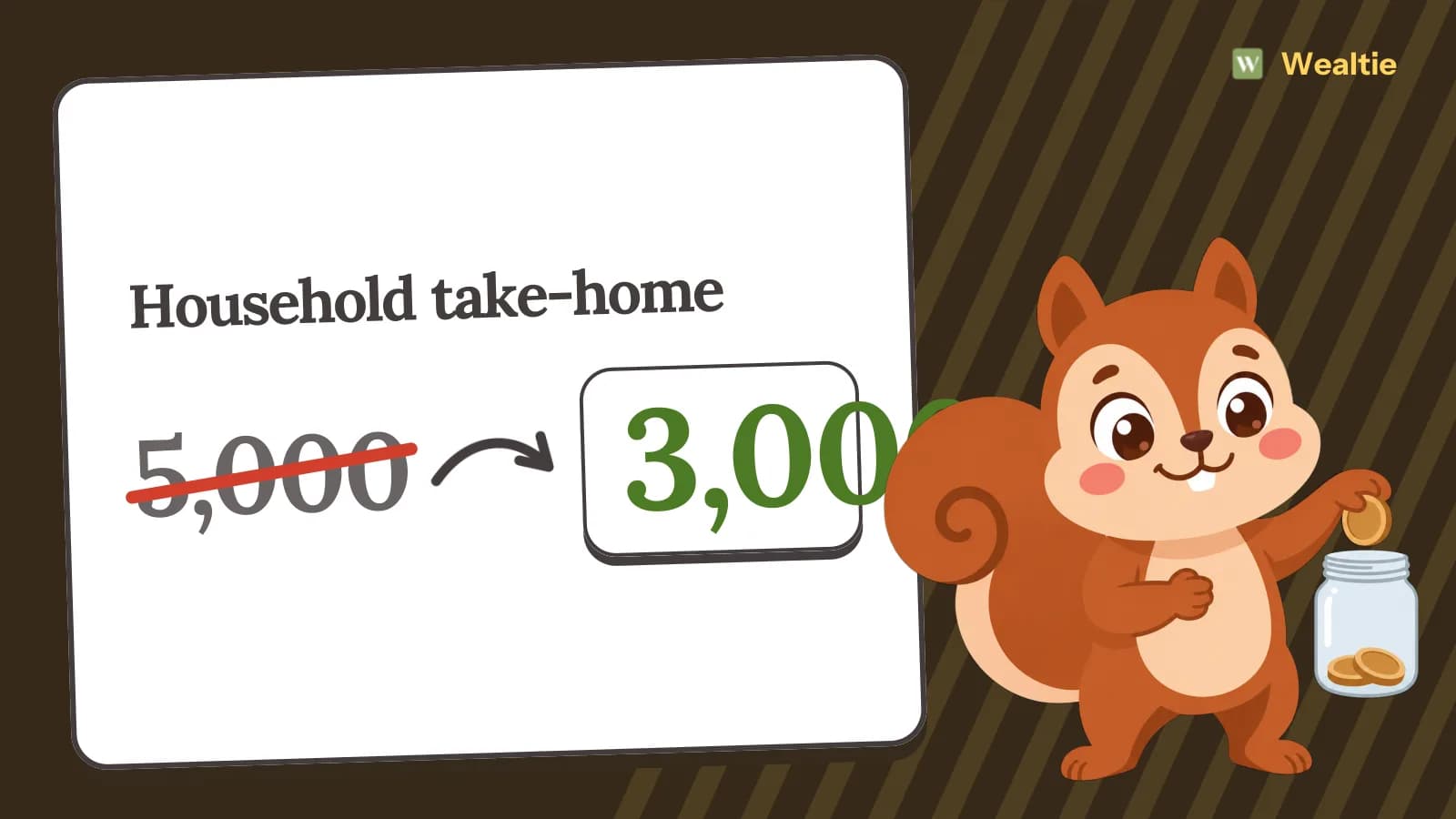
A stay-at-home parent budget starts by testing life on one income for a few months before the switch, then rebalancing costs. In a worked example, a household going from 5,000 to 3,000 a month finds 1,300 of savings from childcare, commuting and cuts.
 By Wealtie Team · 3 min read
Key takeaways
- Test living on one income for three to six months before the switch, saving the second income in full.
- Some costs fall when one parent stays home, like childcare and commuting, which narrows the gap.
- In a worked example, a drop from 5,000 to 3,000 a month is covered by 1,300 of falling costs and 700 of cuts.
- Make sure the parent at home has personal money, savings and a pension of their own.
How do you build a stay-at-home parent budget?
Start from the one income you'll have, then work out which costs fall and which need cutting. The most useful step comes before the switch: living on one income for a few months while both are still coming in.
What changes when one parent stays home?
Income drops, but some costs drop too. Here's a worked example, in round numbers that work in any currency. Household take-home falls from 5,000 to 3,000 a month, a gap of 2,000.
| Where the 2,000 comes from | Amount |
|---|---|
| Childcare no longer needed | 900 |
| Commuting, work clothes, lunches | 250 |
| Less eating out and convenience food | 150 |
| Other cuts to the budget | 700 |
| Total | 2,000 |
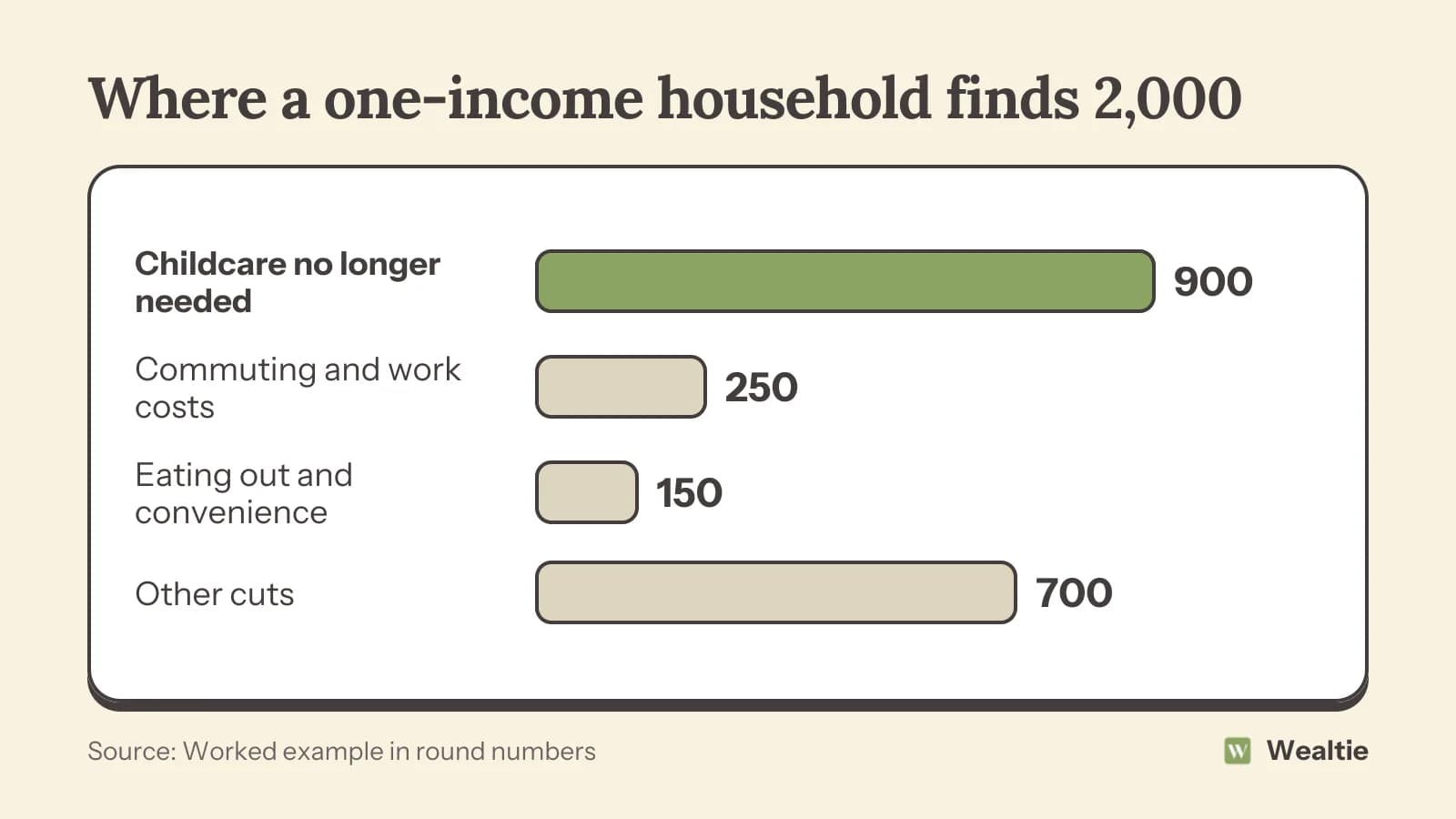
Don't forget the costs that rise. A parent at home all day means more heating, electricity and food at home, and often more spent on outings and activities for the children. Add a realistic amount for these, say 100 a month, before you decide the numbers work.
In this example, 1,300 of the gap is covered by costs that fall on their own. The last 700 has to come from cuts. Your numbers will differ, particularly the childcare line, so work them out carefully.
How do you test it before switching?
Live on one income for three to six months while you're both still working. Put the whole second income into savings. If you can manage, you'll know the plan works, and you'll have a cushion when the switch happens.
If it's harder than expected, you've learned that while you still have options. You might change the timing, find a cheaper home, or plan for part-time work instead.
Which costs should you look at first?
The big fixed ones. Housing, car payments and insurance usually decide whether a single income works. A second car you no longer need for commuting can be a large saving. Living on one income goes through the main levers.
Then the everyday ones. Groceries, subscriptions and eating out are easier to change week to week. How to save money on groceries has practical ways to bring the biggest of those down.
How do you keep things fair between you?
Treat it as a shared decision with shared money. The income belongs to the household, not just the person earning it. Things that help:
- Both of you see all the accounts and numbers
- Each of you has the same amount of personal money, say 200 a month, that nobody has to explain
- Big decisions are made together
- A regular check-in keeps you both involved, and how to talk about money with a partner helps with the harder conversations
Without personal money, the parent at home can end up asking for every small purchase, which tends to build resentment on both sides. Set it up as an automatic transfer to each of you on payday, so it arrives without anyone having to ask.
What about the parent at home's future?
Plan for it from the start. Time out of work can mean a smaller pension and fewer savings in that person's name. Ways to protect it:
- Keep paying into a pension for the parent at home, if your system allows it
- Check whether you can claim credits toward a state pension for caring for children, since some countries offer them
- Keep some savings in that person's name
- Make sure both of you have life and income protection insurance that reflects the new situation
Rules differ a lot by country, so check what applies where you live.
What if it's not working?
Before resigning, ask your employer about unpaid leave or a career break, which can make returning easier. Review the plan after six months with real numbers, and again when the youngest starts school, since costs and options change a lot then.
Look at the numbers together and decide early. Part-time work, freelance work from home, or a phased return can all ease the pressure. A longer gap from work can make returning harder in some fields, so it's worth keeping skills and contacts up if you think you'll go back.
How can you manage one income together in Wealtie?
A shared account gives both of you the same view of household costs, with owner, editor and viewer roles. The owner needs Pro to invite, and the other person can be on any plan. Set a monthly limit in the budget tracker based on the one income, and Budget Health warns you mid-month if your pace would take you over. The shared accounts page has more.
Questions people ask
Test living on one income for a few months first, count the costs that fall, like childcare and commuting, and cut what's left of the gap. Housing and car costs usually matter most.
Work out the gap between your incomes, subtract the costs that would fall, and see whether you can cut the rest. Living on one income for a few months is the best test.
Yes. Equal personal spending money for both parents, plus savings and a pension in the stay-at-home parent's name, keeps things fair.
It can reduce it, because contributions may stop. Keep paying in if possible and check whether your country offers state pension credits for caring for children.
This article is general information, not financial, tax or legal advice. Your situation is your own; check the numbers that apply to you before you act on them.