Budgeting: How to budget in your 30s
To budget in your 30s, give every rise in income a job before it disappears into spending, and balance big goals like a home, family and retirement. In a worked example, splitting a 600 pay rise between savings, debt and spending keeps progress steady.
 By Wealtie Team · 3 min read

Key takeaways
- To budget in your 30s, decide where each pay rise goes before it turns into spending.
- In a worked example, a 600 rise splits into savings, retirement, debt and a little more spending.
- Your 30s often bring big costs like a home or children, so plan for them early.
- Starting or raising retirement saving now makes a big difference later.
How do you budget in your 30s?
Plan for bigger goals, and give each rise in income a job. Your 30s are often a decade of change: higher pay, a first home or a bigger one, a partner, children, career moves and more responsibility. Income tends to rise, but so do costs, and it's easy for spending to grow until nothing's left over. A budget in your 30s keeps you making progress while you enjoy what you've worked for.
If you've never had a budget, this is a great time to start. How to budget in your 20s covers the basics if you want to go back to the start.
How do you handle pay rises?
Decide where they go before they arrive. When income rises, spending tends to rise to match, a pattern often called lifestyle creep. Here's a worked example of a 600 monthly rise, in round numbers that work in any currency:
| Use | Amount |
|---|---|
| Savings and goals | 200 |
| Retirement | 150 |
| Paying down debt | 150 |
| Spending | 100 |
| Total | 600 |
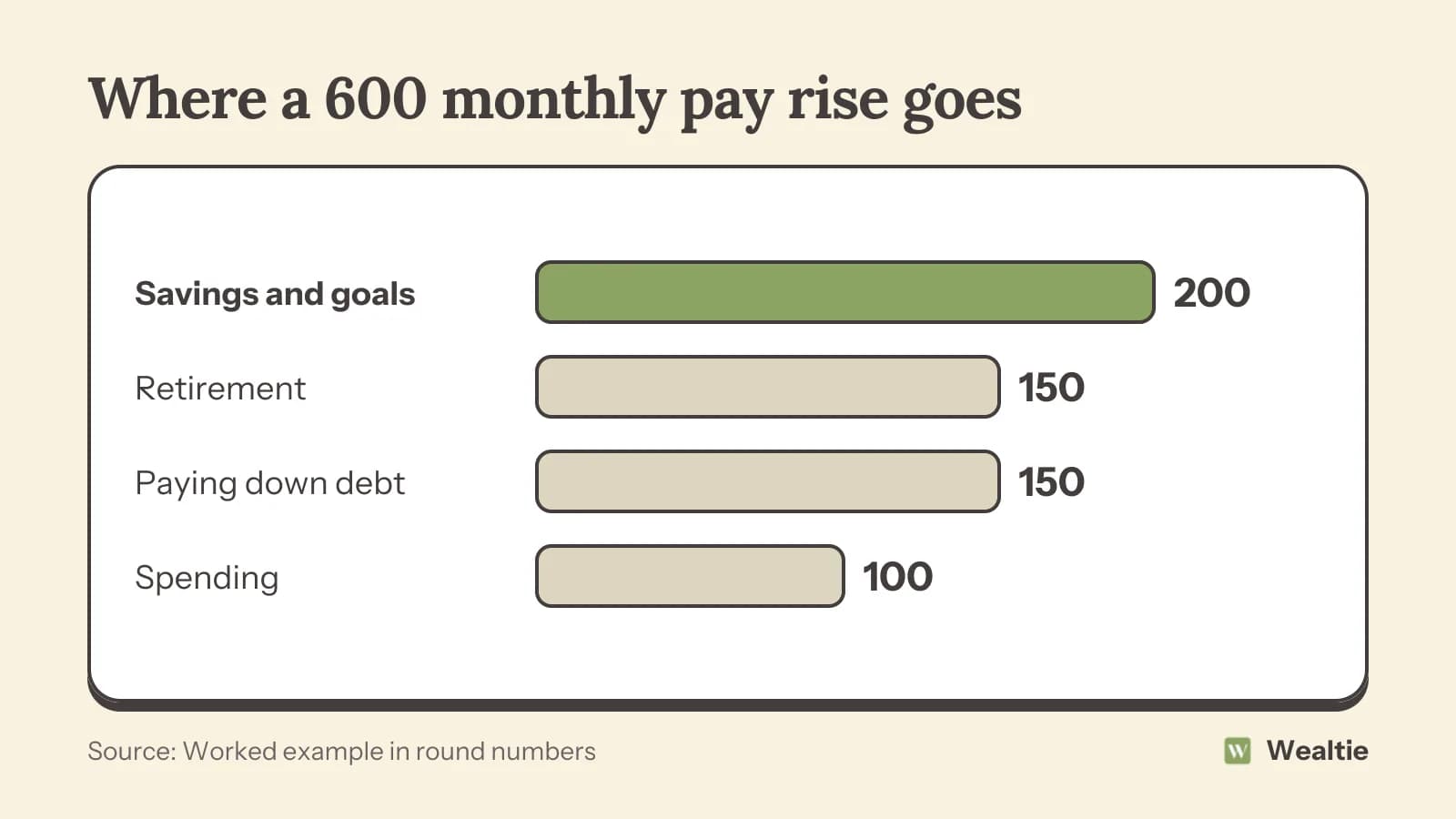
In this example, life still gets a little better, with 100 more to spend, but most of the rise builds your future. Lifestyle creep explains why this matters and how to stay ahead of it. Setting up the extra savings transfer on the same day the rise starts means you never get used to spending it.
What should you prioritise in your 30s?
Most people juggle several goals at once. A common order is:
- An emergency fund, so a surprise doesn't become debt
- High-interest debt, like credit cards, paid down quickly
- Retirement saving, started or increased
- Big goals, like a home deposit, a wedding or a car
- Investing, once the basics are in place
You don't need to finish one before starting the next. Splitting money between them, as in the example above, keeps everything moving. Reviewing the split once a year, or after a big change, keeps it matched to your life. Should I save or invest helps with the later steps.
How big should your emergency fund be?
Enough to cover a few months of essential costs. If your essentials are 2,000 a month, three months is 6,000. With a mortgage or children, aim for more. How to build an emergency fund has a step-by-step plan.
How do you plan for a home or a family?
Start saving early, and price things honestly. A home brings a deposit, moving costs and ongoing upkeep. Children bring childcare, which can be one of the biggest costs of the decade, and often a period on reduced income during parental leave. Writing down rough costs and timelines, even if plans are uncertain, helps you decide how much to save each month.
Don't stretch for the biggest home
It's tempting to borrow the most a lender will offer. Choosing a home that leaves room in the budget for savings, children and the unexpected keeps your 30s less stressful and protects your other goals.
How much should you save?
As much as you can steadily manage. Many people aim for a set share of income for saving and retirement combined, and raise it with each pay rise. How much of your income to save helps you choose a target that fits. The habit matters more than the exact amount at first.
How do you budget with a partner?
Talk openly about money, goals and how to share costs. Couples in their 30s often combine finances in some way, whether a joint account for shared bills or full pooling. A regular money conversation, monthly for example, keeps both of you on the same page and stops small disagreements growing. Agreeing how much each person can spend without checking in avoids friction over small purchases.
Protect your future selves
As responsibilities grow, check that you have the right insurance, like life cover if others depend on your income, and make a will. These cost little compared with the protection they give.
How do you keep enjoying life?
Budget for fun on purpose. Your 30s should include holidays, hobbies and time with friends. When enjoyment has its own amount in the budget, you can spend it without guilt, knowing the important things are covered. Choosing the experiences that matter most to you, and cutting the ones you barely notice, gets you more from the same amount.
How do you budget in your 30s with Wealtie?
Track spending in your expense categories and set a monthly limit in the budget tracker, so Budget Health shows whether you're on pace. Add savings accounts for each goal, like a home deposit or an emergency fund, and move money into them as transfers, which aren't counted as spending.
Questions people ask
Give each pay rise a job, build an emergency fund, pay down high-interest debt, save for retirement and plan for big goals.
As much as you can steadily manage, raising it with each pay rise. The habit matters more than the exact amount at first.
Decide where pay rises go before they arrive, putting most towards savings, retirement and debt.
A few months of essential costs. In a worked example, three months at 2,000 is 6,000.
This article is general information, not financial, tax or legal advice. Your situation is your own; check the numbers that apply to you before you act on them.