Budgeting: How to budget in your 20s and build habits that last
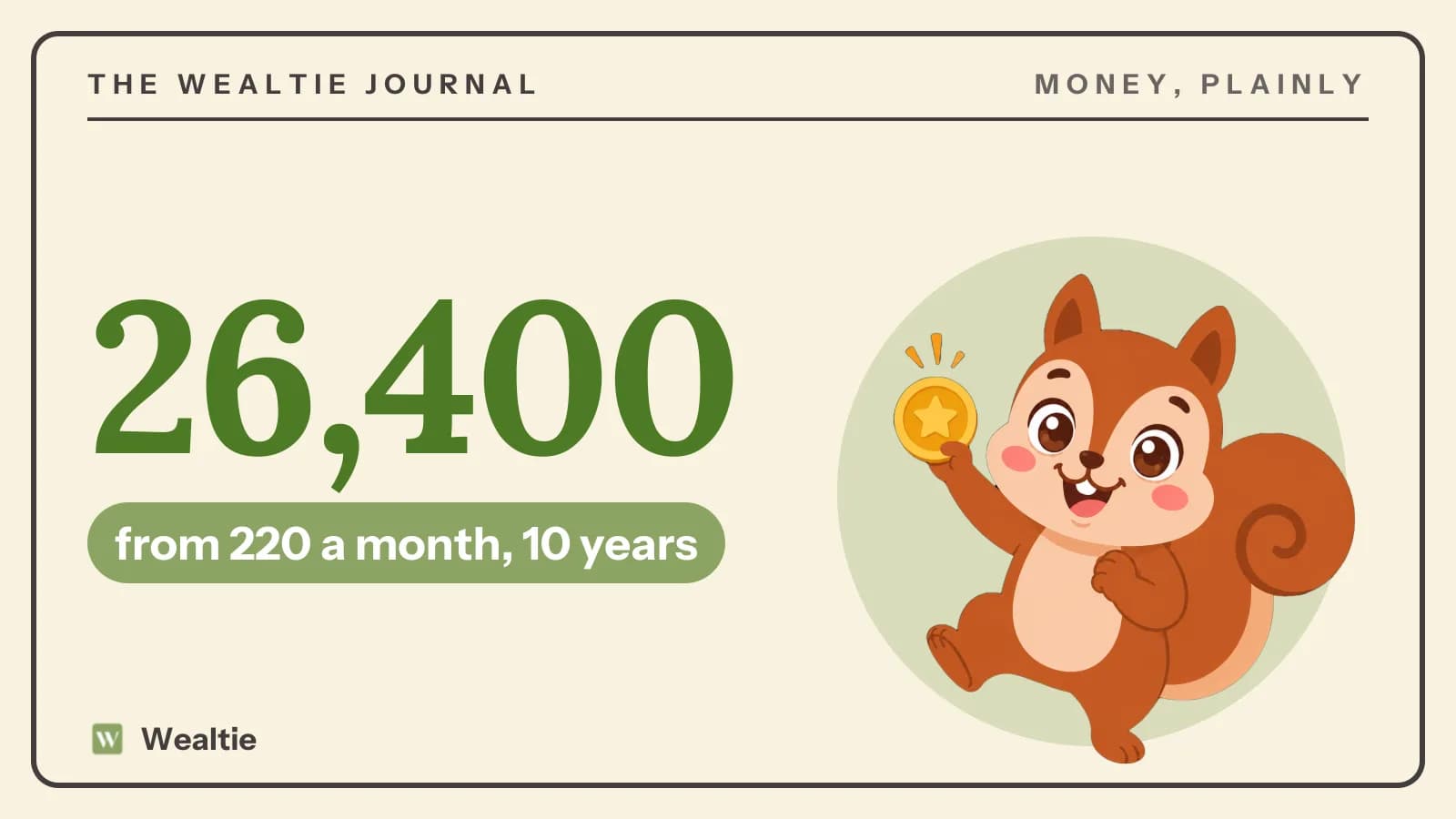
Here's how to budget in your 20s: start from your take-home pay, build a small emergency fund, deal with any costly debt, and save a share of every pay rise. On take-home of 2,200, saving 220 a month adds up to 26,400 over ten years, before any interest.
 By Wealtie Team · 3 min read
Key takeaways
- Start from your take-home pay, and pay rent, bills and savings before spending money.
- On take-home of 2,200, saving 220 a month adds up to 26,400 over ten years, before any interest.
- Build a small emergency fund early, then deal with any high-interest debt.
- Save at least half of every pay rise, so your lifestyle doesn't grow as fast as your income.
How do you budget in your 20s?
Keep it simple: know what comes in, pay the essentials and savings first, and spend what's left. Your 20s are when habits form, and the ones you build now, like saving first and keeping your spending below your income, make every later decade easier. You don't need a complicated system to start, and the best budget is one you'll still be using next year.
What does a 20s budget look like?
Here's a worked example on take-home pay of 2,200 a month, in round numbers that work in any currency:
| Line | Monthly |
|---|---|
| Rent and bills | 1,000 |
| Food and transport | 450 |
| Savings | 220 |
| Debt repayment | 130 |
| Spending money | 400 |
| Total | 2,200 |
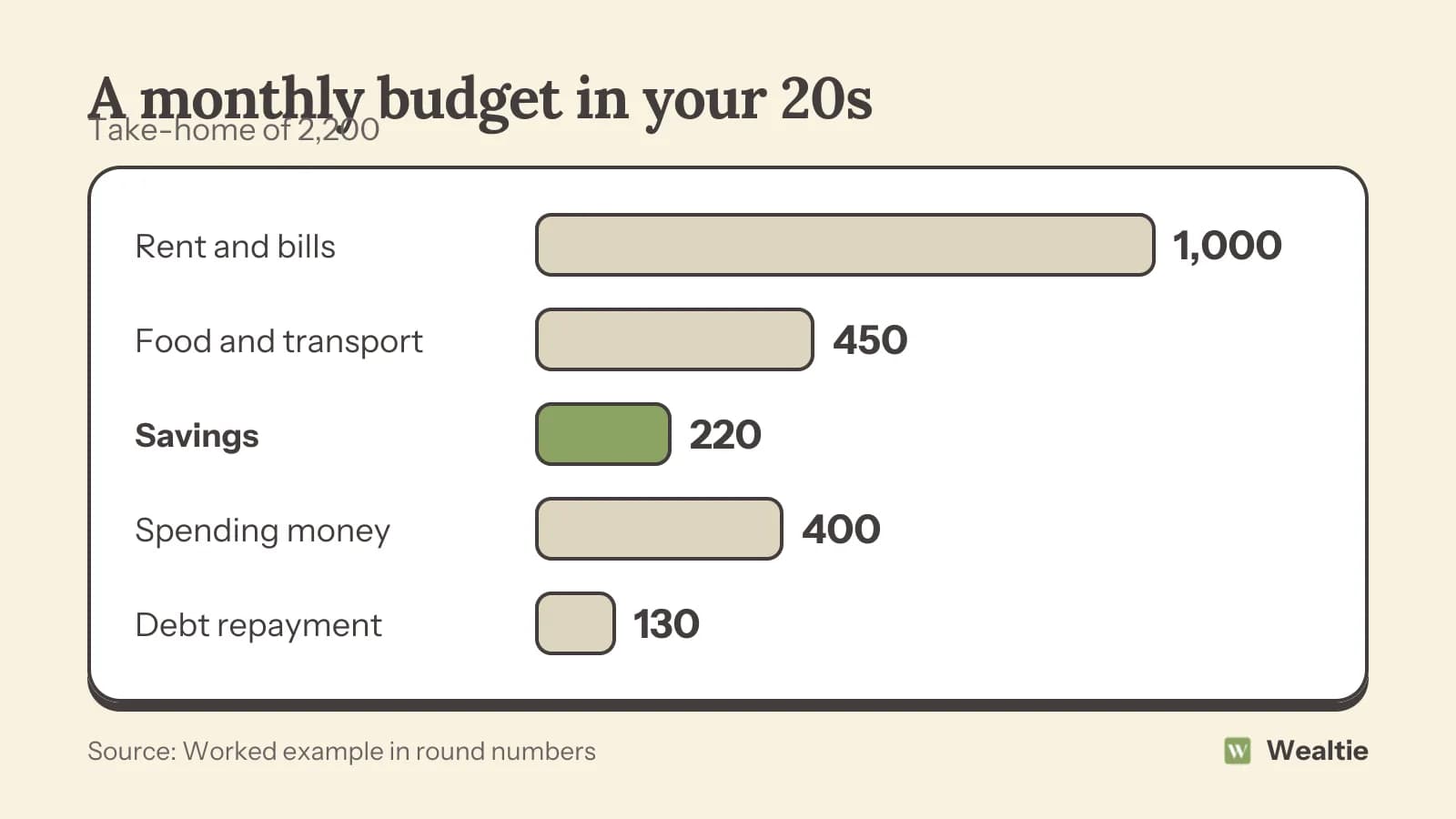
If rent takes more than this, the other lines need to shrink, starting with spending money. Savings here are a tenth of take-home pay. Over ten years, 220 a month adds up to 26,400 before any interest, which could be a home deposit, a safety net and a start on longer-term saving.
What should you save for first?
A small emergency fund, so the first surprise doesn't go on a credit card. Even 500 to 1,000 helps. Then pay down any debt with a high interest rate. After that, build the emergency fund to a few months of costs, and start saving for goals. How to build an emergency fund has the steps. Automate the savings for the day after payday, so it happens before you spend.
If your employer offers a pension with matching contributions, join it. It's one of the best deals available, and starting early matters a lot for retirement savings.
How do you handle debt?
Know what you owe, at what rate, and the minimum payments, written down in one list you can see. Pay high-interest debt, like credit cards, first and fastest. Student loans often work differently, with repayments linked to income in some countries, so check the rules before overpaying. The debt snowball or avalanche helps you choose an order.
If you've got a car loan or a phone contract, include those payments as fixed costs. Avoid new debt for things that lose value, like gadgets or holidays, if you can save for them instead.
How do you avoid lifestyle creep?
Save at least half of every pay rise. In your 20s, pay often rises quickly, and it's easy to let spending rise with it: a nicer flat, a newer car, more eating out. If you send half of each raise to savings, your lifestyle still improves, but your savings grow faster. What to do with a pay rise goes into this. Be careful with long contracts, like car finance, that lock in a higher cost for years.
How do you keep spending in check?
Turn your monthly spending money into a weekly amount, and check it now and then. Social pressure can be expensive in your 20s, with weddings, trips and nights out. It's fine to say no sometimes, or suggest something cheaper. Plan the big social costs, like weddings and trips, with a small monthly amount set aside in advance. How much spending money per month helps you set the amount.
What about big goals like a home?
Start early, even with small amounts, since time does a lot of the work. A home deposit, a car or further study all take years to save for. Pick one main goal at a time, set a target and a date, and set up a monthly transfer. Sharing a flat for a few years can speed things up a lot. Writing down where you'd like to be in five years makes saving feel less abstract.
What about moving out for the first time?
Moving out is one of the biggest costs of your 20s. Upfront costs, like a deposit and the first month's rent, often come to about three times the rent before any buffer. Saving for it in advance, and starting in a flatshare, makes it much easier. How much money to save before moving out has the full list.
How do you build a budget habit in Wealtie?
Set a monthly limit in the budget tracker, and Budget Health warns you mid-month if your pace would take you over. Each month inside the limit adds to your budgeting habit streak, which makes the habit easier to see. Add a savings account and move money into it each payday as a transfer, which isn't counted as spending.
Questions people ask
Start from your take-home pay, pay rent, bills and savings first, build a small emergency fund, deal with high-interest debt and save at least half of every pay rise.
Whatever you can manage regularly. In a worked example, saving 220 a month from take-home of 2,200 adds up to 26,400 over ten years.
Build a small emergency fund first, then pay high-interest debt, then save more. Check the rules before overpaying student loans.
Often yes, especially if your employer matches contributions, since starting early makes a big difference.
This article is general information, not financial, tax or legal advice. Your situation is your own; check the numbers that apply to you before you act on them.



