Budgeting: How to budget for driving lessons and passing your test
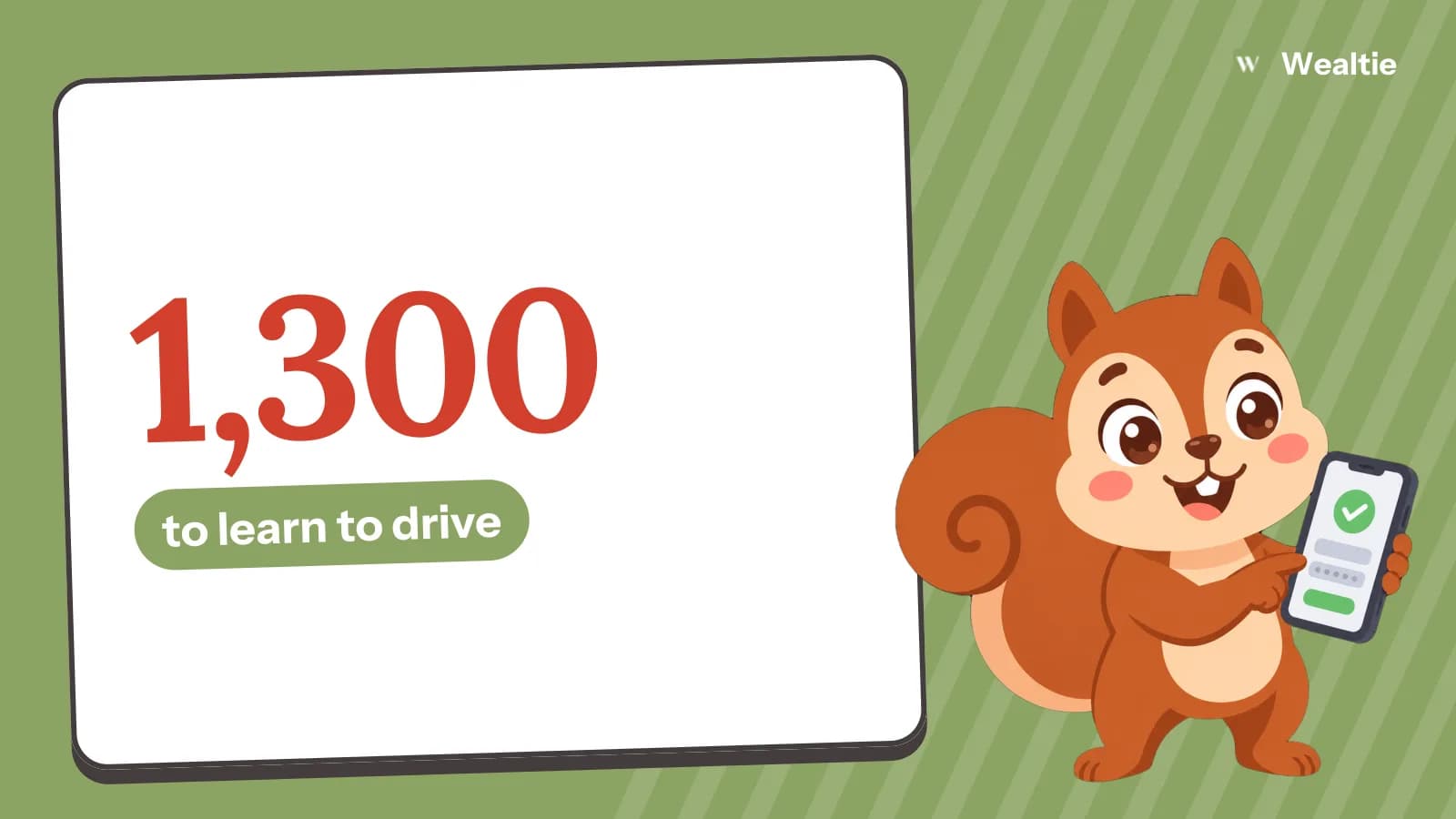
A driving lessons budget covers lessons, the theory and practical tests, and any extra practice. In a worked example, learning to drive costs about 1,300, and planning ahead, practising between lessons and booking blocks can bring it down.
 By Wealtie Team · 3 min read
Key takeaways
- Budget for the whole cost of learning, including lessons, tests and a buffer for a retest.
- In a worked example, learning to drive costs about 1,300.
- Practising between lessons with a qualified driver, where allowed, can reduce the number of paid lessons.
- Count the costs that start after you pass, like insurance and a car, before you begin.
How do you budget for driving lessons?
Add up the full cost of learning, not just the first few lessons, and save for it before you start. Learning to drive takes a number of hours that varies a lot between people, and lessons, tests and practice all add up. A budget for the whole process stops you running out partway through, which can mean losing progress.
What does learning to drive cost?
Here's a worked example in round numbers that work in any currency:
| Cost | Amount |
|---|---|
| Lessons, 30 hours at 35 | 1,050 |
| Theory test and study materials | 60 |
| Practical test | 90 |
| Extra practice and a buffer for a retest | 100 |
| Total | 1,300 |
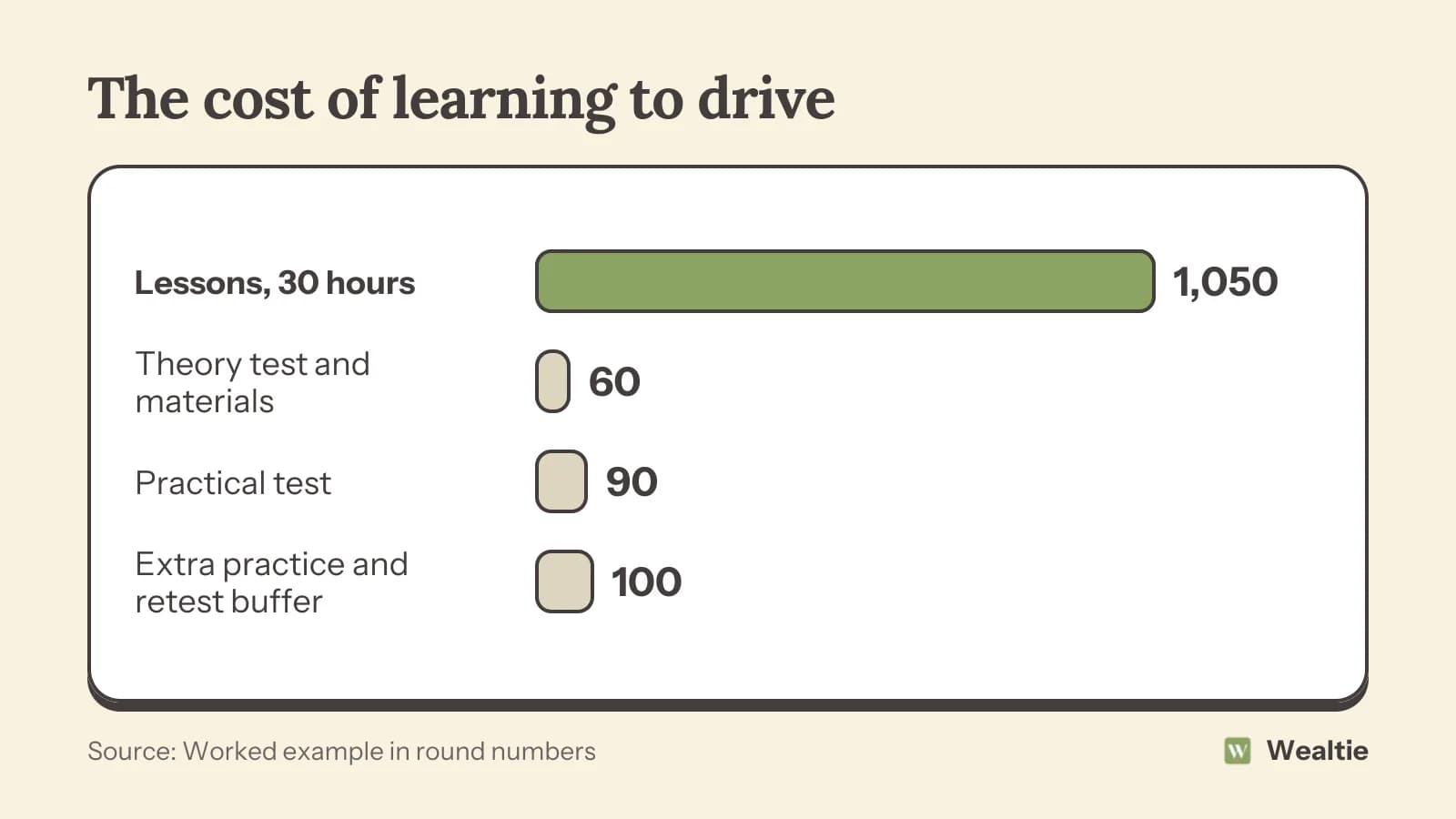
The number of lessons people need varies widely, so your total might be higher or lower. Ask an instructor after a first lesson how many hours they'd expect you to need, which gives a more personal estimate. Test fees and lesson prices vary by country and area, so check local prices.
How can you need fewer lessons?
Practise between lessons, if you can. In many places, learners can practise with a qualified, experienced driver in a car with the right insurance. Even a few hours of extra practice between lessons helps skills stick, so each paid lesson goes further. Check the rules where you live first, including insurance for learners driving a family car, which is often available for short periods.
Other ways to make lessons count:
- Take lessons regularly, like once or twice a week, rather than with long gaps
- Study the theory early, so lessons focus on driving
- Ask your instructor what to practise between lessons
- Review each lesson afterwards, while it's fresh
Is booking a block of lessons cheaper?
Often. Many instructors offer a lower price per lesson if you book and pay for a block. That can save money, as long as you're happy with the instructor and will use all the lessons. Check the cancellation policy and what happens if you need to stop. Start with one or two lessons before committing to a big block, so you know the instructor suits you. Ask friends who've passed recently for recommendations, since a good instructor can save you lessons in the long run.
Should you take an intensive course?
Intensive courses pack lessons into a short period. They can work well for some people, but they're not always cheaper overall, and they suit people who learn quickly and can take time off. Compare the total cost with regular lessons, and check what happens if you don't pass at the end. A retest booked weeks later might mean paying for extra lessons to keep your skills fresh.
What if you fail the test?
It's common, so plan for it. Many people need more than one attempt. A buffer in the budget for a retest and a few extra lessons means a fail is a setback, not a crisis. Ask the examiner and your instructor what went wrong, focus your next lessons on those points, and book the retest when you're ready rather than straight away. Rushing a retest without fixing the problem often means paying for another one.
How do you save for driving lessons?
Before you start. Divide the total by the months you've got. A 1,300 total saved over ten months is 130 a month. Saving first means you won't stop halfway because money runs out. If family want to help, contributions toward lessons can make a useful birthday gift. Studying the theory with free apps or library books keeps that part of the cost low, and booking the theory test early lets you start practical lessons sooner.
What costs come after you pass?
Plan for these before you start, since they're often bigger than the cost of learning:
- Car insurance, which is often expensive for new drivers
- Buying or sharing a car
- Fuel, servicing, tax and parking
How much car can I afford and how to save money on car insurance help with the next step. If running a car isn't affordable straight away, there's no rush. Passing the test and driving later is fine, though some practice now and then keeps your skills current.
How do you track driving lesson costs in Wealtie?
Add a savings account for lessons and move a monthly amount into it as a transfer, which isn't counted as spending. Log lessons and test fees in a Transport or Education category, so your expense categories show the total. Your net worth tracker shows the fund as you save.
Questions people ask
It varies with the number of lessons you need and local prices. A worked example comes to about 1,300, including lessons, tests and a buffer.
Practise between lessons with a qualified driver where allowed, take lessons regularly, study theory early and consider a block booking.
Often, but try an instructor first and check the cancellation policy before paying for a block.
Insurance, buying or sharing a car, fuel, servicing, tax and parking.
This article is general information, not financial, tax or legal advice. Your situation is your own; check the numbers that apply to you before you act on them.