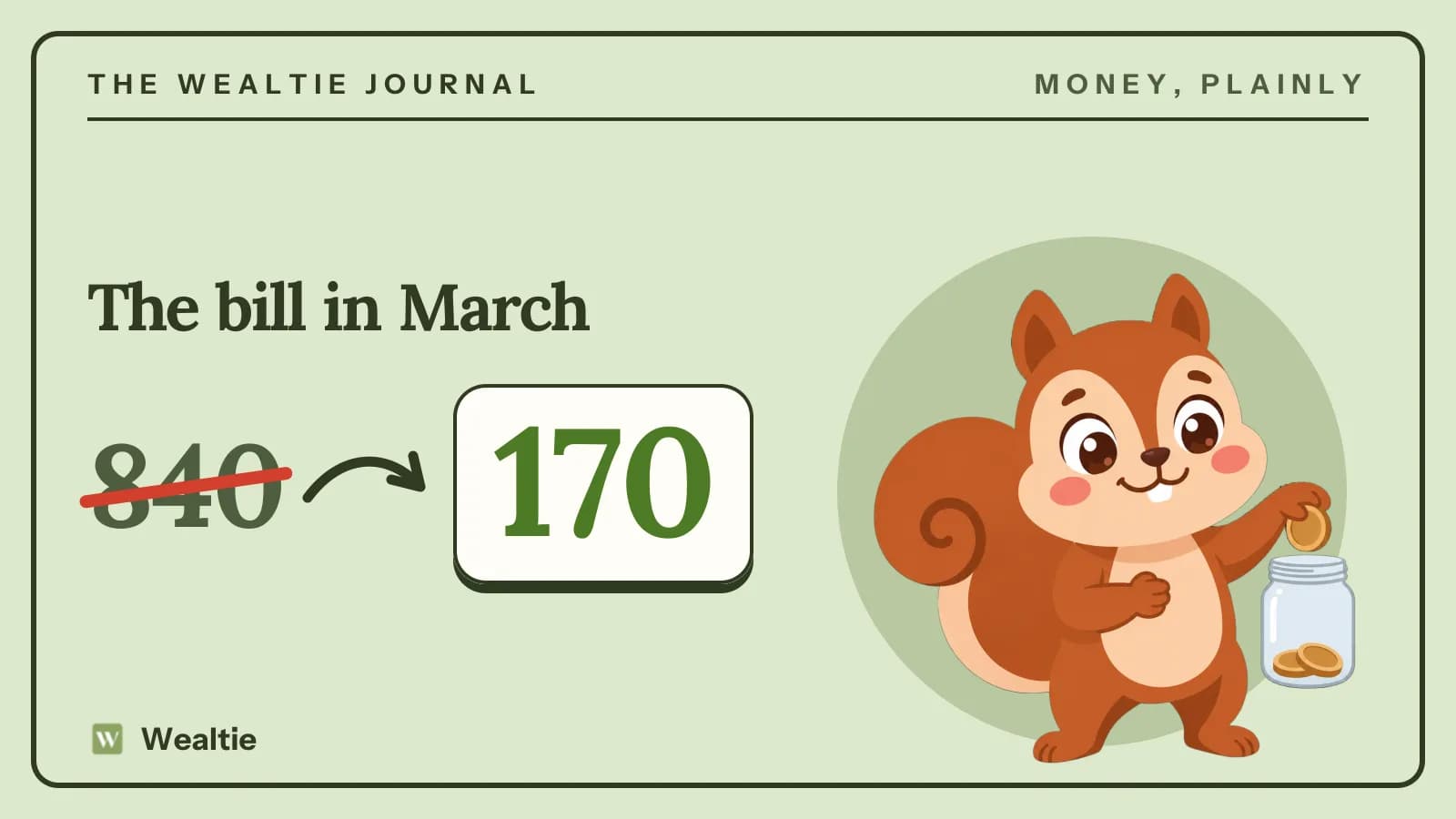
Saving: How much to keep in checking: one month of bills, plus a cushion
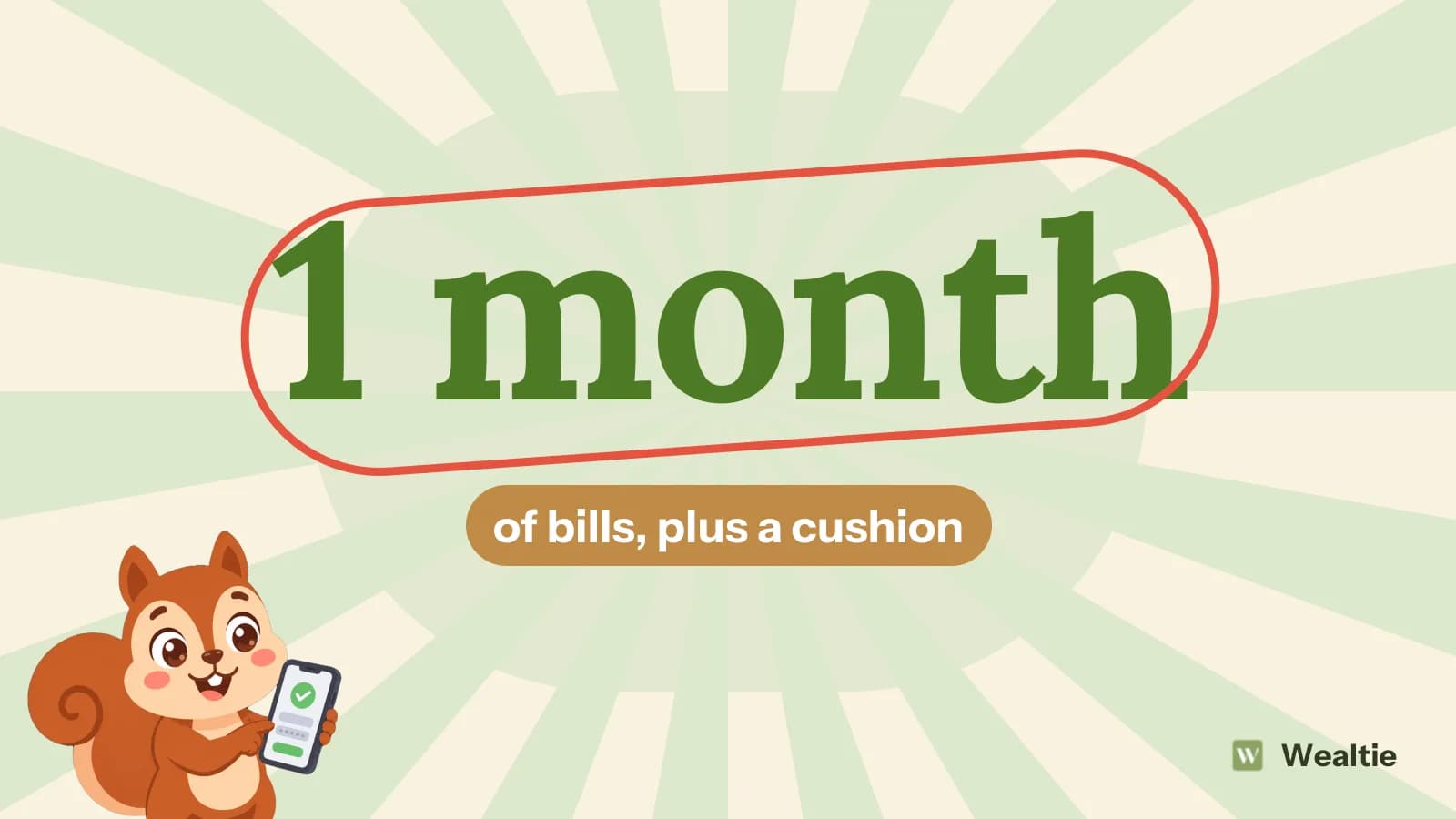
How much to keep in checking comes down to one month of bills and spending, plus a cushion of about a week's spending. On 2,400 a month, that's around 2,700, and anything above it belongs in savings.
 By Wealtie Team · 3 min read
Key takeaways
- Keep about one month of bills and everyday spending in your checking account, plus a cushion of roughly one week's spending.
- On outgoings of 2,400 a month, that's about 2,700.
- If you're paid weekly or every two weeks, you can keep less, because the next payday is closer.
- Sweep anything above the target into savings each month, so it doesn't get absorbed into ordinary spending.
How much should you keep in checking?
Enough to pay everything that leaves the account before your next payday, plus a cushion. For someone paid monthly, that's one month of bills and everyday spending and about a week's spending on top.
Here's the sum on outgoings of 2,400 a month, in round numbers that work in any currency:
| Line | Amount |
|---|---|
| Rent and bills | 1,500 |
| Food, travel, everything else | 900 |
| One month of outgoings | 2,400 |
| Cushion, about one week of spending | 300 |
| Target balance on payday | 2,700 |
The cushion's there for timing. A bill comes out two days early, a card payment posts late, and an annual charge you forgot about lands in the same week. It's a small amount that keeps those from turning into overdraft fees.
In the UK and much of Europe this is called a current account. The sum's the same.
Does it change if you're paid weekly or every two weeks?
Yes, you can keep less, because money arrives sooner. What matters is the largest amount that leaves between two paydays.
| Paid | What to cover | Target on 2,400 a month |
|---|---|---|
| Monthly | The whole month | 2,700 |
| Every two weeks | Bills due before next payday, plus two weeks of spending | About 1,800 to 2,000 |
| Weekly | Bills due that week, plus a week of spending | Depends on when rent falls |
Rent's the part that makes this lumpy. If it's 1,000 and due on the 1st, the week before it needs to have 1,000 sitting there, whatever your pay schedule. How to organize bills shows how to move due dates to just after payday, which lowers the balance you need.
What if your income changes month to month?
Keep more, because the next payment isn't certain. Two months of outgoings is a reasonable target if clients pay at different times, and the rest of the system is in the guide on how to budget on irregular income.
An option that works well is a separate account where all income lands. You pay yourself a fixed amount into the everyday account each month, and that account can then follow the one-month rule. Paying yourself a salary has the steps.
How do you know if you're keeping too much?
Look at the lowest your balance got in each of the last three months. If it never dropped below 1,500, about 1,500 of that money isn't doing anything, and it could be earning interest somewhere else.
People often hold too much in checking without meaning to. It builds up over a few good months, and the balance starts to feel like it's for spending. Moving it makes the decision for you.
Run this check once or twice a year, and again after a pay rise or a move, since your outgoings shift and the target shifts with them. Write the new target down somewhere you'll see it. If the account pays no interest, the gap between your balance and the target is easy to put a cost on: it's whatever a savings account would have paid you.
What should happen to the extra?
Sweep it on the same day each month. Set a date just after payday, look at the balance, and move anything above your target.
Go down this list until the money runs out:
- Any debt with a high interest rate
- An emergency fund that isn't full yet
- A sinking fund for bills you know are coming
- Longer-term goals
Keep the savings in a different account from your everyday money. That's the part that matters most, since money you can see beside your spending money gets spent.
What if your balance keeps falling below the target?
Then the target's fine and the outgoings have grown. Look at the last three months of spending and find the category that's moved, usually eating out, shopping or a subscription that went up.
If you keep going into your overdraft near the end of each month, the timing might be the issue. Moving a bill's due date to just after payday can fix it without spending any less. Where the money's short, how to stop living paycheck to paycheck is the next read.
How do you keep an eye on it in Wealtie?
Add your checking account with today's balance and log what moves. Your net worth tracker shows it alongside savings, and moving money between them is a transfer that isn't counted as spending. The Free plan includes two accounts, which covers one for everyday money and one for savings.
If the number stops matching your bank, Update Balance corrects it without counting the difference as spending. A monthly limit in the budget tracker then shows how much of the month's outgoings you've used.
Questions people ask
About one month of bills and spending, plus a cushion of roughly one week's spending. On outgoings of 2,400 a month, that's around 2,700.
Yes, in the sense that money above your target usually earns little and gets spent more easily. Sweep the excess into savings or toward debt once a month.
Enough to cover spending until your next payday, plus a small cushion. For a monthly earner with 900 of everyday spending, that's about 900 to 1,200 once the bills have gone out.
Yes. Keeping savings in a separate account stops it from being spent by accident, and makes it easy to see what's left for the month.
This article is general information, not financial, tax or legal advice. Your situation is your own; check the numbers that apply to you before you act on them.