Budgeting: Garage door cost: replacement, repair and electric doors
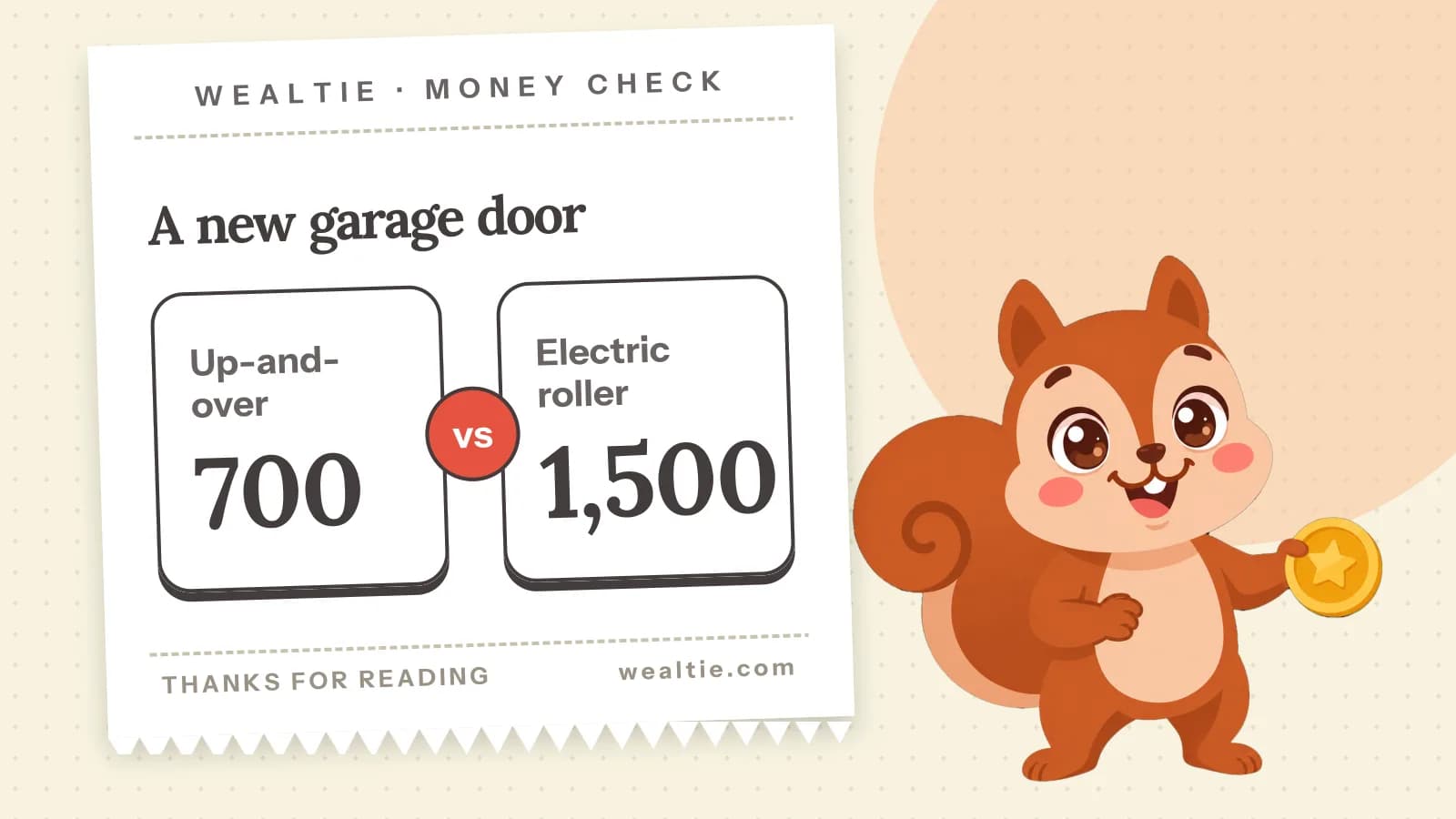
Garage door cost depends on the type of door and whether you add an electric opener, with roller and sectional doors costing more than basic up-and-over doors. In a worked example, a new up-and-over door costs 700 fitted, against 1,500 for an electric roller door.
 By Wealtie Team · 3 min read
Key takeaways
- Garage door cost depends on the door type and whether it's electric.
- Many faults, like springs and cables, can be repaired for much less.
- Insulated doors cost more but help if the garage is used as a room.
- Electric openers add convenience and cost.
How much does a garage door cost?
A garage door protects your car, bikes and tools, and it's a big part of how your home looks from the street. Over time, doors can stick, rust, become noisy or stop working. Garage door cost depends on the type of door, its size and material, whether it's electric and whether the frame needs work.
Here's a worked example of common options, fitted, in round numbers that work in any currency:
| Option | Cost |
|---|---|
| Repair springs or cables | 150 |
| Up-and-over door | 700 |
| Electric roller door | 1,500 |
| Insulated sectional door | 2,000 |
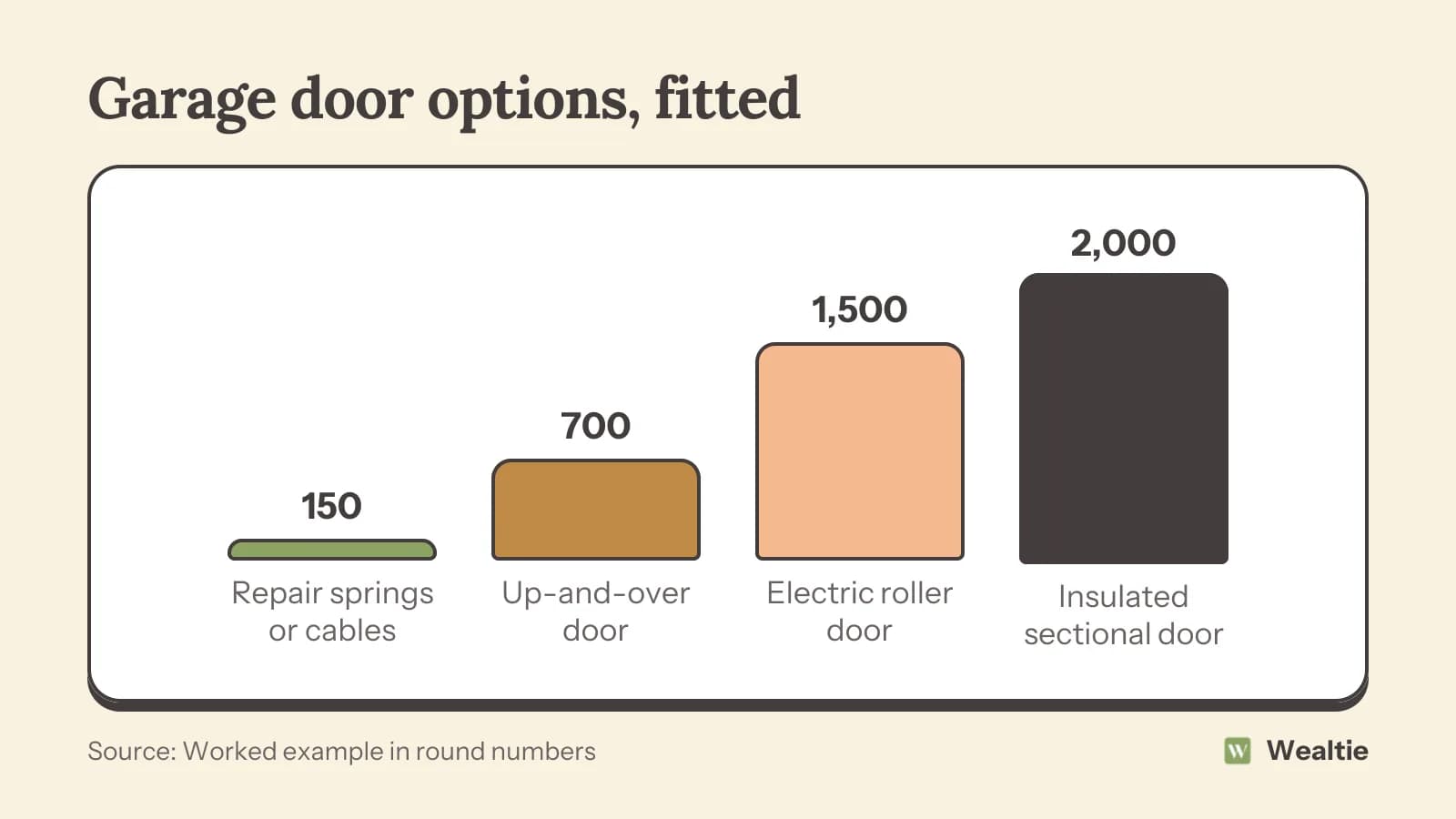
Repairing a common fault like a broken spring or cable might cost around 150. A basic up-and-over door costs about 700 fitted. Electric roller doors and insulated sectional doors cost more but are more convenient and can save space on the driveway. Prices vary by size, material and supplier.
What types of garage door are there?
Up-and-over
The most common and usually cheapest type. The door swings up and back into the garage.
Roller
The door rolls up into a box above the opening, saving space inside and on the driveway. Usually electric.
Sectional
Panels slide up and back along tracks. Often insulated and well sealed, which suits garages used as workshops or rooms.
Side-hinged
Opens like a pair of large doors. Traditional and good for frequent pedestrian access.
Should you repair or replace?
Repair when parts fail
Springs, cables, rollers and locks wear out but are often cheap to replace. A door that's structurally sound is usually worth repairing.
Replace when the door is damaged or unsafe
Badly rusted, warped or dented doors, or ones that won't close securely, may be better replaced. Repair or replace covers how to decide.
Upgrade for a reason
If you want better insulation, security or an electric opener, replacement may make sense even if the old door still works.
Is an electric garage door worth it?
Electric doors open with a remote, which is convenient in bad weather and helpful for people with limited mobility. Adding an electric opener to some existing doors might cost around 400, which can be cheaper than a new door. They need occasional servicing, and you'll want a manual release in case of power cuts.
How do you save on a garage door?
Get several quotes
Compare suppliers and check what's included, like removing the old door and fitting a new frame.
Repair before replacing
A good engineer can tell you if a repair will extend the door's life.
Maintain it
Lubricating moving parts and checking springs and cables once a year helps prevent failures.
Choose a standard size
Standard sizes cost less than made-to-measure doors.
Check insurance requirements
Some insurers ask for certain locks on garages, especially if valuables are stored there. How to save money on home insurance covers what's often required.
How do you budget for it?
Garage doors last many years but eventually need repairs or replacement. Saving a little each month in a sinking fund or a home maintenance budget means the cost doesn't come as a shock. If you're planning bigger work, how to plan a home renovation budget covers fitting it in.
Safety matters with garage doors. Springs and cables are under a lot of tension and can cause injury if they break or are adjusted wrongly. Repairs to these parts are best left to a trained engineer. Electric doors should have safety features that stop and reverse the door if something is in the way, and it's worth testing these regularly, especially if children or pets are around.
Think about how you use the garage before choosing a new door. If it's mainly for storage, a basic up-and-over door may be enough. If you park a car there daily, a roller door that opens straight up can be easier with a short driveway. If you use the garage as a workshop or gym, an insulated sectional door can make it more comfortable all year.
Security is another factor. Garages often hold bikes, tools and garden equipment, which are attractive to thieves. A sturdy door with good locks can deter break-ins, and some insurers ask for this.
Finally, keep the remote controls and any warranty information safe, and ask the installer how to release the door manually in a power cut.
Ask for a written quote that lists the door, frame, opener, fitting and removal of the old door, so you can compare suppliers fairly.
How can Wealtie help you plan home costs?
Log garage door repairs and replacements in a home expense category, and set a monthly budget for upkeep. Seeing yearly maintenance costs helps you plan for bigger jobs.
Questions people ask
In a worked example, an up-and-over door cost about 700 fitted, an electric roller door 1,500 and an insulated sectional door 2,000.
Often, yes. Springs, cables and rollers are cheap to replace if the door itself is sound.
Many doors can be fitted with an opener. In a worked example, adding one cost about 400.
Lubricate moving parts, check springs and cables once a year and fix small problems before they get worse.
This article is general information, not financial, tax or legal advice. Your situation is your own; check the numbers that apply to you before you act on them.