Income & freelancing: How to save for retirement as a freelancer
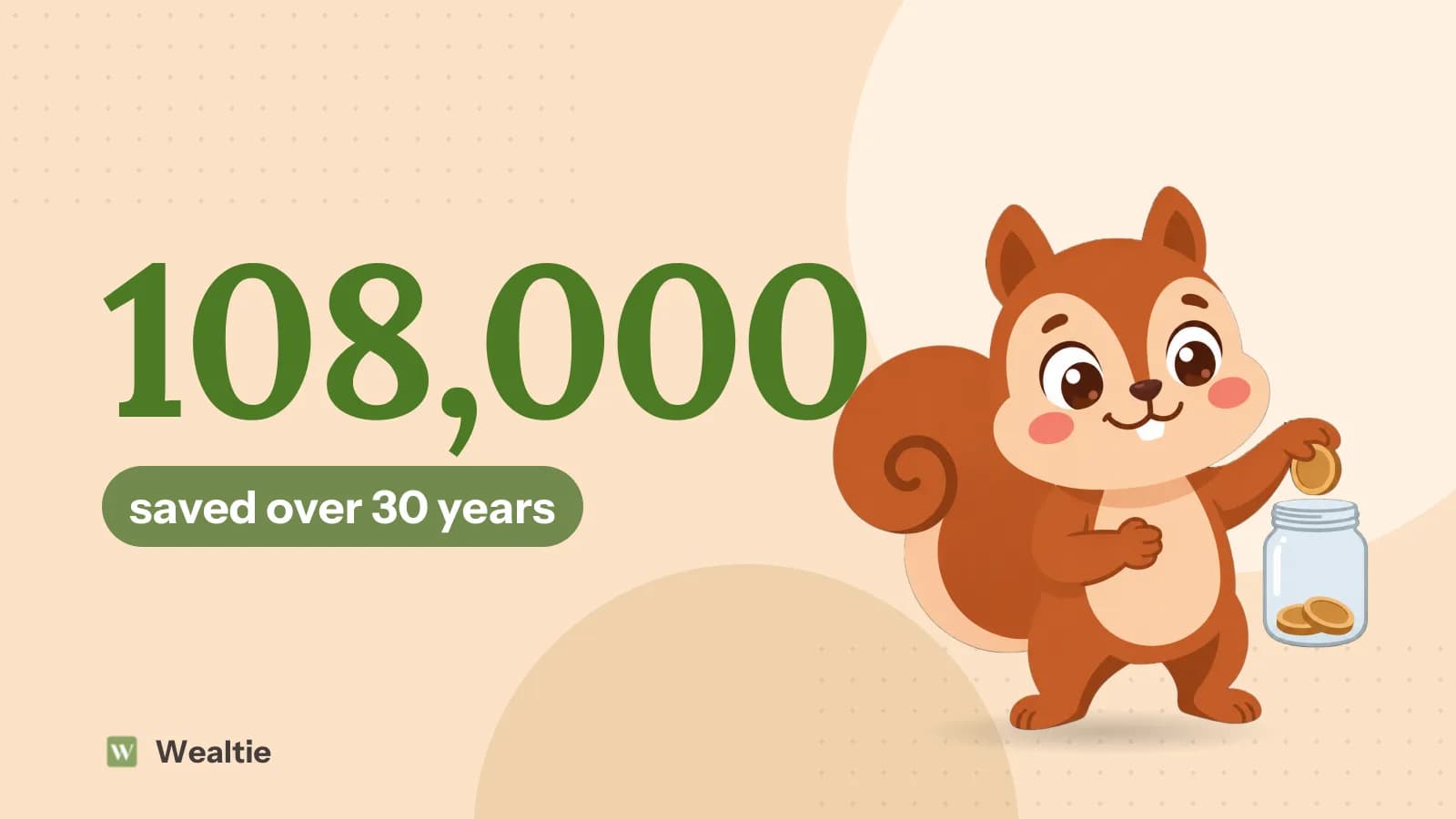
To save for retirement as a freelancer, set aside a fixed share of every payment, just as you do for tax, and automate it so it happens before you spend. In a worked example, saving 300 a month for 30 years puts aside 108,000 before any growth, and starting early makes the biggest difference.
 By Wealtie Team · 3 min read
Key takeaways
- Freelancers have no employer pension, so retirement saving is up to them.
- In a worked example, 300 a month for 30 years puts aside 108,000 before any growth.
- Set aside a share of every payment, like you do for tax, so saving follows your income.
- Check the retirement schemes and tax relief available to self-employed people where you live.
Why is it harder to save for retirement as a freelancer?
Because nobody does it for you. Employees often have pension contributions taken from their pay automatically, sometimes with extra from their employer. Freelancers have to set it up themselves, and with income that changes from month to month, it's easy to put off. Many freelancers focus on tax, bills and the next client, and retirement slips down the list. Some plan to rely on selling their business later, but many freelance businesses have little sale value, so it's safer to save separately.
The good news is that a simple system makes it automatic, and starting with small amounts still makes a real difference.
How much should you save?
As much as you can manage steadily, starting as early as possible. Here's a worked example of saving 300 a month, before any growth, in round numbers that work in any currency:
| Years | Total saved |
|---|---|
| 10 | 36,000 |
| 20 | 72,000 |
| 30 | 108,000 |
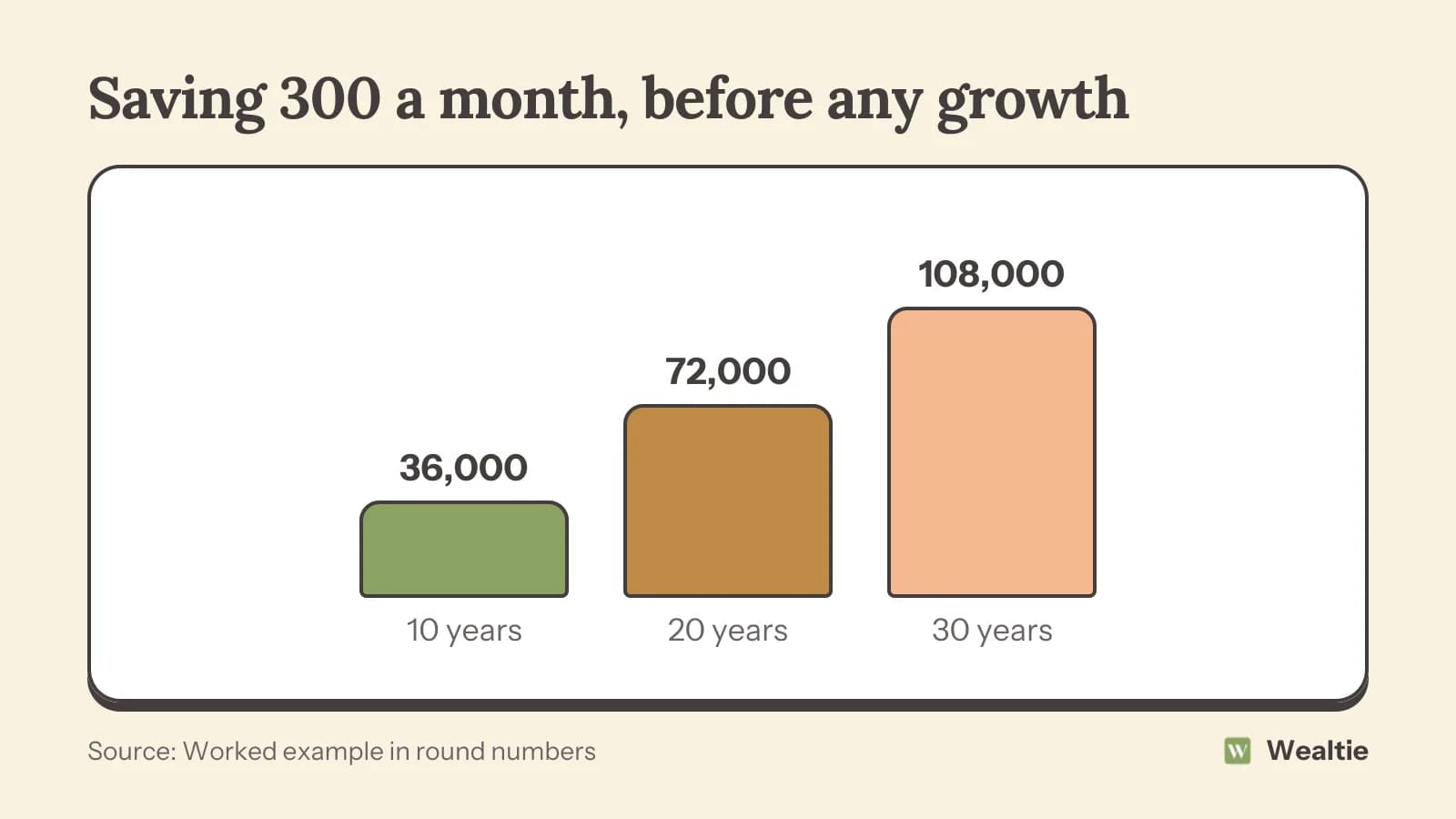
Money in a pension or investment can grow over time, so the final amount could be higher, but growth isn't guaranteed. The key point is that time matters: starting ten years earlier adds a lot, even at the same monthly amount. How much of your income to save helps you choose a target.
How do you save when income varies?
Save a share, not a fixed amount. Many freelancers set aside a portion of every payment for tax as soon as it arrives. Doing the same for retirement means saving rises in good months and falls in quiet ones, without breaking the plan. How to set aside money for taxes uses the same method.
Pay yourself first
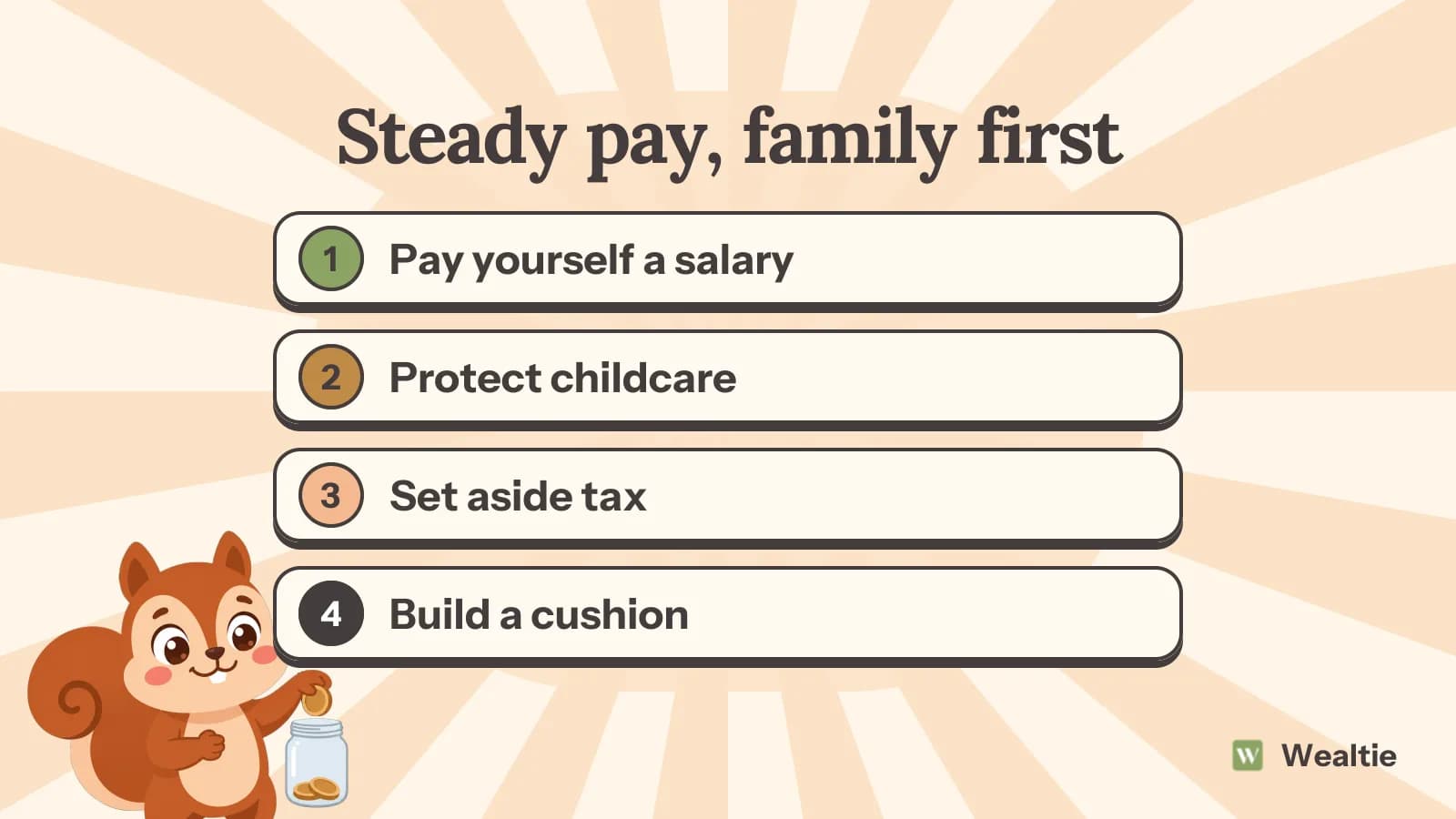
When a client pays, split the money straight away: a share for tax, a share for retirement, and the rest for your business and personal budget. Automating the split, or doing it on the same day every week, makes it a habit. How to pay yourself a salary as self-employed covers a steady system for this.
What options are there for freelancers?
It depends on where you live. In many countries, self-employed people can use:
- Personal pensions with tax relief on contributions
- Self-employed retirement accounts designed for people without an employer scheme
- Tax-efficient savings or investment accounts
- State pension contributions, which may depend on paying certain taxes or contributions
Each has different rules on how much you can pay in, when you can access the money and what tax relief applies. A financial adviser or official government guidance can help you choose. Should I save or invest covers the difference between the two. Some schemes let you choose how your money is invested, while others choose for you, and low fees matter a lot over decades, so compare them.
What if you can't afford much now?
Start small. Even a modest amount each month builds a habit and gets your money working sooner. You can raise it as your income grows, for example by increasing your retirement share each time you raise your rates. Some schemes let you pay in a lump sum, which suits a good year or a large project. If a month is especially tight, it's better to lower your retirement share for a while than to stop altogether, so the habit stays in place.
Using good months
When a big payment arrives or a year goes well, put an extra amount into retirement savings. This helps make up for quieter years and takes advantage of any tax relief available.
How do you build retirement into your rates?
Include it in what you charge. An employee's pay often comes with pension contributions on top, so your freelance rate should allow for the same. When you set or raise your rates, include retirement saving alongside tax, holidays and business costs. How to set your freelance rate covers the full picture.
What about an emergency fund?
Have both. Retirement savings are usually locked away until later in life, so they can't help with a quiet month or an unexpected bill. Keep an emergency fund for that, so you're not tempted to stop retirement saving or borrow when income dips. A common order is to build a small emergency fund first, then start retirement saving, then grow both together.
How do you track retirement savings in Wealtie?
Add your retirement savings as an account and move money into it as a transfer each time you're paid, which isn't counted as spending. Track client payments in the income tracker, and set a monthly income goal that includes your retirement share. Your expense categories show what's left for everyday spending.
Questions people ask
By setting aside a share of every payment into a pension or retirement account, often with tax relief, depending on where they live.
As much as you can manage steadily, starting early. In a worked example, 300 a month for 30 years puts aside 108,000 before growth.
Save a share of each payment rather than a fixed amount, so saving rises and falls with your income.
Yes. Your rate should cover retirement saving, as well as tax, holidays and business costs.
This article is general information, not financial, tax or legal advice. Your situation is your own; check the numbers that apply to you before you act on them.