Budgeting: Emergency plumber cost: what you'll pay and how to avoid it
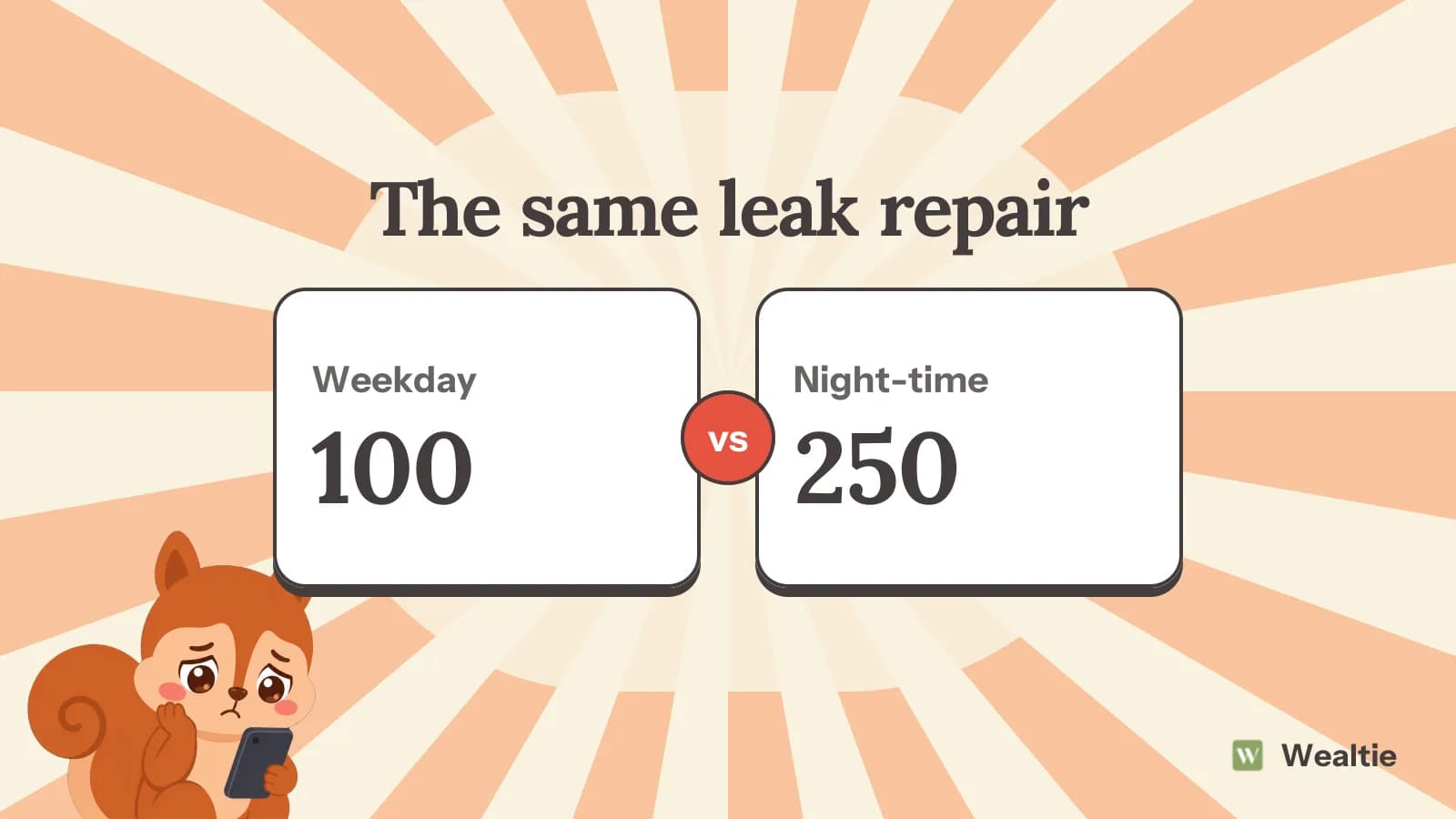
Emergency plumber cost is mostly the out-of-hours call-out fee, which can make a small fix far more expensive than a weekday visit. In a worked example, a night-time leak repair costs 250, against 100 for the same job on a weekday.
 By Wealtie Team · 3 min read
Key takeaways
- Emergency plumber cost is driven by out-of-hours call-out fees.
- Turning off the water and waiting for a weekday can save a lot.
- Know where your stopcock is before you need it.
- Home emergency cover or a repair fund helps with surprise bills.
How much does an emergency plumber cost?
A burst pipe, overflowing toilet or leak at night or at the weekend can feel urgent, and calling a plumber straight away is often the first instinct. But emergency plumber cost is much higher than a normal visit, mainly because of out-of-hours call-out fees. The same small repair can cost two or three times more at midnight than on a weekday morning.
Here's a worked example of a small leak repair, in round numbers that work in any currency:
| Visit | Cost |
|---|---|
| Weekday visit | 100 |
| Night-time emergency | 250 |
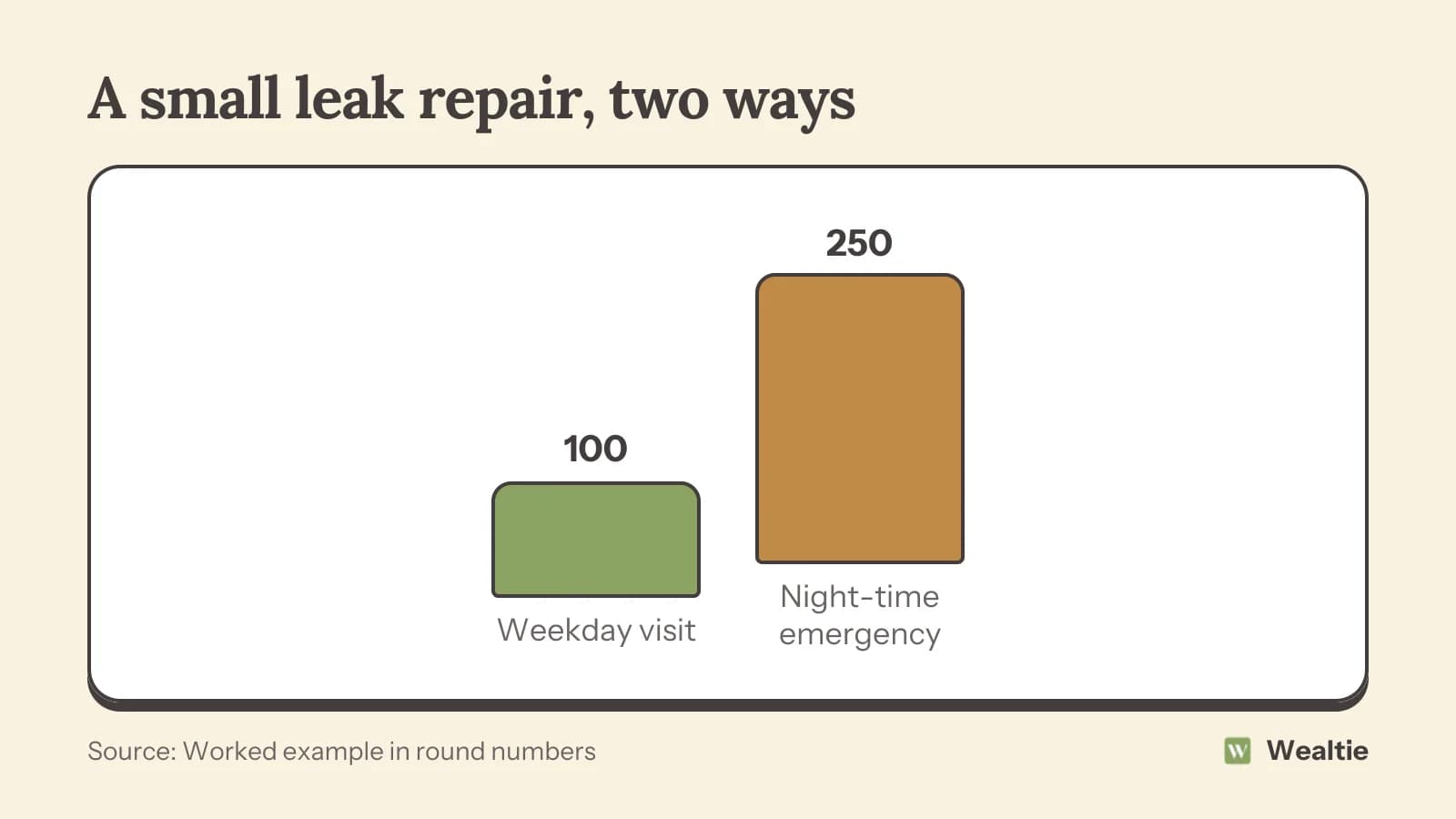
The weekday visit includes a standard call-out, an hour of work and parts. The night-time visit includes a higher emergency call-out fee. Prices vary by area and company, so it's worth knowing a local plumber's rates before you need one.
What counts as a plumbing emergency?
Real emergencies
A burst pipe you can't stop, water coming through a ceiling near electrics, no water at all, or a leak you can't contain are true emergencies. If water is near electrics, turn off the electricity at the fuse box if it's safe to do so.
Things that can usually wait
A dripping tap, a slow drain, a running toilet or a small leak you can contain with a bucket can usually wait until normal hours. Turning off the water to that fixture or the whole house stops further damage. What counts as an emergency? covers deciding what needs money now.
How do you avoid an emergency call-out?
Know where your stopcock is
The stopcock or main water valve turns off the water to your whole home. Find it now, check it turns and show everyone in the household. In an emergency, turning it off can stop a flood and give you time to wait for a normal visit.
Keep basic tools
A plunger, an adjustable wrench, plumber's tape and a bucket can handle many small problems.
Check for small leaks
Look under sinks and around toilets and boilers regularly. Fixing a small drip early is far cheaper than repairing water damage.
Protect pipes in winter
Insulating pipes in lofts and outside walls helps prevent frozen and burst pipes.
Be careful what goes down drains
Grease, wipes and food waste cause many blockages.
How do you pay for plumbing emergencies?
Emergency fund
An emergency fund means a surprise plumbing bill doesn't go on a credit card. How to build an emergency fund covers how much to keep aside.
Home insurance
Some home insurance covers water damage, and some policies include home emergency cover for call-outs. How to save money on home insurance covers what policies include.
Home emergency cover
Separate cover can pay for emergency call-outs, though it costs money every month. Compare the premium with how often you'd use it.
A home maintenance fund
Setting aside a little each month for repairs helps with both emergencies and planned maintenance. How to plan a home maintenance budget covers how much to save.
How do you choose a plumber in an emergency?
Ask for the call-out fee and hourly rate before they come out, and whether parts are extra. Check reviews if you can. Be wary of anyone who won't give a price upfront. Keeping the number of a trusted local plumber saved in your phone means you won't have to search in a panic.
It's worth building a relationship with a local plumber before you need one in a hurry. Using the same plumber for small jobs, like fixing a dripping tap or servicing a boiler, means you'll have someone you trust to call in an emergency. Some plumbers prioritise existing customers or offer fairer out-of-hours rates to people they already know.
If you rent, check your tenancy agreement before calling a plumber. In many places, landlords are responsible for plumbing repairs and may have a preferred contractor. Calling your landlord or letting agent first, unless it's a true emergency, avoids paying for a repair you're not responsible for.
Keep a note of what happened, what was repaired and how much it cost. If problems repeat, that record helps you decide whether a bigger repair or replacement would be cheaper in the long run. Repair or replace covers making that decision for appliances and fittings.
Finally, after any leak, check for hidden damage, like damp walls or warped floors. Dealing with it quickly can prevent much bigger repair bills later.
How can Wealtie help with home repair costs?
Log repairs in a home maintenance expense category and set a monthly budget for home upkeep. Over a year, you'll see what repairs cost, which helps you plan how much to keep aside.
Questions people ask
In a worked example, a night-time leak repair cost about 250, compared with 100 for the same job on a weekday.
A burst pipe you can't stop, water near electrics, no water or a leak you can't contain. Small drips can usually wait.
Know where your stopcock is, keep basic tools, check for small leaks, protect pipes in winter and keep drains clear.
Some policies cover water damage or include home emergency cover. Check your policy for what's included.
This article is general information, not financial, tax or legal advice. Your situation is your own; check the numbers that apply to you before you act on them.