Budgeting: The Diderot effect: why one new purchase leads to more
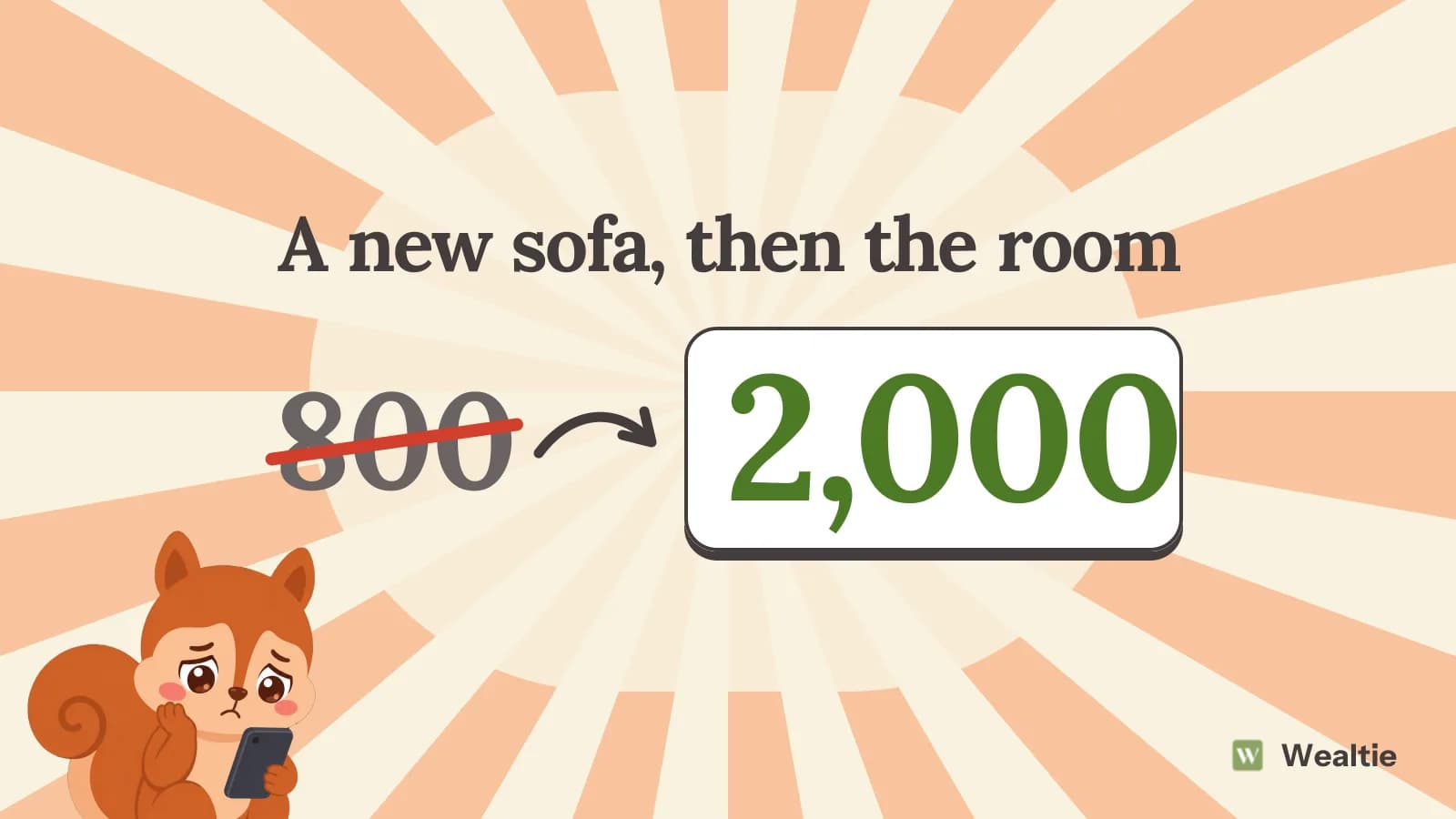
The Diderot effect is the pull to buy more after one new purchase, because the new item makes everything around it look worse. A new sofa that costs 800 can easily turn into a 2,000 living room refresh.
 By Wealtie Team · 3 min read
Key takeaways
- The Diderot effect is the urge to upgrade everything around a new purchase.
- It turns one planned cost into several unplanned ones.
- A one-in, one-out rule and a waiting period slow the spiral.
- Budget for the whole project upfront if you know you'll want matching items.
What is the Diderot effect?
The Diderot effect is what happens when one new purchase makes the things around it feel out of place, so you start replacing those too. It's named after the French writer Denis Diderot, who was given a beautiful scarlet dressing gown. Next to it, his old study looked shabby, so he replaced his chair, then his desk, then his wall hangings, until he had a new room and a pile of debt. He wrote an essay about regretting it, and the anthropologist Grant McCracken later gave the pattern its name.
The idea is that we see our belongings as a set that should match our sense of who we are. When one item moves up a level, the gap between it and everything else feels uncomfortable, and buying more is the quickest way to close it. Nothing about the old items has changed. They still work exactly as they did the day before. What changed is the comparison.
How does one purchase turn into many?
Here's a worked example in round numbers that work in any currency. You plan to replace a worn sofa and set aside 800. The new sofa arrives and looks great, but now the rug looks tired next to it, so you buy one to match. The cushions clash with the new colours. The old coffee table is too low. The lamp and curtains look dated.
| Purchase | Cost |
|---|---|
| New sofa | 800 |
| Rug to match | 300 |
| Cushions and throw | 150 |
| Coffee table | 350 |
| New lamp and curtains | 400 |
| Total | 2,000 |
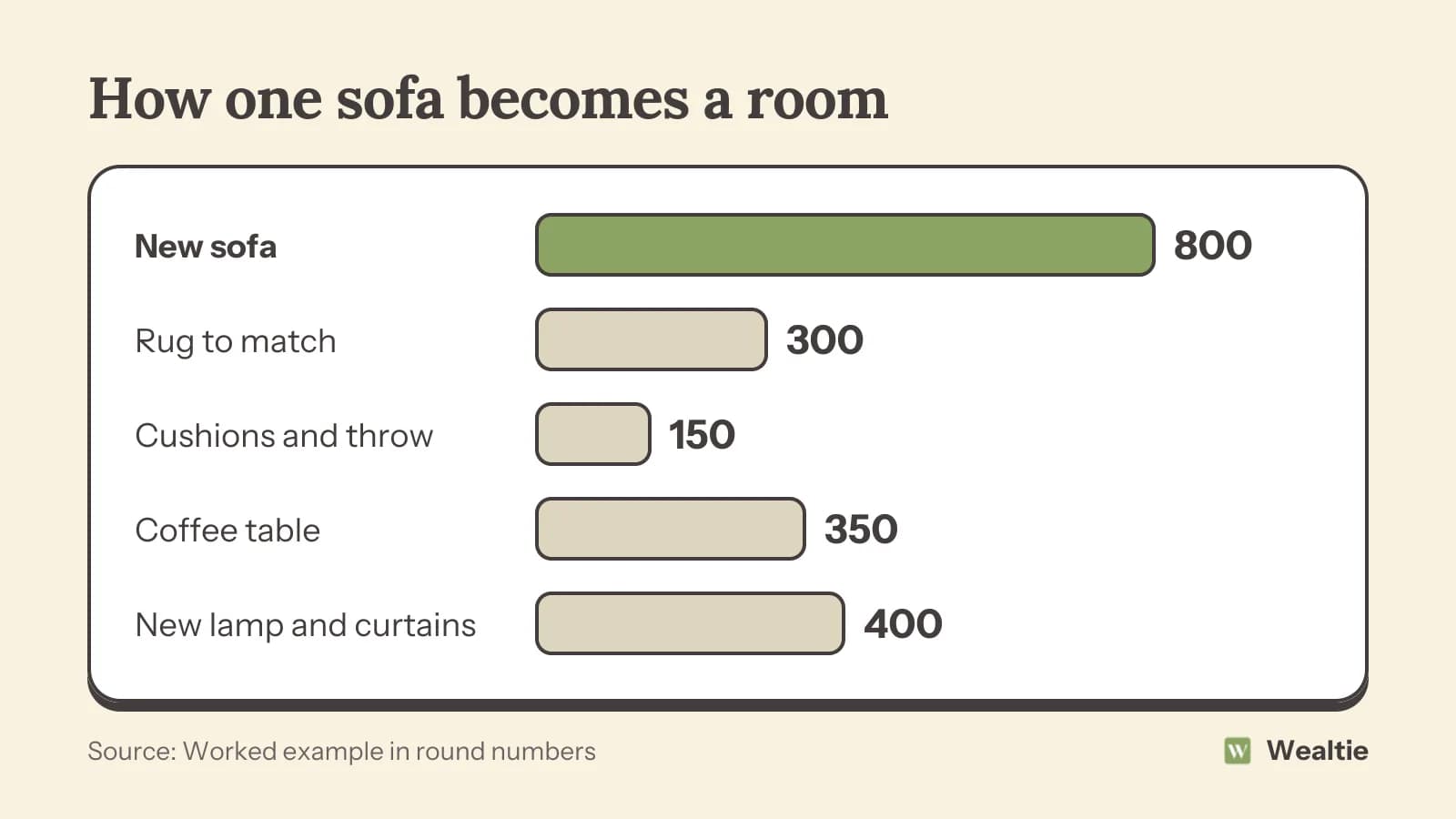
None of those extra purchases was planned, and each one on its own felt small next to the sofa. Together they cost more than the sofa itself. That's the pattern to watch for: the first purchase is a decision, and the rest feel like finishing the job.
Where does the Diderot effect show up?
Home and furniture
New furniture, a repainted room or a kitchen upgrade are classic triggers, because rooms are seen as a whole. How to furnish a home on a budget covers buying in stages without the spiral.
Clothes
A new coat leads to new boots to go with it, then a bag, then a scarf. A capsule wardrobe works partly because it limits how many new pieces any one item can pull in.
Tech and hobbies
A new phone needs a case, a charger, earbuds and a smartwatch that pairs with it. A new bike needs better clothes, lights and a computer. Hobbies can grow the same way, one upgrade at a time.
Lifestyle after a pay rise
A higher income can trigger the effect on a bigger scale: a better flat, then furniture to suit it, then a car that matches the address. Lifestyle creep covers how spending quietly rises with income.
How do you stop the Diderot effect?
Notice the trigger
The urge usually starts right after a new purchase arrives. When you catch yourself thinking "this doesn't go with the new one", that's the effect at work. Naming it makes it easier to pause.
Wait before the follow-up buy
Give yourself a waiting period, like 30 days, before any purchase that's prompted by a recent one. Many of those urges fade once the new item stops feeling new. How to stop impulse buying covers waiting rules in more detail.
Use one in, one out
When something new comes in, something old goes out, and nothing else gets replaced at the same time. It keeps upgrades to the item you planned.
Budget for the whole project
If you know you'll want the room to match, plan and price the whole thing upfront, then decide if it's worth it. A planned 2,000 refresh is fine. An unplanned one that grew from 800 is the problem.
Think in cost per use
Before replacing something that still works, ask how often you'll use the new one and whether it improves your day. Cost per use helps put a fair value on upgrades.
Buy for the life you have
Many upgrades are about the person you'd like to be rather than how you live now. Choosing items that suit your current routine keeps the set feeling complete without constant additions.
How can Wealtie help you spot it?
Put home, clothes and tech purchases in their own expense categories, and set a monthly budget for each. A follow-up spiral shows up as one category climbing fast in the weeks after a big purchase, which is your cue to pause before the next item.
Questions people ask
The Diderot effect is the urge to buy more after one new purchase, because the new item makes your other belongings look worse by comparison.
The name comes from the writer Denis Diderot, who replaced his whole study after being given a new dressing gown. The anthropologist Grant McCracken named the pattern.
Wait 30 days before any purchase prompted by a recent one, use a one-in, one-out rule and budget for the whole project upfront.
No. A planned upgrade you can afford is fine. The problem is when one purchase quietly leads to several you never planned.
This article is general information, not financial, tax or legal advice. Your situation is your own; check the numbers that apply to you before you act on them.