Saving: How a capsule wardrobe saves money on clothes
A capsule wardrobe is a small set of clothes that all work together, and it saves money because you buy fewer, better pieces and stop buying things you rarely wear. In a worked example, clothing spending falls from 1,200 to 600 a year once the capsule is in place.
 By Wealtie Team · 3 min read

Key takeaways
- A capsule wardrobe is a small set of clothes that all work together.
- In a worked example, clothing spending falls from 1,200 to 600 a year.
- Start with what you already own, and fill gaps slowly.
- Buying fewer, better pieces lowers the cost per wear.
What is a capsule wardrobe?
A capsule wardrobe is a small collection of clothes that all go together, so you can make many outfits from fewer pieces. It usually means a handful of trousers or skirts, tops, layers, shoes and a coat or two, in colours that mix easily. There's no set number. The idea is to own clothes you wear often and like, rather than a full wardrobe with little to wear.
It's not about owning as little as possible. It's about choosing on purpose.
How does a capsule wardrobe save money?
You buy less, and what you buy gets worn. Here's a worked example of yearly clothing spending, in round numbers that work in any currency:
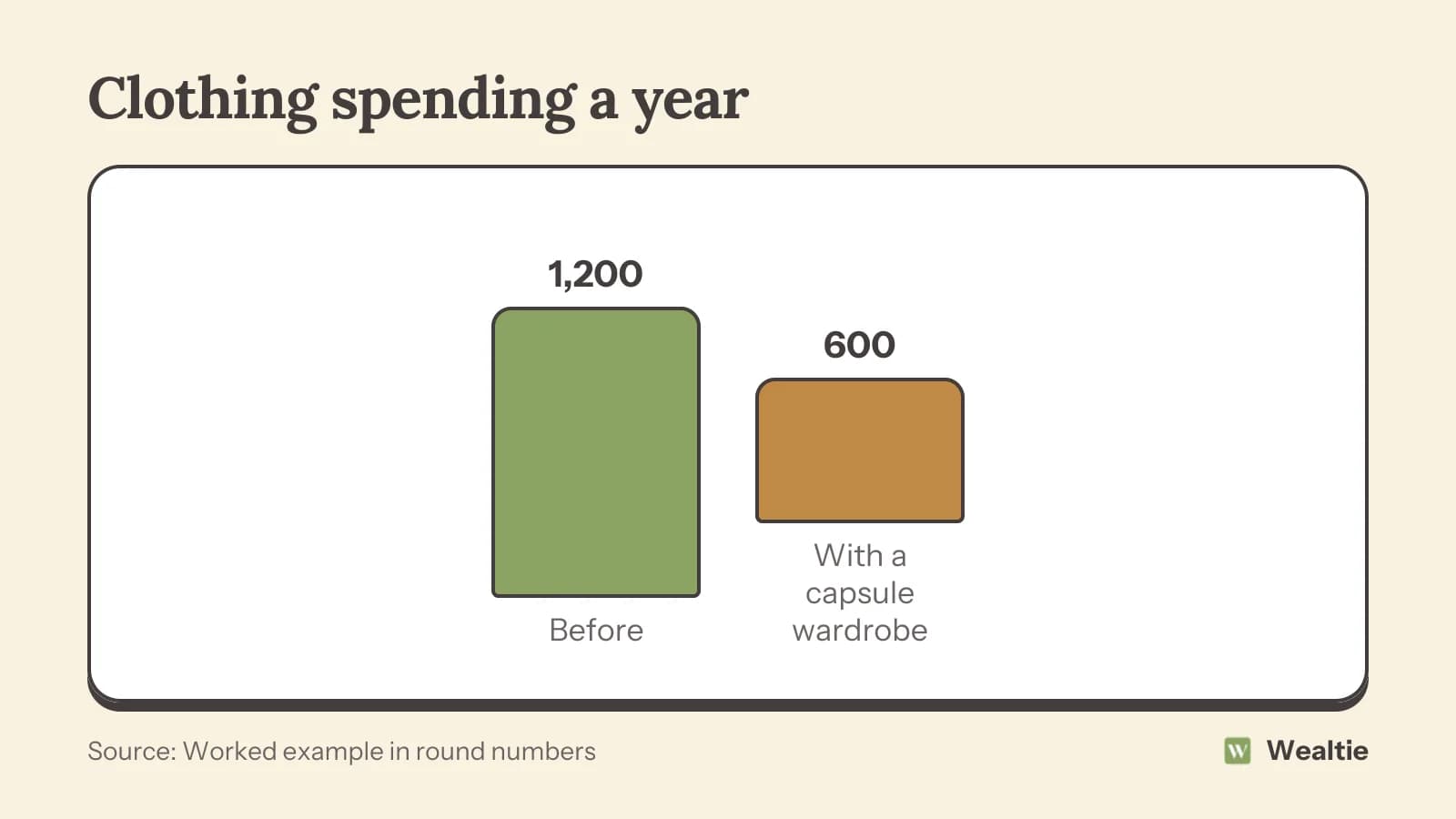
In this example, spending halves from 1,200 to 600 a year. Most of the saving comes from fewer impulse buys and fewer items bought for one occasion and never worn again. Your own figures depend on your current habits.
Cost per wear
A 120 jacket worn 150 times costs 0.80 each time. A 30 top worn five times costs 6 each time. Thinking in cost per wear makes it easier to spend a bit more on pieces you'll wear constantly and skip cheap ones that won't last. Cost per use covers this way of thinking.
How do you start a capsule wardrobe?
Start with what you already own. Building a capsule doesn't mean buying a new wardrobe.
- Take everything out and sort it into: wear often, wear sometimes, never wear.
- Notice the pattern. Which colours, shapes and fabrics do you reach for?
- Keep the favourites that fit and work with other pieces.
- Set the rest aside for a few weeks before deciding what to sell or give away.
- List real gaps, like a coat that goes with everything or shoes for work.
Most people find they already own most of their capsule. The sorting also shows which shops and styles led to regret, which helps you avoid them next time.
How do you fill the gaps?
Slowly and with a list. Buy one piece at a time, choosing quality and versatility over trends. Before buying, ask whether it goes with at least three things you already own. Second-hand shops and online selling sites are good places to find well-made basics for less. How to buy second-hand has tips.
Choose a simple colour palette
A few neutral colours with one or two accents make almost everything mix. Looking after clothes, by washing at lower temperatures and mending small tears, makes each piece last longer. That's what lets a small wardrobe create many outfits, and it stops you buying items that only work with one other piece.
What do you do with the clothes you don't keep?
Sell what's in good condition, give away the rest and recycle anything worn out. Selling can bring in money to put towards the few pieces you need. How to sell things you don't use covers getting a good price.
How do you set a clothing budget?
Decide on a yearly amount and divide it by twelve. With a capsule, much of the year may involve buying very little, then replacing a few items as they wear out. A yearly budget makes it easier to buy one good coat when you need it, rather than several cheap ones. How to save money on clothes has more ideas.
Keep a wish list
When you see something you like, add it to a list instead of buying it. Review the list each month. Many items lose their appeal, and the ones that stay are usually pieces you'll wear.
Is a capsule wardrobe right for everyone?
It works for most people, with adjustments. If your work needs a uniform or formal clothes, those form part of your capsule. Families can use the idea for children, keeping a small set of clothes that mix and match as they grow. You can keep a few special pieces for occasions too. The aim is fewer regrets, not strict rules. Reviewing your capsule at the change of each season keeps it working without a big shop.
How do you track clothing spending in Wealtie?
Give clothing its own line in your expense categories, so you can see what you spend over a year. A monthly limit in the budget tracker, with Budget Health, shows whether you're on track, and comparing this year with last shows what the capsule has saved.
Questions people ask
A small set of clothes that all work together, so you can make many outfits from fewer pieces.
Usually. In a worked example, clothing spending falls from 1,200 to 600 a year.
Sort what you own, keep favourites that mix well, list real gaps and fill them slowly.
There's no set number. Keep what you wear often and what works with your other pieces.
This article is general information, not financial, tax or legal advice. Your situation is your own; check the numbers that apply to you before you act on them.