Budgeting: How to furnish a home on a budget, room by room
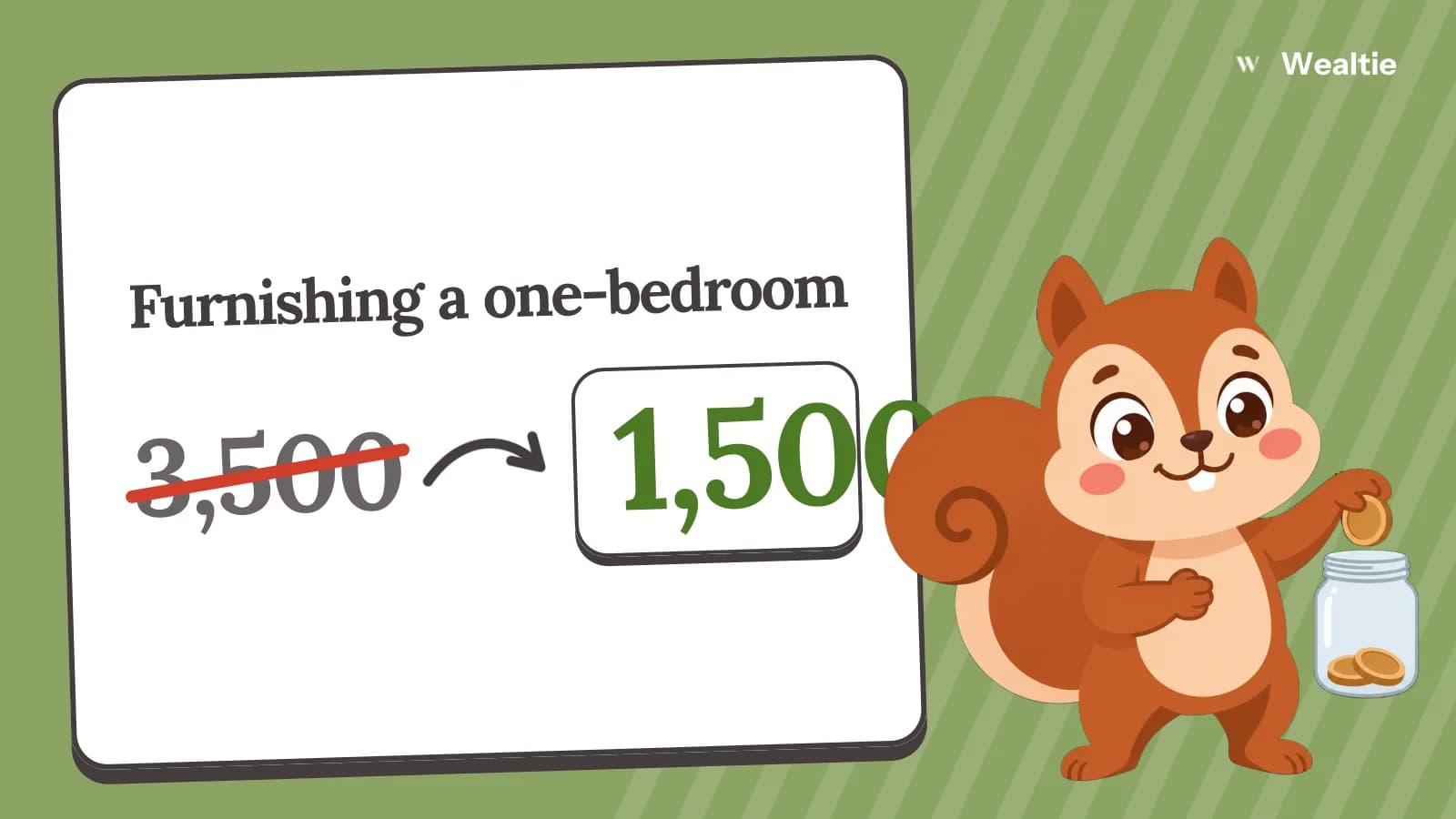
To furnish a home on a budget, buy the essentials first, find good second-hand pieces and spread the rest over several months. In a worked example, furnishing a one-bedroom home with a mix of new and second-hand pieces costs about 1,500, far less than buying everything new at once.
 By Wealtie Team · 3 min read
Key takeaways
- Buy the essentials first, like a bed, a place to sit and kitchen basics, and add the rest over time.
- In a worked example, a mix of new and second-hand furniture costs about 1,500 for a one-bedroom home.
- Second-hand marketplaces, friends and family are often the best sources of solid, cheap furniture.
- Spreading purchases over a few months avoids buy-now-pay-later debt.
How do you furnish a home on a budget?
Start with what you need to live comfortably, then add the rest slowly. Moving into a new home, especially a first one, can make it tempting to buy everything at once so the place feels finished. But furnishing over a few months spreads the cost, gives you time to find good deals and helps you understand what the space needs before you fill it.
What does it cost to furnish a home?
Here's a worked example for a one-bedroom home, comparing everything new with a mix of new and second-hand, in round numbers that work in any currency:
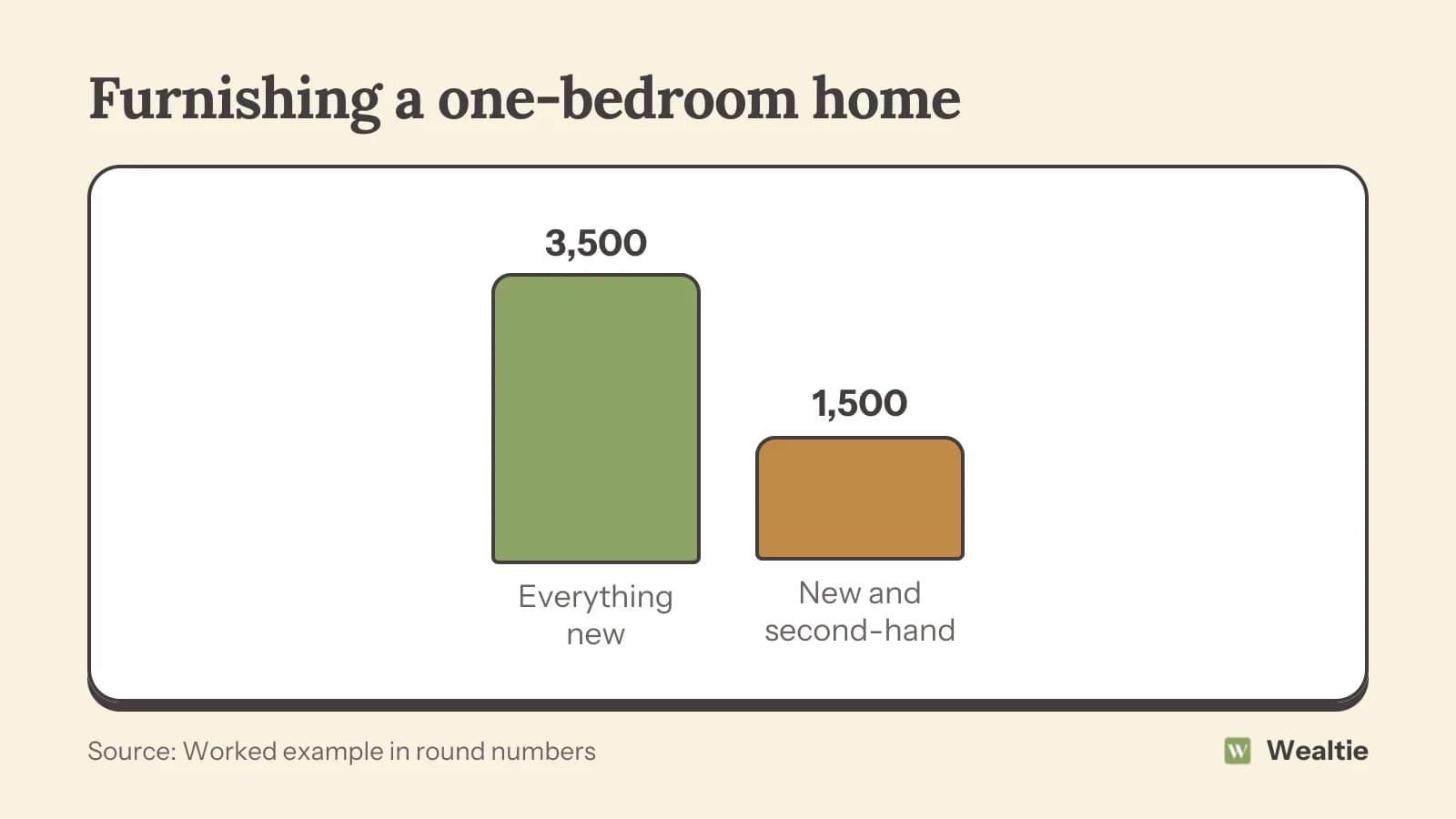
The mixed approach in this example looks like this:
| Area | Amount |
|---|---|
| Bedroom: new mattress, second-hand bed frame | 600 |
| Living room: second-hand sofa, table and lamp | 400 |
| Kitchen: basics, pots, plates and utensils | 300 |
| Bathroom and household: towels, bedding, cleaning | 200 |
| Total | 1,500 |
Your figures will depend on what you already own, the size of your home and what's available near you.
What should you buy first?
Prioritise sleep, eating and sitting. The essentials for the first few weeks are:
- A good mattress and bedding
- Basic kitchen equipment to cook simple meals
- Somewhere to sit and eat
- Towels, a shower curtain and cleaning supplies
- Curtains or blinds for privacy
A mattress is one thing worth buying new, since you'll use it every night for years. Most other items can be second-hand or wait a while.
Making do in the first weeks
It's fine for a home to look empty for a while. A mattress on the floor, a camping chair and a few borrowed pots will see you through the first weeks while you look for the right pieces. Waiting stops you buying something just to fill a gap, and then replacing it later when you find what you wanted.
Where can you find cheap furniture?
Look second-hand first. Solid furniture often lasts decades, and people sell good pieces when they move, downsize or redecorate. Places to look include:
- Online marketplaces and local selling groups
- Charity and second-hand furniture shops
- Friends and family who are clearing out
- Free-to-collect listings, where people give away furniture
- End-of-line or ex-display pieces in furniture shops
Check items carefully before buying. Look for sturdy frames, working drawers and no damage, and bring measurements so you know it'll fit. How to buy second-hand has a checklist for getting good value.
Fixing up second-hand pieces
A coat of paint, new handles or a fresh cover can make a cheap piece look new. Simple repairs like tightening joints or replacing a drawer runner cost very little and extend a piece's life by years.
How do you furnish room by room?
Finish one room at a time. A completed bedroom gives you somewhere calm to rest while the rest comes together. Then move to the kitchen and living area. Living in a space for a few weeks before buying shows you what you'll use day to day. You may find you don't need a dining table, or that a bookshelf would help more than a coffee table.
If you'll work from home, plan that space early. The home office budget covers setting up a workspace without overspending.
Measuring before you buy
Measure each room, doorway and staircase before buying anything large. A sofa that won't fit through the door is an expensive mistake, and returns can be difficult with second-hand pieces. Keeping a note of measurements on your phone means you can check quickly when you spot a deal.
Should you use buy now, pay later?
Be careful. Interest-free offers can make expensive furniture feel affordable, but missed payments can bring fees and interest, and several plans at once are hard to keep track of. Saving first and buying when you have the money avoids those risks. If you do use a plan, make sure the payments fit your monthly budget with room to spare, and treat each plan as a monthly bill from the first payment.
How do you spread the cost over months?
Set a monthly furniture amount and stick to it. Make a list of what you need, roughly priced, and buy the next item each month as the money allows. If you know a move is coming, start saving beforehand. A sinking fund works well for this, and selling things you won't take with you helps too. How to sell things you don't use has tips.
How do you track furnishing costs in Wealtie?
Give furniture and household items their own line in your expense categories, so you can see what furnishing costs over the months. A monthly limit in the budget tracker, with Budget Health, shows how much room you have left for the next piece without stretching the rest of your spending.
Questions people ask
A worked example for a one-bedroom home costs about 1,500 with a mix of new and second-hand pieces, compared with about 3,500 for everything new.
A mattress and bedding, basic kitchen equipment, somewhere to sit and eat, and towels and cleaning supplies.
Online marketplaces, charity shops, free-to-collect listings, ex-display pieces, and friends and family who are clearing out.
Only if the payments fit your budget comfortably. Missed payments can bring fees and interest, so saving first is safer.
This article is general information, not financial, tax or legal advice. Your situation is your own; check the numbers that apply to you before you act on them.