Budgeting: Dehumidifier running cost, and when it's worth using one
A dehumidifier running cost is usually modest, since most models use less power than a tumble dryer or heater. In a worked example, running one for eight hours a day costs about 15 a month.
 By Wealtie Team · 3 min read
Key takeaways
- A dehumidifier running cost is usually modest.
- In a worked example, eight hours a day costs about 15 a month.
- Drying laundry with a dehumidifier and airer can cost far less than a tumble dryer.
- Fixing the cause of damp matters more than running a machine forever.
What is the dehumidifier running cost?
Usually much less than people expect. A dehumidifier pulls moisture out of the air, which helps with condensation, damp patches and drying laundry indoors. Most home models use less electricity than a tumble dryer, an electric heater or a kettle used for the same length of time. In a worked example, running one for eight hours a day costs about 15 a month.
Your own cost depends on the model, how long you run it and your electricity price. Desiccant dehumidifiers tend to work better in cold rooms but use more power. Compressor models are often more efficient in warmer rooms. The energy label and power rating tell you what to expect.
Many people buy a dehumidifier to deal with damp or mould in winter, then find it's also the cheapest way to dry washing indoors. Using it for both jobs makes it much better value.
Size matters when choosing one. A small dehumidifier struggles in a large, damp house, running for hours without making much difference, while a bigger model clears the air faster and can switch off sooner. Matching the size to the room or home you'll use it in keeps running costs sensible. Look for one with a humidity sensor, a timer and a decent-sized water tank, so you don't have to empty it several times a day.
Noise is worth checking too, especially if you'll run it in a bedroom or living room. Quieter models cost a little more but are easier to live with.
How does it compare with a tumble dryer?
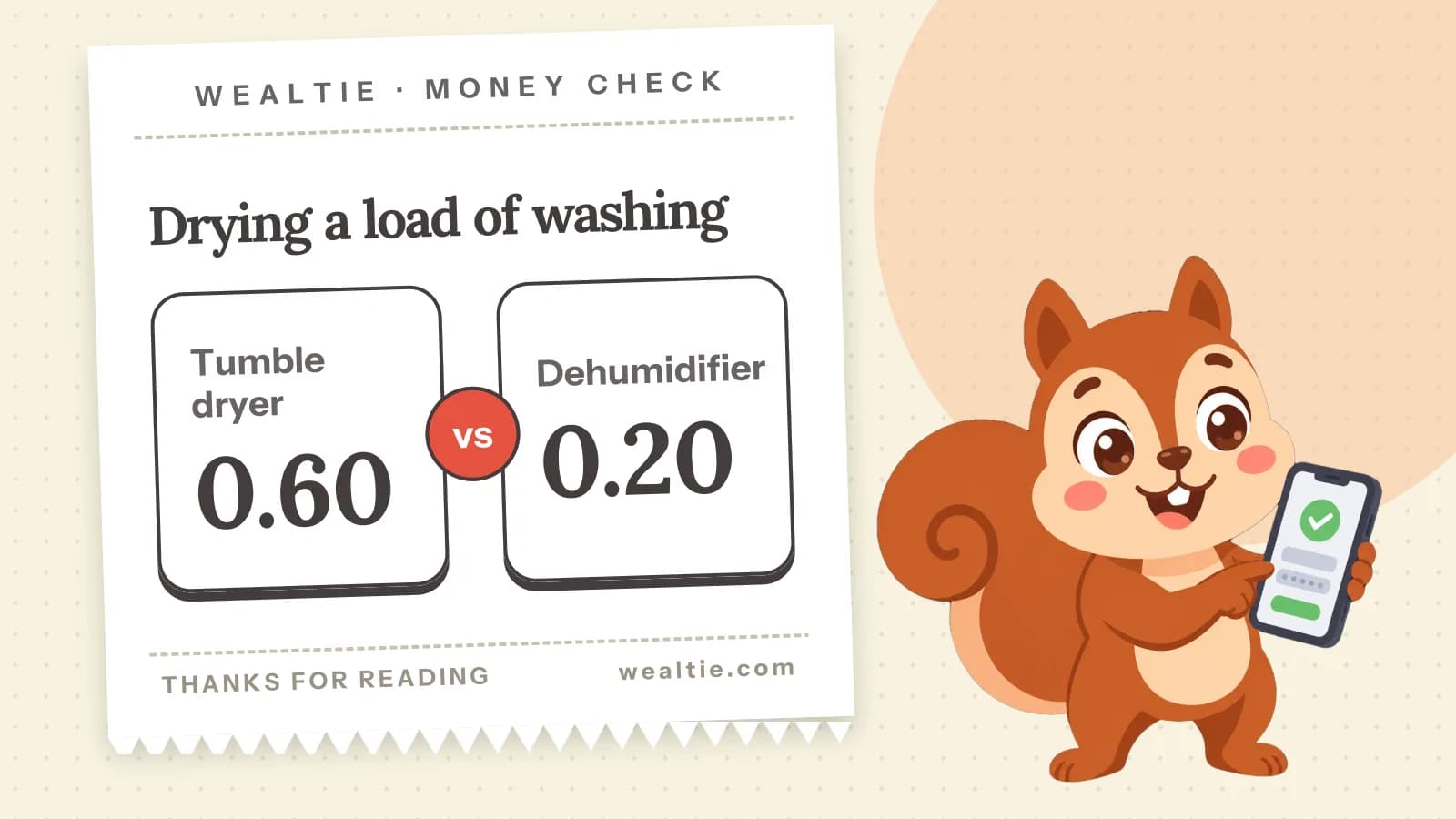
Here's a worked example of drying one load of washing, in round numbers that work in any currency:
| Method | Cost per load |
|---|---|
| Tumble dryer | 0.60 |
| Dehumidifier and airer | 0.20 |
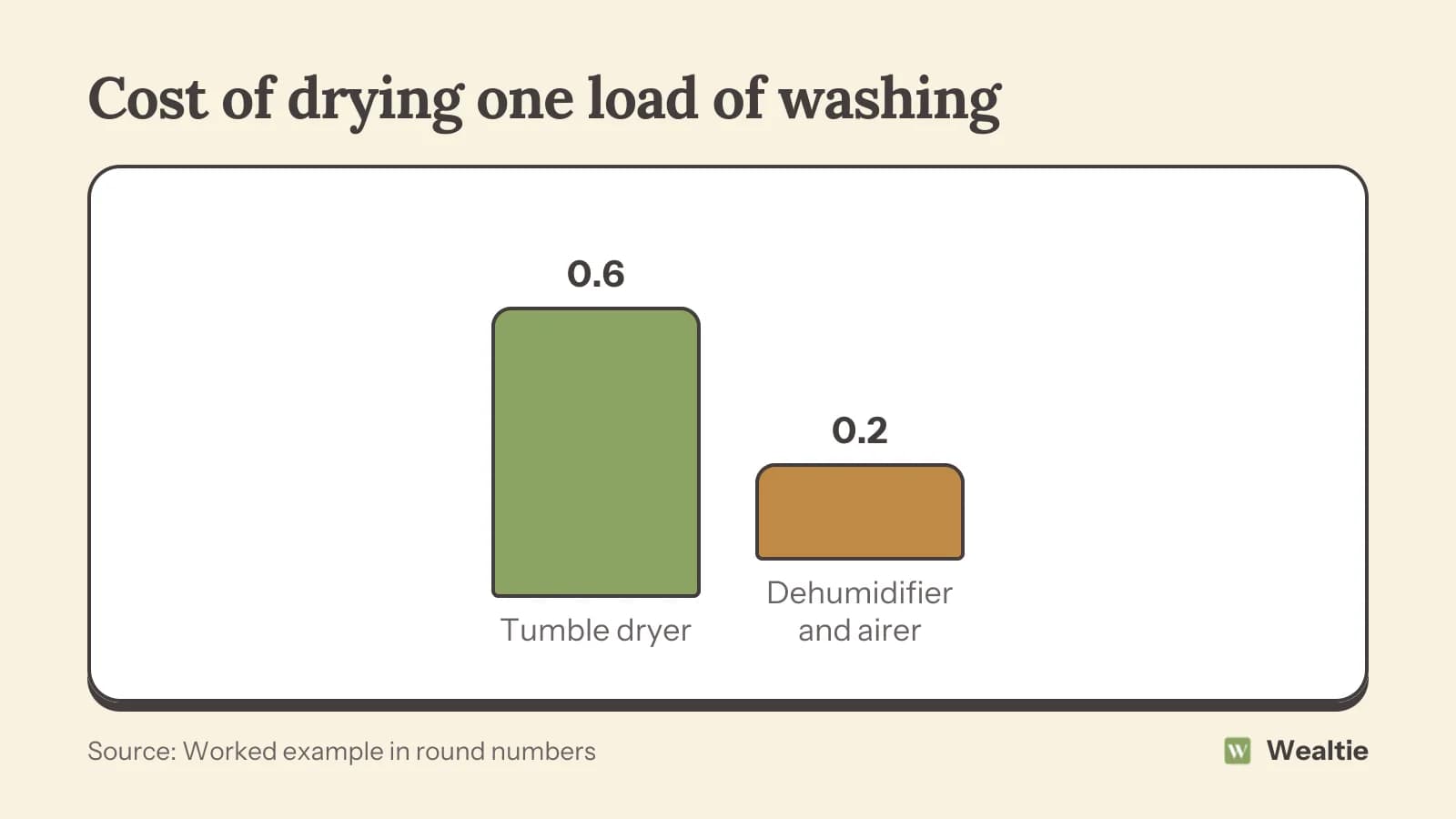
Drying three loads a week with a dehumidifier and airer instead of a tumble dryer saves about 60 a year. Clothes take longer to dry, but they're gentler on fabrics and you avoid the damp that drying on radiators can cause. How to save money on laundry covers other ways to cut washing costs.
When is a dehumidifier worth using?
Drying laundry indoors
If you can't dry washing outside, a dehumidifier in a small room with an airer dries clothes faster and stops moisture spreading through the home.
Condensation and damp
Running a dehumidifier helps reduce condensation on windows and walls, which can lead to mould. It's a useful tool while you deal with the cause. Running it for a few hours in the morning, when condensation is often worst, can be enough in many homes.
Rooms that feel cold and damp
Damp air feels colder than dry air. Lowering humidity can make a room feel more comfortable without turning up the heating. How to save money on heating has more ideas for staying warm for less.
How do you keep running costs down?
Run it in a closed room rather than the whole house. Use the humidity setting so it switches off once the air is dry enough, rather than running constantly. Empty the water tank regularly so it doesn't stop and restart. Some models let you attach a hose to drain continuously into a sink, which saves the job altogether. Clean the filter as the instructions say. Put laundry close to the dehumidifier on an airer, with space between items. A timer lets you run it when you need it rather than all day.
Should you fix the damp instead?
Yes, where you can. A dehumidifier treats the symptom, not the cause. Leaks, poor ventilation, blocked gutters and missing insulation can all cause damp. Opening windows briefly each day, using extractor fans when cooking and showering, and keeping furniture slightly away from cold walls all help. If damp persists, it's worth getting it checked, since the repair can save money in the long run. The home maintenance budget covers planning for repairs like these.
Is a dehumidifier worth buying?
If you dry washing indoors regularly or deal with condensation every winter, it often is. Work out the cost per use: one used most days for several winters costs very little per use. How to save money on your electric bill covers checking what appliances cost to run.
How do you track energy costs in Wealtie?
Add energy bills as recurring transactions, so they log themselves on their date, and keep them in their own expense category. Comparing winter bills before and after changing how you dry laundry shows the saving.
Questions people ask
Usually a modest amount. In a worked example, running one for eight hours a day costs about 15 a month.
Usually yes. In a worked example, drying a load costs about 0.20 with a dehumidifier against 0.60 with a tumble dryer.
Run it in a closed room, use the humidity setting, empty the tank regularly and clean the filter.
It helps with symptoms like condensation, but fixing the cause, such as leaks or poor ventilation, matters more.
This article is general information, not financial, tax or legal advice. Your situation is your own; check the numbers that apply to you before you act on them.