Budgeting: How to save money on laundry, wash by wash
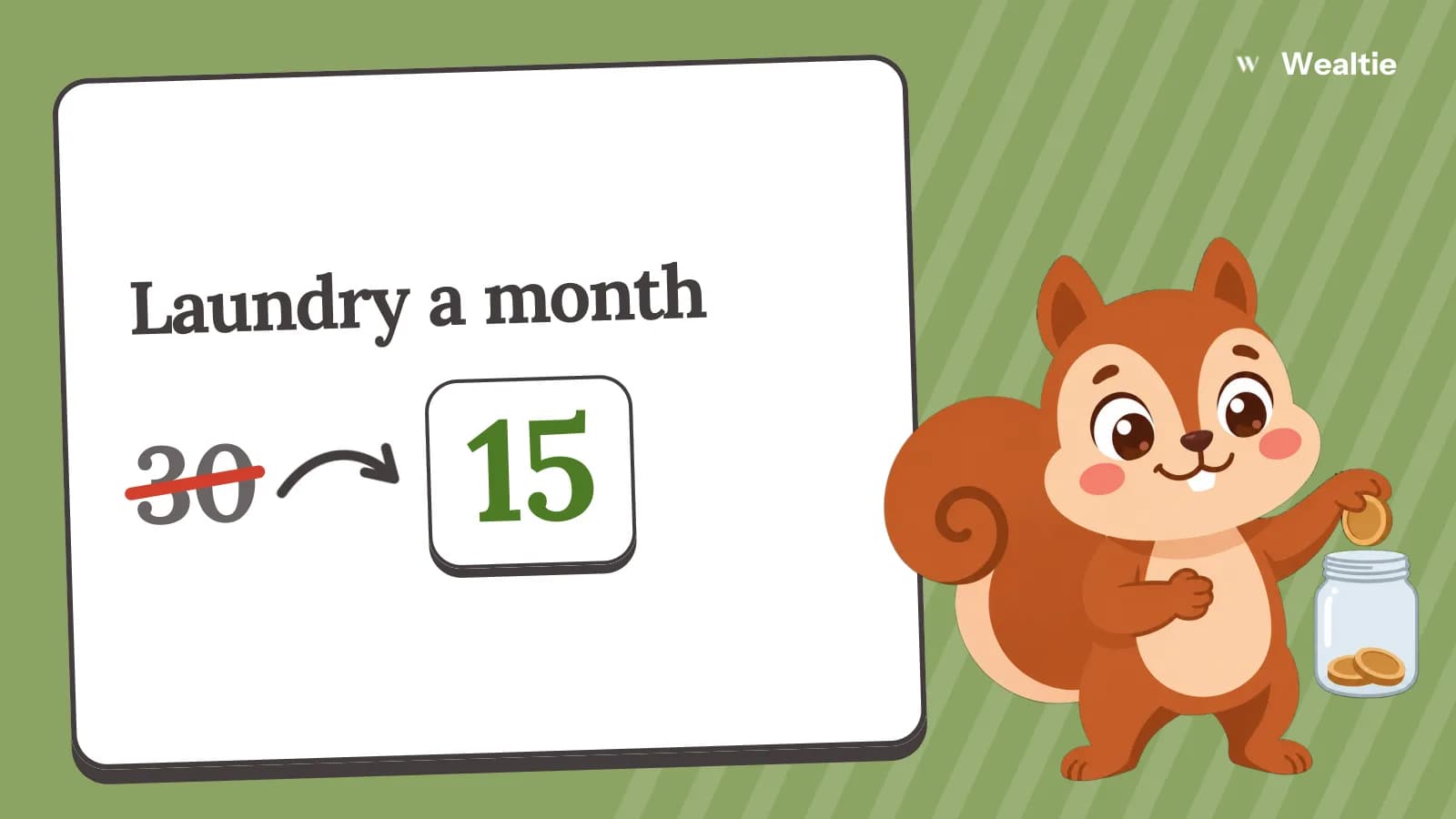
To save money on laundry, wash full loads at lower temperatures, measure detergent instead of guessing, and air-dry when you can. In a worked example, those habits cut a household's laundry costs from 30 a month to 15.
 By Wealtie Team · 3 min read
Key takeaways
- Washing full loads at lower temperatures uses less energy per item.
- Measuring detergent, instead of pouring by eye, makes a bottle last much longer.
- The tumble dryer is often the most expensive part of laundry, so air-drying saves the most.
- In a worked example, those habits cut laundry costs from 30 a month to 15.
How do you save money on laundry?
Use less energy and less product per wash, and wash a little less often. Laundry costs come from three places: the energy to heat water and run the machine, the energy to dry, and the detergent and softener. Small changes to each add up, because most households run several loads a week, often for years.
Where does the money go?
Here's a worked example for a household's monthly laundry, in round numbers that work in any currency:
| Cost | Before | After |
|---|---|---|
| Tumble dryer energy | 12 | 3 |
| Washing energy | 8 | 6 |
| Detergent and softener | 10 | 6 |
| Total | 30 | 15 |
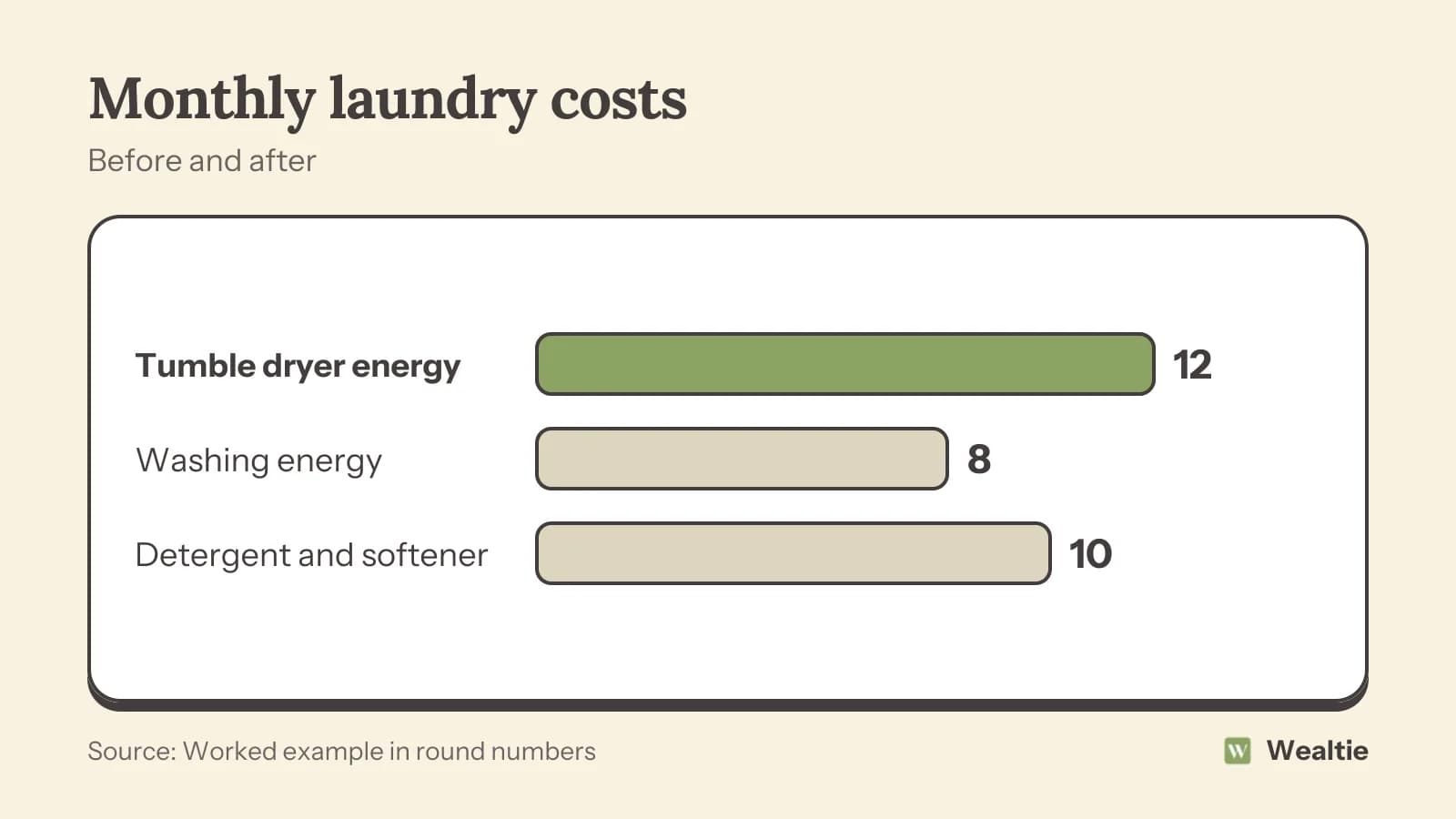
Your figures depend on your machines, energy prices and how many people live with you. Families with young children often run more loads, so the savings can be bigger. The tumble dryer was the biggest line here, which is common.
How do you use less energy washing?
Most of a washing machine's energy goes into heating the water, so lower temperatures save the most. Many everyday loads clean well at a cooler setting, especially with a detergent designed for it. Keep hotter washes for things that need them, like towels, bedding or very dirty items, and always follow care labels.
Wash full loads, since a half-empty machine uses nearly as much energy as a full one. Eco settings often take longer but use less energy. If your energy tariff is cheaper at certain times, running the machine then can help. Pre-treating stains straight away means you don't need a hot wash or a second one later.
How do you dry clothes for less?
Air-dry when you can, which costs nothing. A tumble dryer uses a lot of energy, so line-drying outside or on a rack indoors saves the most. In winter, a rack in a warm, ventilated room works, though open a window or use a dehumidifier to avoid damp.
If you use a dryer, spin clothes well in the washing machine first, clean the lint filter every time, and dry full loads. Drying similar fabrics together helps, since light items dry faster than heavy ones. Taking clothes out while slightly damp and hanging them saves time and energy. Dryer balls can shorten drying time a little.
How do you save on detergent?
Measure it. Most people use more than they need, which wastes product and can leave residue on clothes. Check the guide on the packet, which often suggests less for soft water or light soiling. A bottle used carefully can last much longer.
Supermarket own-brand detergents often clean as well as big brands for less. Softener is optional, and many people find they don't miss it. Buying larger packs on offer can cut the price per wash, as long as you'll use them. A bit of white vinegar in the softener drawer is a cheap alternative some people like.
Should you wash clothes less often?
Many items don't need washing after every wear. Jeans, jumpers and outer layers can often be worn several times, aired between wears. Washing less saves energy, detergent and wear on the clothes, which then last longer. Clothes that last longer mean buying less, which is often the biggest saving of all. How to save money on clothes covers that side.
What about laundrettes and shared machines?
If you use a laundrette or shared machines, the same habits apply: full loads, cooler washes and air-drying where possible. Dryers in laundrettes are often charged by time, so spin well first and dry only what you need to. Some people wash at the laundrette and dry at home to save money.
How do you look after the machines?
Clean the washing machine's filter and drawer now and then, and run a maintenance wash occasionally. Keep the dryer's filter clear. Well-kept machines work more efficiently and last longer, which avoids the cost of a replacement. If you're replacing a machine, look at its energy rating and running costs as well as the price, since a cheaper machine can cost more to run.
How do you track laundry costs in Wealtie?
Laundry costs mostly show up in your energy bill and household shopping, and a share of the monthly limit in the budget tracker keeps household spending in view, so log detergent in a Household category and energy in Utilities. Your expense categories show whether the changes bring those lines down. How to save money on electric bill has more on energy.
Questions people ask
Wash full loads at lower temperatures, measure detergent, air-dry instead of using the tumble dryer and wash some items less often.
It's often the most expensive part of laundry. Air-drying, spinning well first and drying full loads all help.
Yes, because most of a washing machine's energy heats the water. Many everyday loads clean well at cooler settings.
Follow the packet guide, which often suggests less for soft water or light soiling. Most people use more than they need.
This article is general information, not financial, tax or legal advice. Your situation is your own; check the numbers that apply to you before you act on them.