Budgeting: How to deal with a pay cut: rebuild your budget in a week
To deal with a pay cut, work out your new take-home pay, rebuild your budget from fixed costs down, and close the gap with a mix of cuts, renegotiated bills and support. In a worked example, a 400 monthly drop is covered by 250 of cuts and 150 from bills.
 By Wealtie Team · 3 min read
Key takeaways
- Start with your exact new take-home pay, not the headline cut.
- Rebuild the budget from fixed costs down, so essentials are covered first.
- In a worked example, a 400 drop is covered by 250 of cuts to flexible spending and 150 from cheaper bills.
- Keep saving something if you can, since a smaller cushion leaves you more exposed.
How do you deal with a pay cut?
Find out exactly what you'll receive, rebuild your budget around it, and close the gap quickly. A pay cut, reduced hours or a lost bonus can be a shock, and it's normal to feel unsettled for a while, but a clear plan in the first week makes the following months much easier.
What's your new take-home?
Look at your first payslip after the change, or ask your employer for the new figure. A cut in gross pay doesn't come off take-home in the same amount, since tax and other deductions also change. Gross vs net income explains the difference.
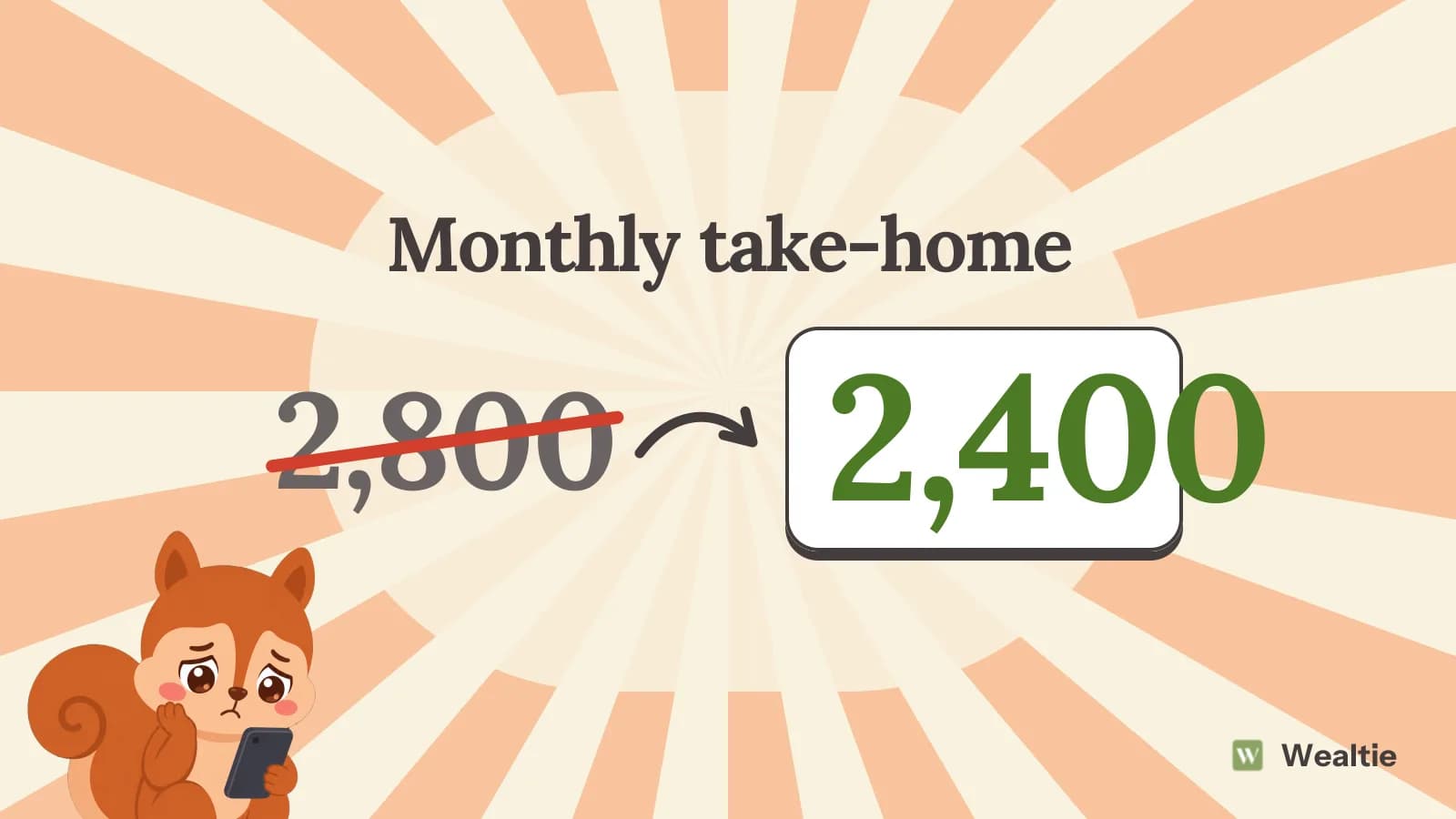
If your hours were cut, check whether other things, like pension contributions, have changed too. In this example, take-home pay falls from 2,800 to 2,400, in round numbers that work in any currency. That's a gap of 400 a month.
Check your contract and your rights, too. Depending on where you live and how the change was made, an employer may need your agreement or have to follow a process. Local employment advice can help if you're unsure.
How do you rebuild the budget?
From the top down: fixed essentials first, then other costs, then savings, then spending money. Starting with essentials makes sure rent, bills, food and debt payments are covered before anything else.
Then compare the new total with your old budget line by line, and see where the 400 can come from. Write the new budget down, so you're not working from memory of the old one.
Where can the gap come from?
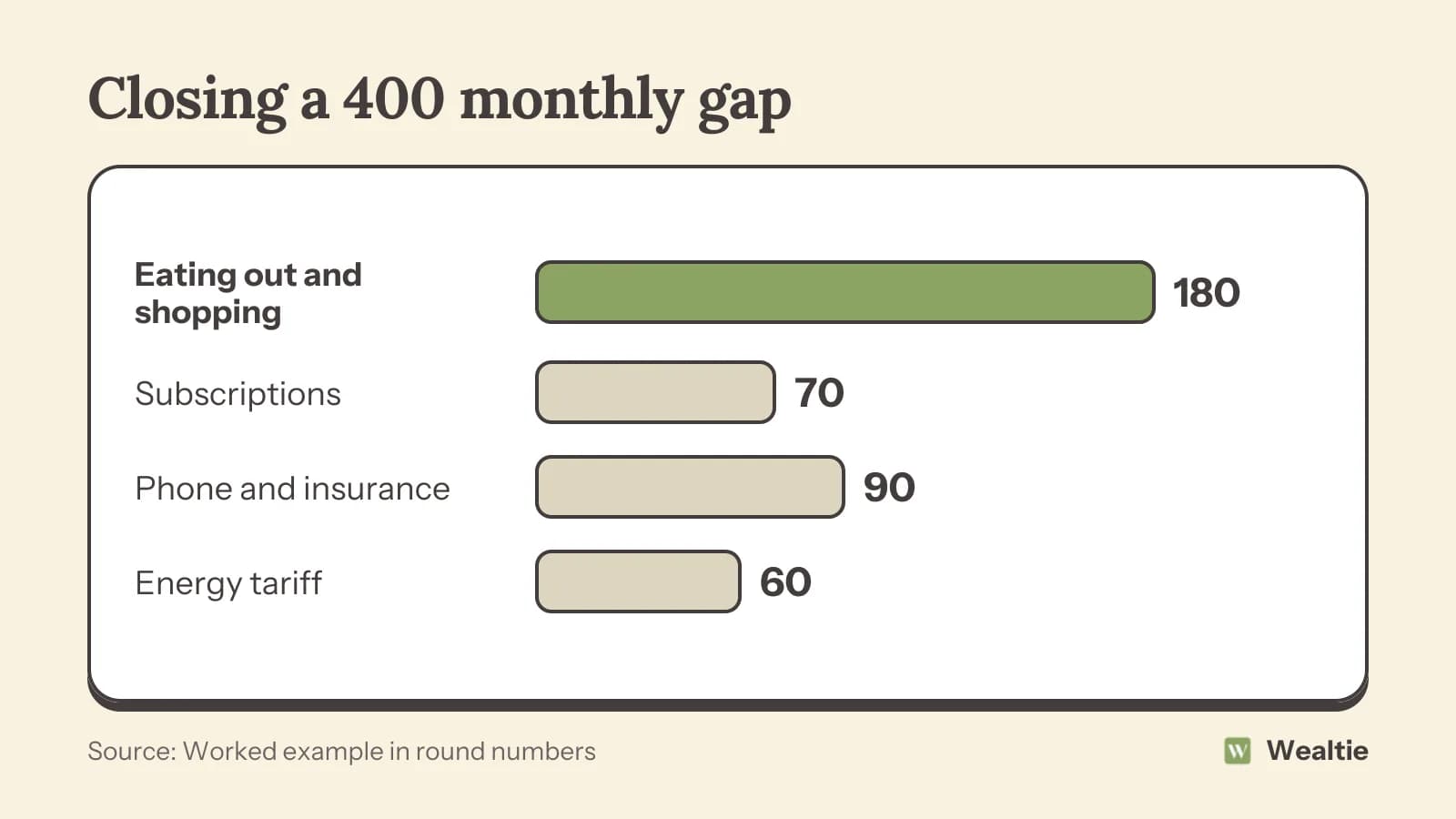
A mix of cuts and cheaper bills usually works best. Here's one way to close 400:
| Change | Saved a month |
|---|---|
| Less eating out and shopping | 180 |
| Cancelled subscriptions | 70 |
| Cheaper phone plan and insurance | 90 |
| Better energy tariff | 60 |
| Total | 400 |
Make the changes in the first week, since every month at the old spending level widens the gap. Bills often have room you haven't looked at, and changing them doesn't change your day-to-day life. How to negotiate bills shows how. For flexible spending, how to stop overspending has practical ideas.
Should you keep saving?
Yes, if you can, even a smaller amount. A pay cut is a reminder that income can change, and a cushion matters more when there's less room in the budget. If you have to pause saving, keep your emergency fund intact and restart as soon as you can. Even 20 a month keeps the habit going.
What if the gap is too big to cut?
Look at the big costs and at income. Rent, car payments and debt payments are the largest numbers for most people. If the cut is permanent, a cheaper home or car may be worth considering when contracts allow. Check whether you're now entitled to any support, since a lower income can change eligibility.
If you have debts, contact lenders early if repayments are now hard. Tell anyone you share costs with, so the plan works for the whole household. Extra income, like overtime, a second job or freelance work, can help too. Check your contract allows it. How much should a side hustle make helps you judge whether extra work is worth it.
What if the cut is temporary?
Then plan for the period it lasts. If your hours will return in three months, a temporary cut in spending and a pause on extra savings might be enough. Use your emergency fund if needed, and plan to refill it afterwards. Don't make permanent changes, like moving home, for a short-term problem. Write down the date you expect pay to return, and review the plan then.
Should you look for another job?
It's worth thinking about, especially if the cut feels like a sign of trouble at your employer. Update your CV, keep a note of what you've achieved in your role, and look at what similar roles pay. How to negotiate a pay rise helps when you're negotiating a new offer.
How do you adjust your budget in Wealtie?
Update your monthly income goal to the new take-home, and set the limit in the budget tracker to match. Give the categories you're cutting their own share of the limit, so you can see whether the cuts are working. Budget Health warns you mid-month if your pace would take you over, and the income tracker shows the new income against your goal.
Questions people ask
Work out your new take-home pay, rebuild your budget from fixed costs down, and close the gap with cuts, cheaper bills and any support you're entitled to.
Start with bills you can renegotiate, then flexible spending like eating out and subscriptions. In a worked example, that closes a 400 gap.
Yes, if you can, even a smaller amount. Keep your emergency fund intact.
Only in some circumstances, depending on your contract and local law. Check your contract and get local employment advice if you're unsure.
This article is general information, not financial, tax or legal advice. Your situation is your own; check the numbers that apply to you before you act on them.



