Budgeting: How to plan a camping trip budget
A camping trip budget covers campsite fees, travel, food and any gear you need to buy or borrow. In a worked example, a weekend for a family of four costs about 200 once the gear is sorted, which makes camping one of the cheaper ways to get away.
 By Wealtie Team · 3 min read

Key takeaways
- A camping trip budget covers campsite fees, travel, food and gear.
- In a worked example, a weekend for a family of four costs about 200 once the gear is sorted.
- Borrowing or renting gear for the first trip avoids buying things you may not use again.
- Cooking your own meals is the biggest way to keep camping cheap.
How do you plan a camping trip budget?
Separate the one-off cost of gear from the cost of each trip. Camping can be one of the cheapest ways to take a holiday, since the nightly cost of a pitch is usually far below a hotel or rental. But the first trip can be expensive if you buy a full set of gear at once. Planning both parts shows what camping costs over time.
Start with where you'll go, how long you'll stay and what gear you already have.
What does a camping weekend cost?
Here's a worked example for a family of four, two nights, with gear already sorted, in round numbers that work in any currency:
| Cost | Amount |
|---|---|
| Campsite, 2 nights | 70 |
| Food | 60 |
| Travel | 50 |
| Extras, like firewood or activities | 20 |
| Total | 200 |
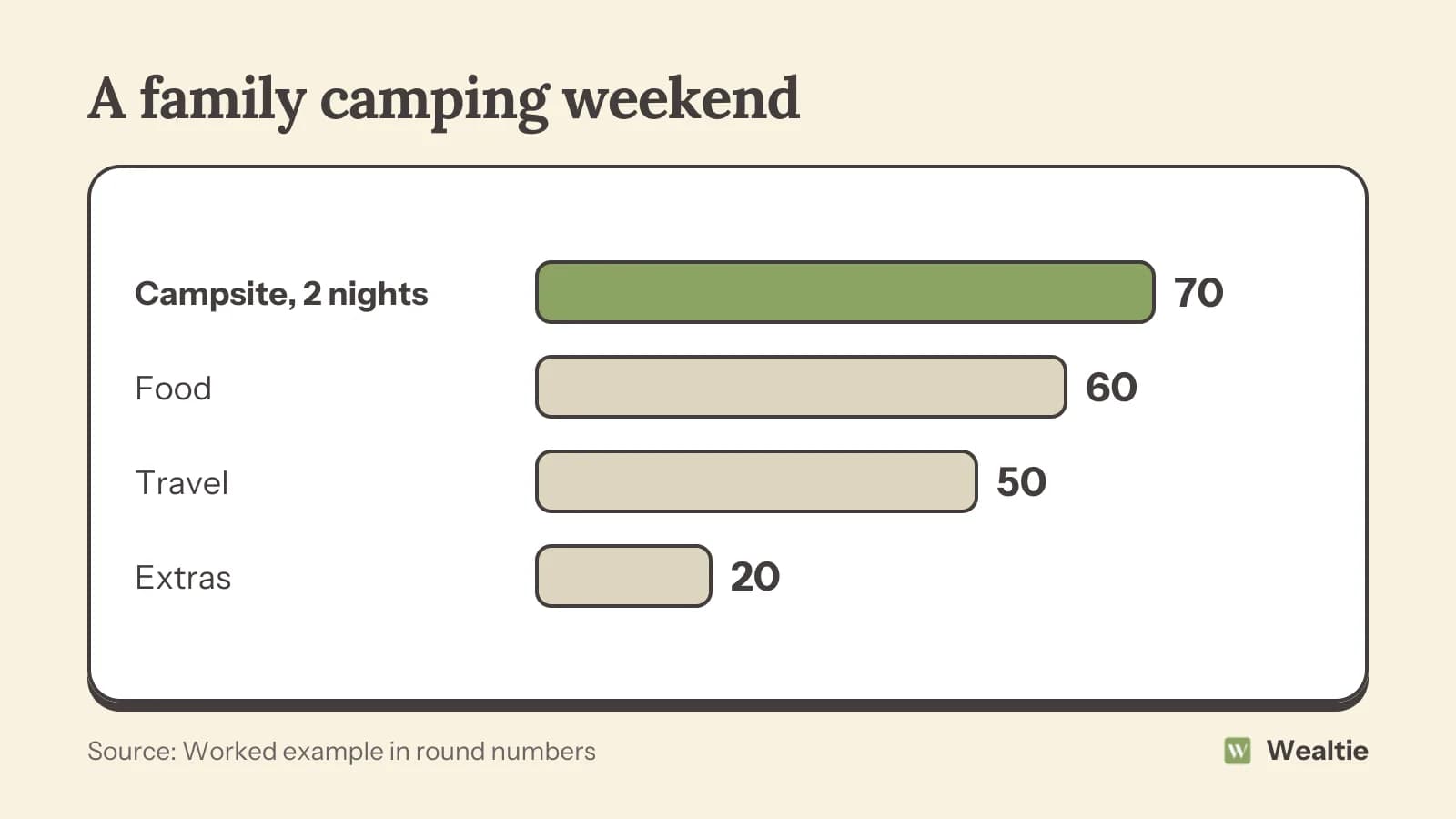
Your figures depend on the campsite, the distance and how much you cook yourself. Basic sites cost less than those with lots of facilities, and costs are often higher in school holidays.
What gear do you need, and what does it cost?
For a first trip, the basics are a tent, sleeping bags, sleeping mats, a stove and some cooking kit. Here's a worked example of starter gear for a family of four:
| Item | Amount |
|---|---|
| Tent | 150 |
| Sleeping bags, 4 at 30 | 120 |
| Sleeping mats | 60 |
| Stove and cooking kit | 30 |
| Total | 360 |
Spread over several trips, the cost of gear per trip falls quickly. But if you're not sure camping is for you, it's worth trying it before buying everything.
Gear worth spending more on
If you'll camp regularly, a few items are worth buying in good quality: a waterproof tent that's easy to pitch, warm sleeping bags rated for the season and comfortable mats. A cold, wet night can end a trip early, which costs more than the better gear would have.
Borrow, rent or buy second-hand
Borrowing from friends is the cheapest way to try camping. Many outdoor shops and campsites rent tents and equipment, and some sites offer pre-pitched tents, so you only need to bring sleeping bags. Second-hand gear is widely available, since many people buy kit and use it only a few times. How to buy second-hand has tips on checking quality.
How do you save on food?
Cook your own meals. Eating out on a camping trip can cost more than the campsite itself. Plan simple meals before you go, like pasta, wraps, sausages, porridge and one-pot dishes, and shop at a supermarket on the way rather than at a campsite shop. Prepare some food at home, like chopped vegetables or a frozen stew that defrosts in the cool box.
Meal planning on a budget has a method that works well for trips too.
How do you choose a campsite?
Match the site to what you need. Basic sites with toilets and water cost much less than sites with pools, entertainment and shops. For many families, a quieter site near a beach, a forest or walking trails offers plenty to do for free. Booking early in busy seasons helps you get the cheaper pitches, and travelling outside school holidays can save a lot.
In some places, wild camping away from official sites is allowed, while in others it isn't. Check the rules before you go.
Saving on travel
Camp closer to home. A site an hour or two away gives you a break without long journeys and high fuel costs. Sharing a car with another family, or travelling by train to a site near a station, can cut costs too. The road trip budget covers fuel and travel planning in more detail.
What about the extras?
Plan for them. Firewood, activities, ice for the cool box, a treat at a local café and replacement gas canisters can add up. Setting a small amount aside for extras keeps the trip relaxed without overspending. Free activities, like walking, swimming in safe places, games and stargazing, are often the highlight anyway. Bringing games, a ball and a torch for each child keeps everyone busy without spending.
How do you save for camping trips?
If you're buying gear, save for it before the camping season starts. A 360 starter kit saved over six months is 60 a month. After that, each trip costs much less. Many families find camping lets them take several short breaks a year for the cost of one hotel holiday. If you're comparing options, the staycation budget covers other ways to holiday close to home.
How do you track camping costs in Wealtie?
Add a savings account for trips and move money into it each month as a transfer, which isn't counted as spending. Log gear, campsites and food in a travel category in your expense categories, so you can see what each trip costs. A monthly limit in the budget tracker keeps the rest of the month on track.
Questions people ask
In a worked example, a weekend for a family of four costs about 200, covering the campsite, food, travel and extras, once gear is sorted.
A starter kit for a family of four costs about 360 in a worked example. Borrowing, renting or buying second-hand costs less.
Cook your own meals, choose basic sites, travel outside school holidays and borrow or buy gear second-hand.
Rent or borrow for your first trip. Buy once you know you'll camp regularly.
This article is general information, not financial, tax or legal advice. Your situation is your own; check the numbers that apply to you before you act on them.