Multi-currency & travel: How to plan a rail pass trip budget
A rail pass trip budget includes the pass, seat reservation fees, accommodation and daily costs, and the pass is only worth it if you'd spend more on single tickets. In a worked example, a pass costs 400 against 550 in single tickets for the same route, and the whole three-week trip costs about 2,200.
 By Wealtie Team · 3 min read

Key takeaways
- A rail pass is worth it only if it costs less than the single tickets you'd buy.
- In a worked example, a pass costs 400 against 550 in single tickets.
- Seat reservation fees on some trains can add a lot, so include them.
- Overnight trains can save a night's accommodation.
How do you plan a rail pass trip budget?
Price your route first, then decide whether a pass makes sense. Travelling by train is a relaxed way to see several cities or countries, with city-centre stations and views along the way. Rail passes let you take many trains for one price, but they're not always cheaper than buying tickets as you go. A rail pass trip budget that compares both, and includes everything else, shows the real cost.
Is a rail pass worth it?
Only if it costs less than the single tickets you'd otherwise buy, or if the flexibility is worth paying for. Here's a worked example for a three-week route, in round numbers that work in any currency:
| Option | Cost |
|---|---|
| Rail pass | 400 |
| Single tickets for the same journeys | 550 |
In this example, the pass saves 150. But if you book single tickets well in advance, they can sometimes be cheaper than a pass, especially on routes with low advance fares. If you're taking only a few long journeys, single tickets may win. If you're taking many trains or want to change plans freely, a pass often does. Passes come in different types, like a set number of travel days within a month or unlimited travel for a period, so choose one that matches how often you'll take trains.
Price your route first
List the journeys you plan to take and check single ticket prices for each, both booked early and bought on the day. Add them up and compare with the pass price. How to save money on train tickets has tips for finding cheaper fares.
What does the whole trip cost?
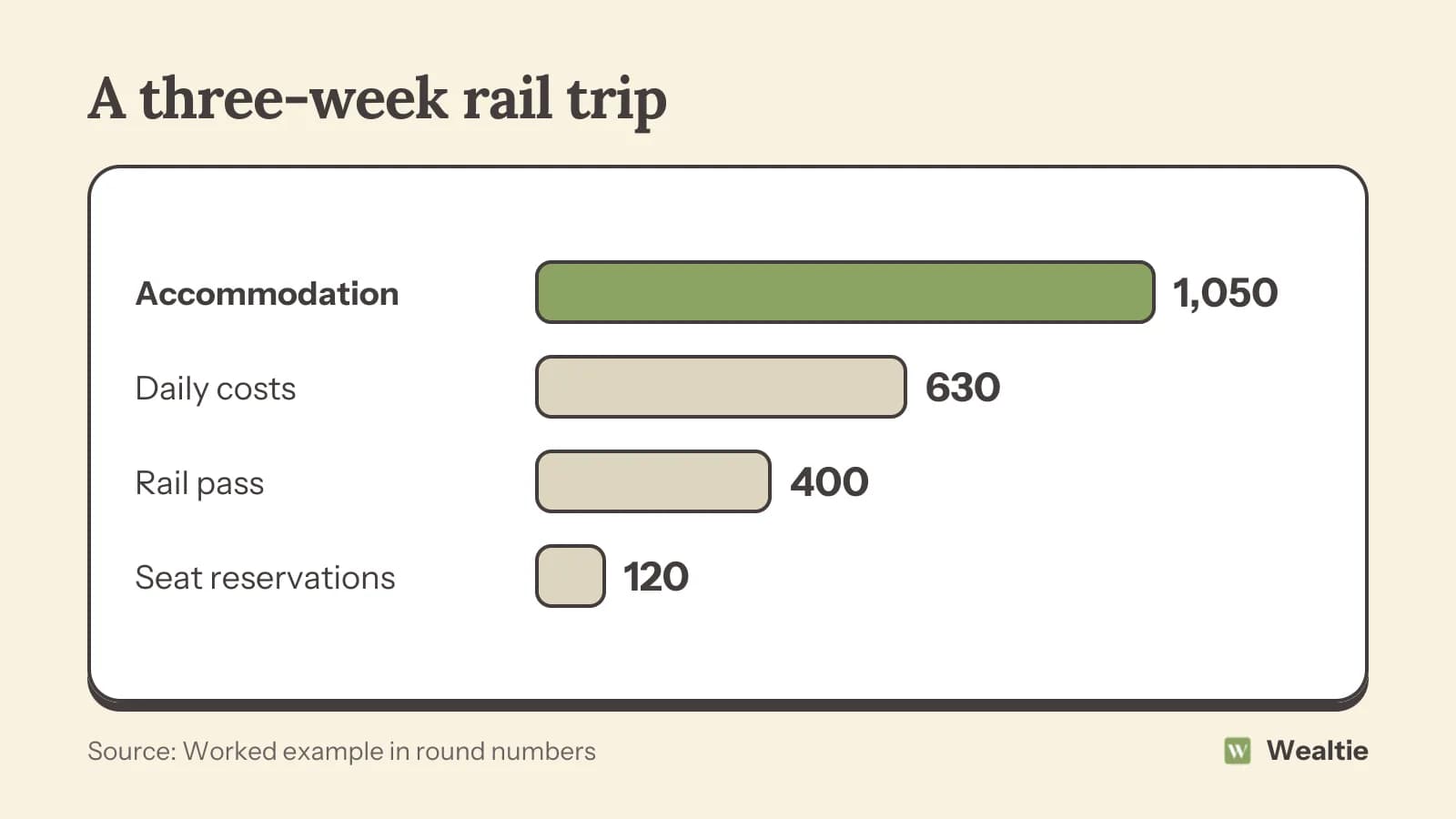
Here's a worked example of a three-week trip, in round numbers:
| Cost | Amount |
|---|---|
| Accommodation, 21 nights at 50 | 1,050 |
| Daily costs, 21 days at 30 | 630 |
| Rail pass | 400 |
| Seat reservations | 120 |
| Total | 2,200 |
Your figures depend on your route, the season and your style of travel.
What are seat reservation fees?
Some trains, especially high-speed and overnight services, require a reservation even with a pass. These fees vary and can add up over a trip. Check which trains on your route need reservations, and include the fees in your budget. Book them early on popular routes, since reserved seats for pass holders can sell out. Choosing regional trains, which often don't need reservations, can save money if you have time.
How do you save on accommodation?
Accommodation is often the biggest cost. Hostels, guesthouses and budget hotels near stations keep costs down and make early departures easier. Overnight trains, where available, can save a night's accommodation, though a couchette or sleeper berth usually costs extra. Staying a few nights in each place, rather than moving every day, also gives you better weekly rates. Some stations have lockers, so you can explore a city on a travel day without paying for an extra night. How to save money on hotels has more ideas.
How do you keep daily costs down?
Pack food for long journeys, since station and onboard food is expensive. Buy picnic supplies from supermarkets, look for free walking tours and museums with free days, and use city transport passes if you'll get around a lot. Setting a daily figure helps you see whether you're on track. Shorter travel days also mean fewer meals bought on board.
Travelling through several countries
If your route crosses currencies, plan how you'll pay. A card with low foreign fees and a little local cash in each country works well. Train prices also vary a lot between countries, so mixing a pass for expensive legs with single tickets for cheap ones can work out best. How to budget for a trip abroad covers travel money.
When to book
Book passes and any required reservations early, especially for popular routes in summer. Some passes are cheaper at certain times of year or for younger and older travellers. Accommodation in busy cities fills up, so book key nights ahead and keep flexibility for the rest.
How do you save for a rail trip?
Divide the total by the months before you go. A 2,200 trip saved over eight months is 275 a month. Keeping the money in a separate account means it's ready when the pass and bookings need paying.
How do you track a rail trip in Wealtie?
Add an account for each currency you'll use, so spending is recorded in the money you paid in, with totals converted into your display currency. Log the pass, reservations, rooms and daily costs in expense categories, and set a limit in the budget tracker. How to track a trip in Wealtie has more detail.
Questions people ask
Only if it costs less than the single tickets you'd buy, or the flexibility matters to you. Price your route first.
In a worked example, a three-week trip costs about 2,200, including the pass, reservations, accommodation and daily costs.
Extra fees some trains charge even with a pass, especially high-speed and overnight services.
Compare pass and single prices, use regional trains, take overnight trains, pack food and stay a few nights in each place.
This article is general information, not financial, tax or legal advice. Your situation is your own; check the numbers that apply to you before you act on them.