Budgeting: How much does running cost as a hobby? A yearly budget
The cost of running as a hobby is mostly shoes and a few clothes, plus optional extras like race entries, a club and a watch. In a worked example, a year of regular running costs about 350.
 By Wealtie Team · 3 min read

Key takeaways
- The cost of running as a hobby is mostly shoes and clothing.
- In a worked example, a year of regular running costs about 350.
- Good shoes are worth paying for, and most other gear is optional.
- Free group runs and clubs keep running cheap and social.
How much does running cost as a hobby?
Running is one of the cheapest ways to get fit. You can run from your front door, at any time, without a membership. The main cost is shoes, which wear out after a few hundred miles. Beyond that, comfortable clothes, perhaps a running club and some race entries are the usual costs. Gadgets like watches and headphones are optional. In a worked example, a year of regular running costs about 350.
What does a year of running cost?
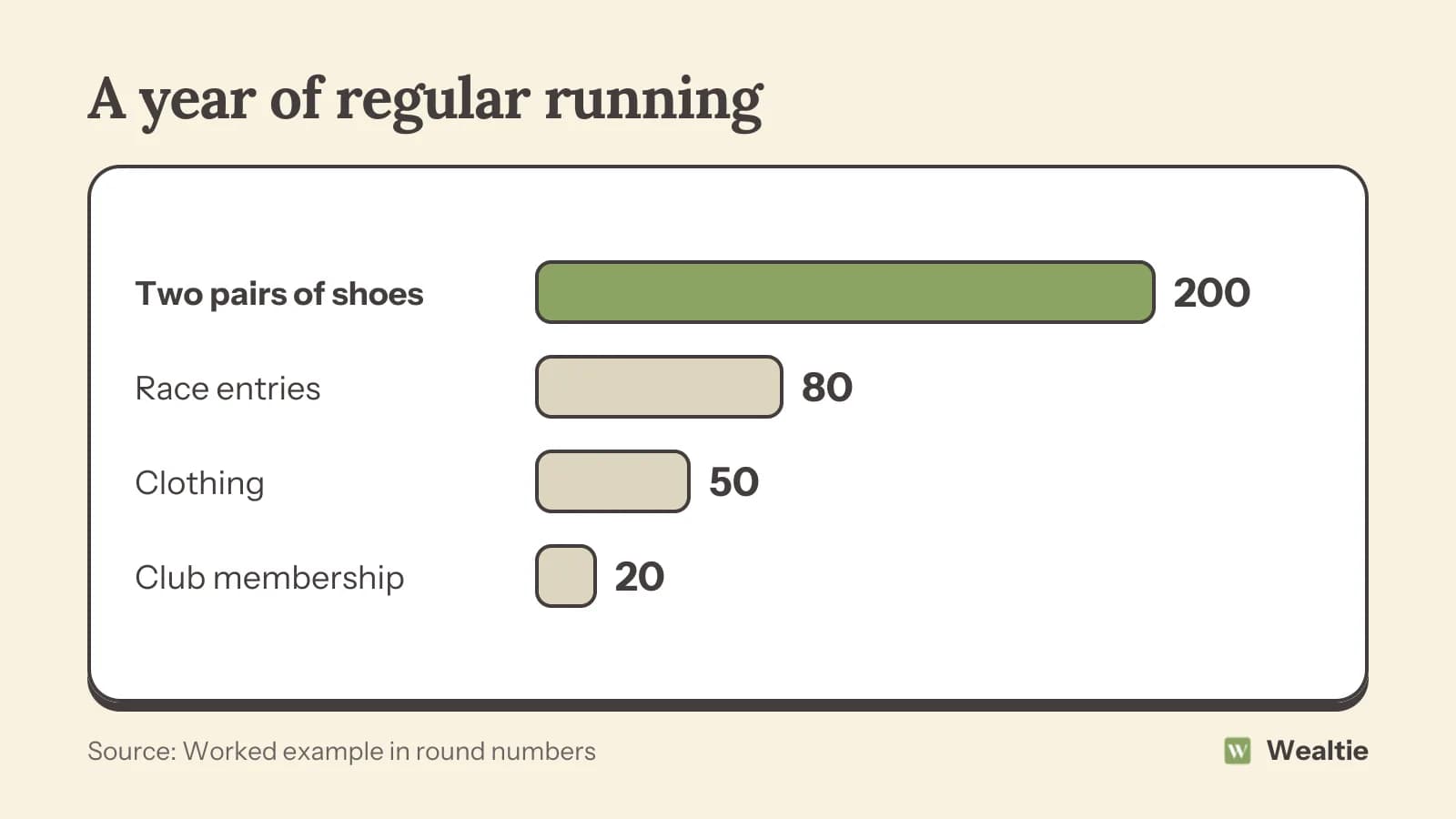
Here's a worked example for someone running three or four times a week, in round numbers that work in any currency:
| Item | A year |
|---|---|
| Two pairs of shoes | 200 |
| Race entries | 80 |
| Clothing | 50 |
| Club membership | 20 |
| Total | 350 |
Someone running once or twice a week might need only one pair of shoes a year and skip races, bringing the cost down to about 150.
What are the main costs of running?
Shoes
Good running shoes are worth paying for, since they help you run comfortably and avoid injury. Many running shops offer a free gait check to help you choose. Try shoes on in the afternoon, when feet are slightly larger, and run a few steps in the shop. Last season's model is often much cheaper and barely different. Shoes usually need replacing every few hundred miles, when the cushioning wears out.
Clothing
Comfortable, breathable clothes are enough. Specialist running kit is nice but not essential. A light waterproof jacket and something reflective for dark evenings are worth having.
Race entries
Organised races, from short fun runs to marathons, charge entry fees. Bigger races cost more. The marathon budget covers the costs of training for and running a marathon.
Club membership
Running clubs often charge a small yearly fee and give you coaching, training partners and cheaper race entries. Some free weekly group runs are open to anyone.
What else adds to the cost of running?
As you get into running, extras can creep in. A GPS watch tracks distance and pace but can cost as much as several pairs of shoes. Headphones, a running belt, a head torch for winter and sports drinks add up. Physiotherapy or a sports massage for an injury can be expensive. Travel to races, especially big ones in other cities, brings fuel, trains and sometimes hotels. Most of these are optional. Decide which ones you'd use, and leave the rest.
Running for a charity
Many people run races for charity, which often means a fundraising target on top of the entry fee. Some big races give charity places to runners who agree to raise a set amount. Before signing up, make sure you're comfortable asking friends and family for the money, or be ready to cover any gap yourself.
Running in winter
Dark, cold months may tempt you to buy extra kit, like thermal layers, gloves and a head torch. A few warm basics and something reflective are enough for most runners. Running at lunchtime or on lit routes avoids the need for much more.
How can you run for less?
- Join free group runs: many towns have weekly free timed runs in parks.
- Buy last season's shoes: often much cheaper than the latest model.
- Rotate two pairs: they can last longer than one pair worn every day.
- Skip the gadgets at first: a free phone app tracks distance and pace.
- Choose local races: cheaper entry and no travel costs.
- Join a club: cheap membership, coaching and discounted race entries.
- Look after your body: warming up, resting and building distance slowly avoid injuries that cost money to treat.
Is running cheaper than a gym?
For most people, yes. A year of running can cost less than a few months of gym membership. If you only use the gym for the treadmill, running outside could save a lot. How to save money on a gym membership covers when a gym is worth keeping. The cost of cycling covers another way to keep fit outdoors.
Avoid gear creep
Running shops and adverts make it easy to buy more than you need. Set a yearly running budget and add new kit only when you find a clear need. How to save money on sports kit and how to save money on a hobby have more tips.
How do you track running costs in Wealtie?
Add a running or fitness category to your expense categories and set a budget for it, so you can see what you spend on shoes, kit and races over a year.
Questions people ask
In a worked example, a year of regular running costs about 350 for two pairs of shoes, race entries, clothing and a club.
Every few hundred miles, when the cushioning wears out. Regular runners often need two pairs a year.
For most people, yes. A year of running can cost less than a few months of gym membership.
Join free group runs, buy last season's shoes, skip gadgets at first, choose local races and join a club.
This article is general information, not financial, tax or legal advice. Your situation is your own; check the numbers that apply to you before you act on them.