Budgeting: The cost of ice skating as a hobby
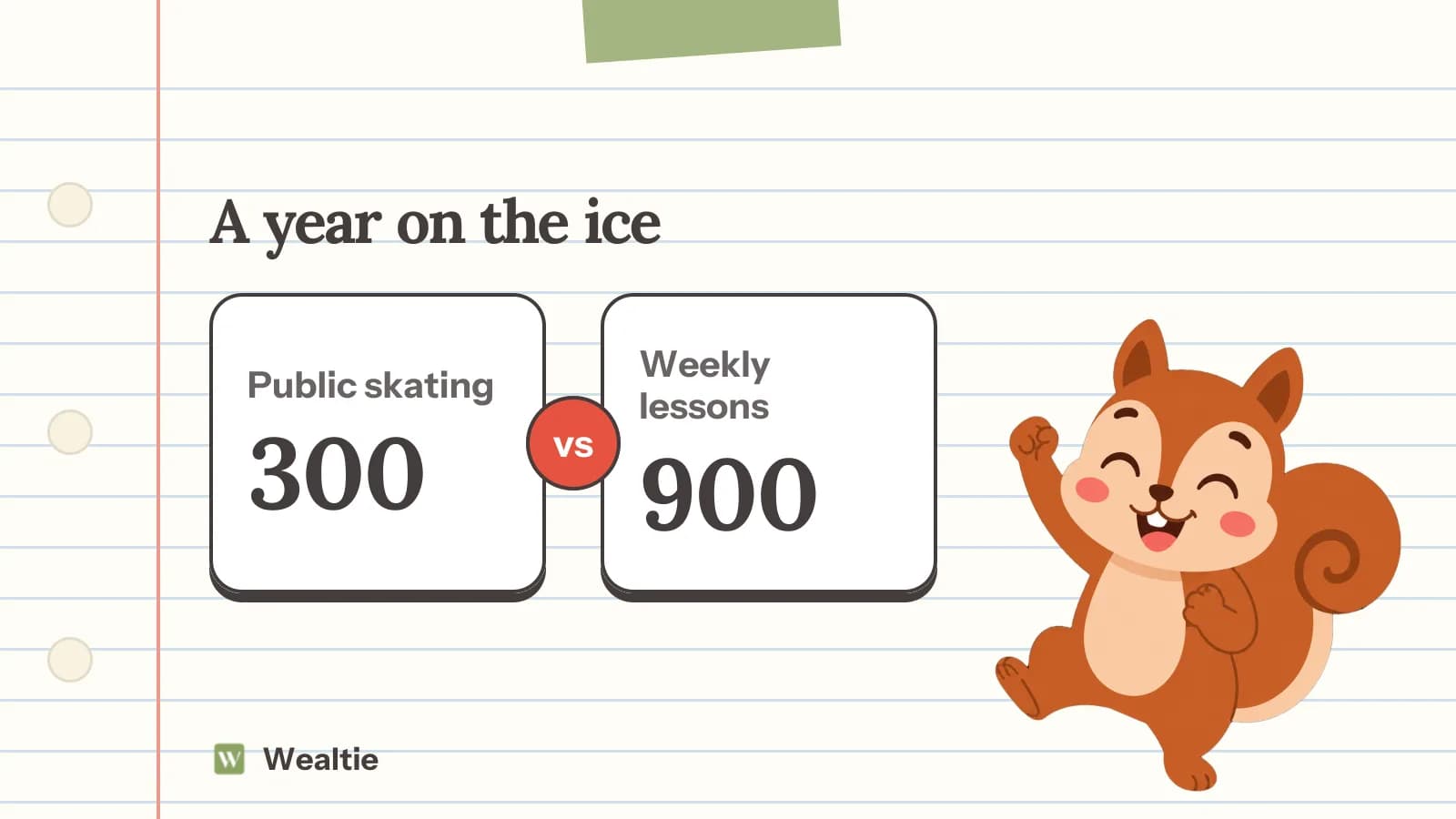
The cost of ice skating starts low with public sessions and skate hire, and rises with lessons and your own skates. In a worked example, a weekly session with lessons costs 900 a year, against 300 for occasional public skating.
 By Wealtie Team · 3 min read
Key takeaways
- The cost of ice skating depends on how often you skate and whether you take lessons.
- Public sessions with hired skates are the cheapest way to start.
- Buying skates makes sense once you skate regularly.
- Serious figure skating with coaching costs much more.
What is the cost of ice skating?
Ice skating can be a festive treat at a winter rink, a fun family activity or a serious sport with competitions and coaching. The cost of ice skating depends on how often you go, whether you hire or buy skates and whether you take lessons.
Here's a worked example of a year of skating, in round numbers that work in any currency:
| Approach | Yearly cost |
|---|---|
| Public session twice a month | 300 |
| Weekly lessons and practice | 900 |
| Figure skating with private coaching | 3,000 |
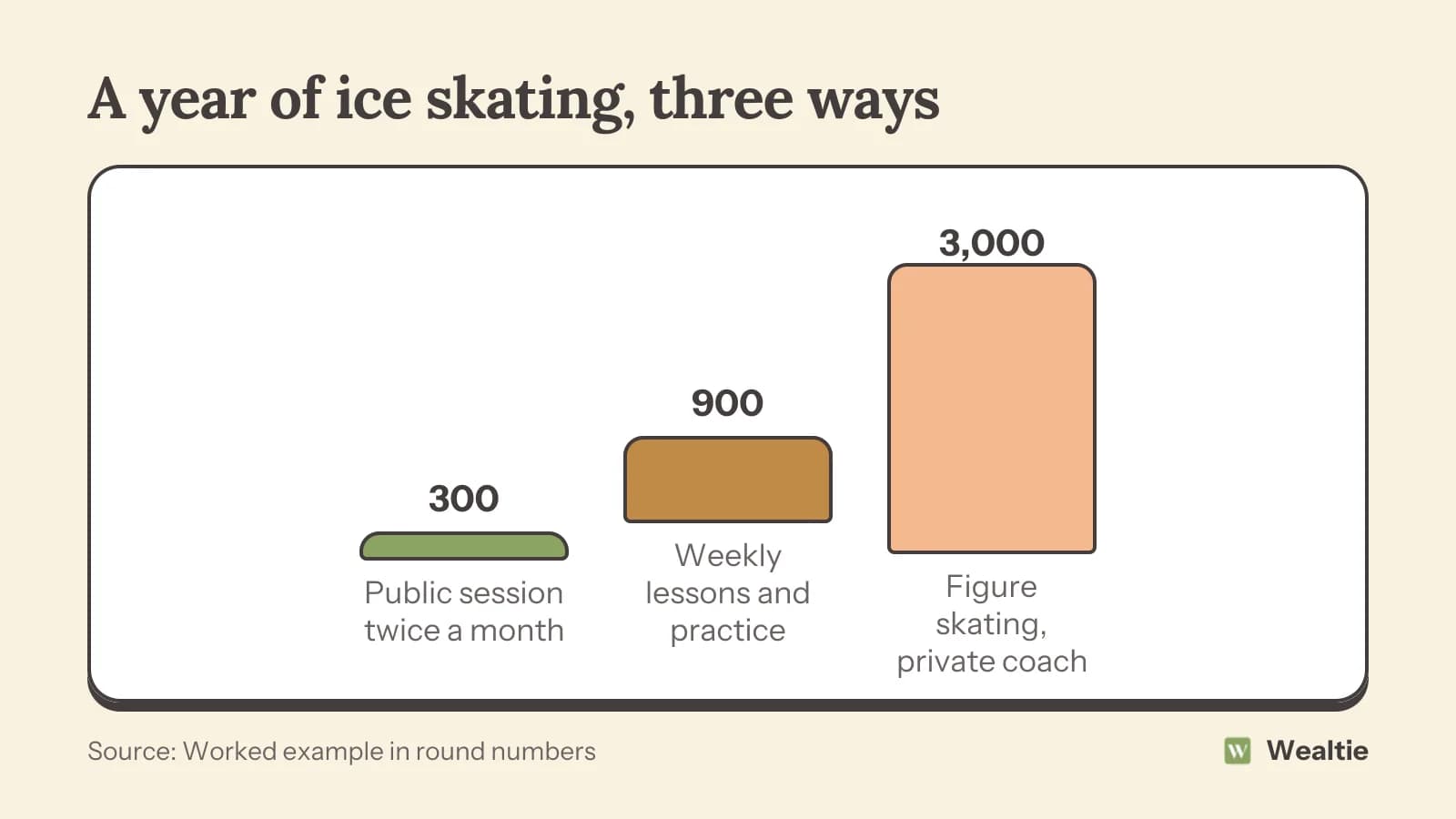
A public session with skate hire at around 12.50, twice a month, costs about 300 a year. Weekly group lessons and practice, with your own skates, cost about 900. Serious figure skating with private coaching, ice time and competitions can cost 3,000 or more.
What are the main costs?
Rink entry
Public sessions usually include skate hire. Some rinks offer cheaper prices for children, students or off-peak times.
Skates
Hired skates are fine for occasional skating. Your own skates fit better and help you improve, but cost money upfront and need sharpening.
Lessons
Group lessons are an affordable way to learn. Private lessons cost more but help skaters progress faster.
Ice time
Serious skaters often pay for extra practice sessions.
Competitions and costumes
Figure skating competitions involve entry fees, costumes and travel.
Should you hire or buy skates?
If you skate less than once a month, hiring is usually cheaper and easier. If you skate weekly or take lessons, buying skates often pays for itself within a season, and well-fitting skates make learning easier and safer. Second-hand skates can be good value, especially for children who grow quickly. How to save money on sports kit covers buying second-hand.
How do you skate for less?
Go off-peak
Weekday and morning sessions are often cheaper and quieter.
Look for family tickets
Some rinks offer discounts for families or groups.
Use season passes
If you skate often, a season pass or membership can lower the cost per session.
Choose group lessons
Group lessons cost less than private coaching and are great for beginners.
Bring your own snacks
Rink cafés can be expensive, especially with children.
Enjoy winter rinks wisely
Temporary outdoor rinks around the holidays can be pricey. Booking early or going on weekdays helps. How to plan a winter budget covers other seasonal costs.
Is ice skating a good activity for kids?
Skating builds balance, fitness and confidence, and group lessons are affordable for many families. If a child wants to compete, costs rise quickly with coaching, ice time and competitions. How to save money on kids' activities covers keeping activity costs down, and how to save money on a hobby covers planning for more expensive hobbies.
Fitting skates properly makes a big difference. Hired skates are often worn and may not fit well, which can make skating harder and less comfortable. If you skate regularly, getting your own skates fitted at a specialist shop helps you learn faster and enjoy it more. Ask about sharpening too, since skates need sharpening regularly and this has a small cost.
Many rinks run beginner courses over several weeks, which are often cheaper per session than one-off lessons. They teach basics like stopping and turning, which make public sessions more fun and safer.
For families, skating can be a lovely winter tradition, but costs add up with entry, skate hire, snacks and parking for everyone. Choosing quieter sessions, bringing your own food and looking for family deals helps keep the outing affordable.
If your child shows real interest in figure skating or ice hockey, talk to the rink about pathways and costs before committing. Club fees, equipment, extra ice time and competitions can quickly add up, and knowing the likely costs helps you plan.
Second-hand equipment is widely available for skating, especially children's skates and hockey gear. Swap schemes at rinks or local selling groups can save a lot as children grow.
Finally, set a monthly or seasonal budget for skating. It keeps the hobby enjoyable and avoids surprises when lessons, equipment and events all come at once.
Keep an eye out for rink offers during quieter months, when some rinks run discounted sessions or bundles of lessons to attract new skaters. Signing up for a rink's newsletter is an easy way to hear about them.
How can Wealtie help you track skating costs?
Log rink sessions, lessons and skates in a hobby expense category, and set a monthly budget for skating. Seeing what each month costs helps you decide whether a season pass or your own skates would save money.
Questions people ask
In a worked example, public skating twice a month cost about 300 a year, while weekly lessons and practice cost about 900.
Hire if you skate occasionally. If you skate weekly or take lessons, buying often pays for itself within a season.
Go off-peak, look for family tickets or season passes, choose group lessons and bring your own snacks.
Serious figure skating with private coaching, extra ice time and competitions can cost thousands a year.
This article is general information, not financial, tax or legal advice. Your situation is your own; check the numbers that apply to you before you act on them.