Budgeting: The cost of go-karting: from a fun day to racing
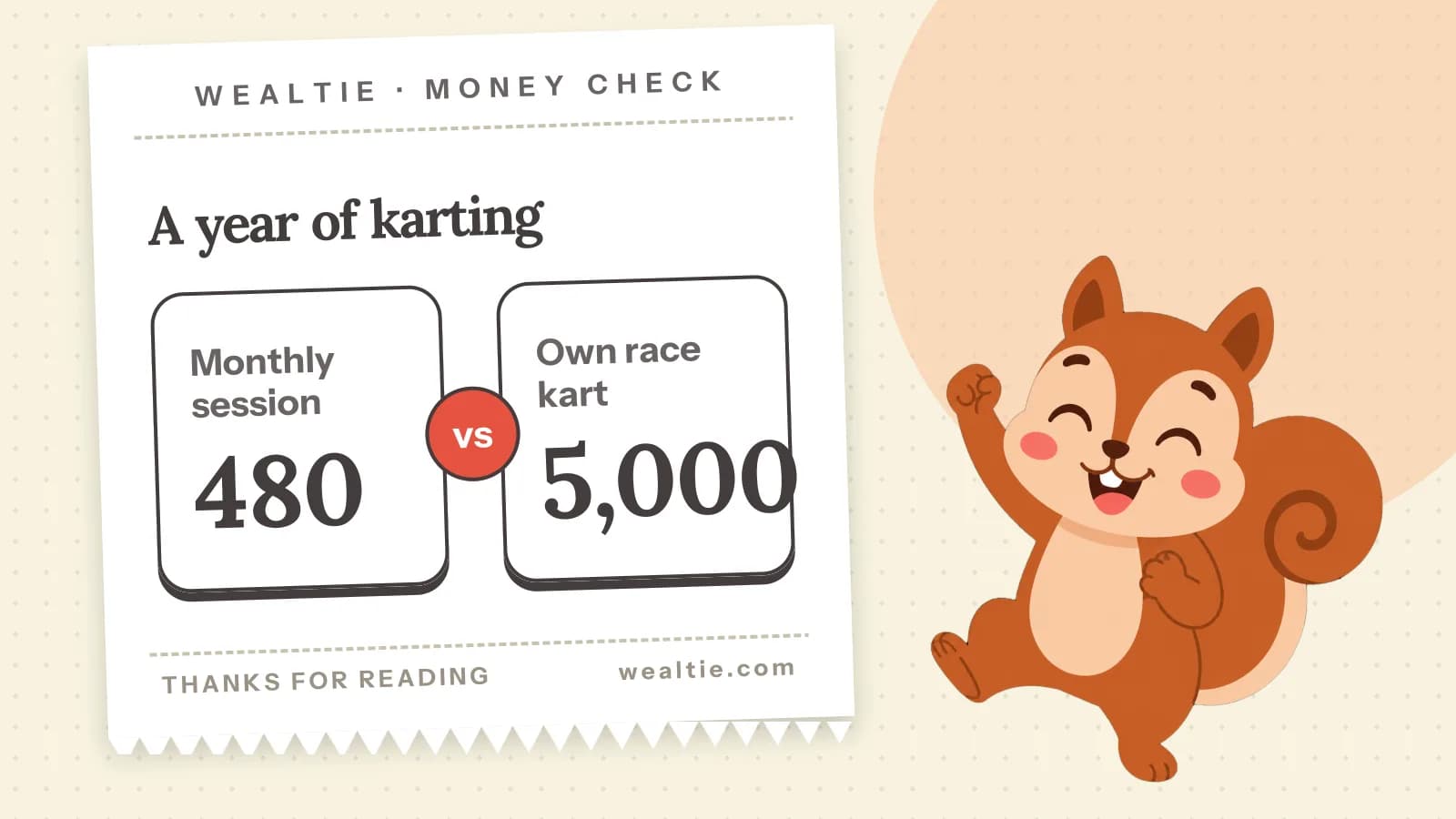
The cost of go-karting ranges from a one-off session to a serious yearly budget for racing your own kart. In a worked example, a monthly session costs 480 a year, while racing your own kart costs 5,000.
 By Wealtie Team · 3 min read
Key takeaways
- The cost of go-karting depends on whether you do sessions or race seriously.
- Arrive-and-drive sessions are the cheapest way to enjoy karting.
- Owning a race kart means paying for engines, tyres, fuel, entries and transport.
- Rental kart leagues give a taste of racing for much less.
What is the cost of go-karting?
Go-karting can be a fun day out with friends, a popular birthday party, or a serious motorsport hobby that some racers take all the way to competition. The cost of go-karting depends on which of these you choose. A single session at an indoor track costs much less than racing your own kart, which involves equipment, maintenance, entry fees and transport.
Here's a worked example of a year of karting, in round numbers that work in any currency:
| Approach | Yearly cost |
|---|---|
| Monthly arrive-and-drive | 480 |
| Club racing in rental karts | 1,500 |
| Racing your own kart | 5,000 |
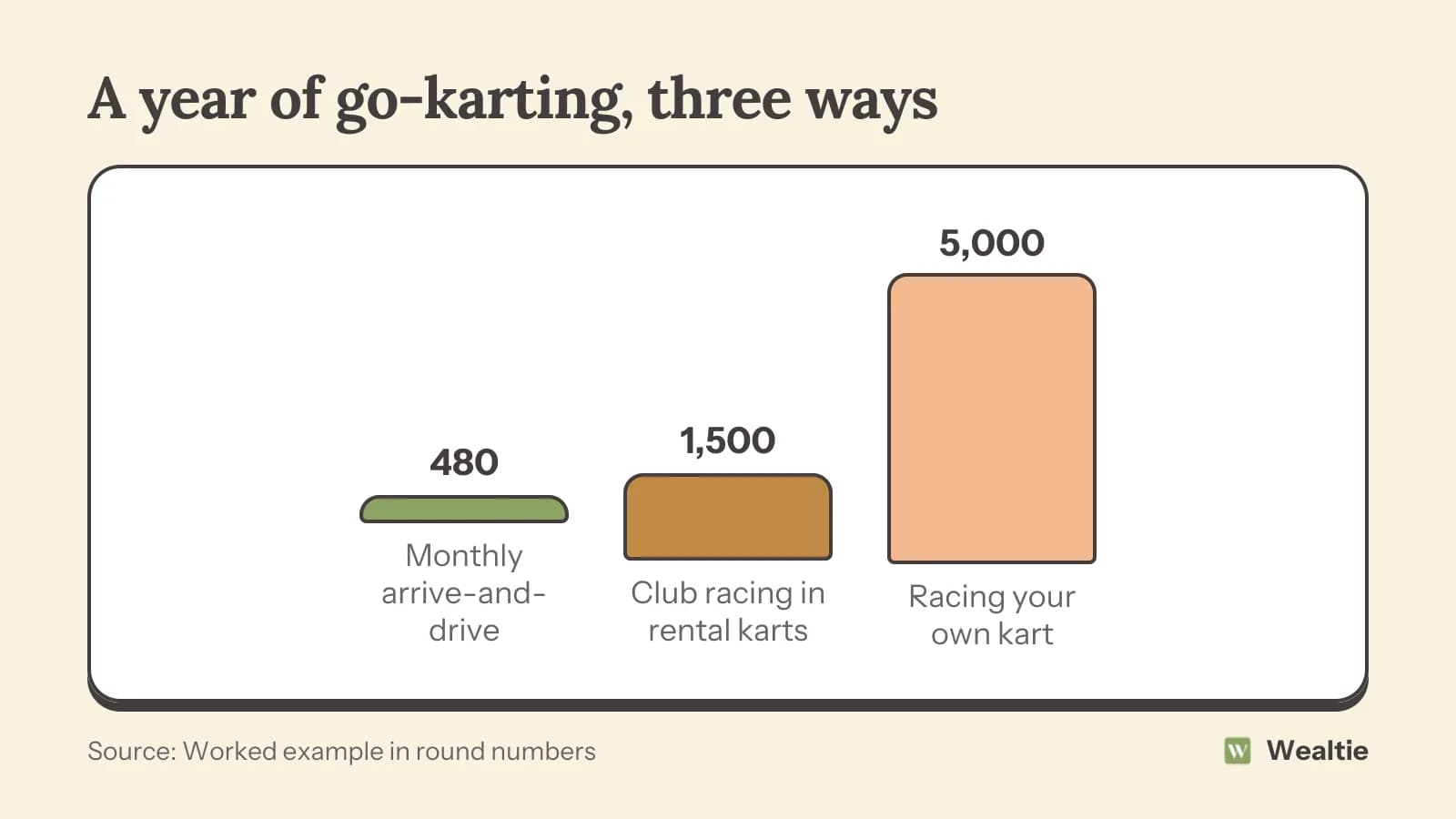
One session a month at around 40 costs 480 a year. Joining a rental kart league, where you race against others in provided karts, costs around 1,500. Owning and racing your own kart, including running costs, tyres, fuel, entries and transport, might cost 5,000 or more.
What are the main types of karting?
Arrive-and-drive sessions
Indoor and outdoor tracks offer sessions where you turn up, put on a helmet and drive their karts. It's the easiest and cheapest way to start.
Rental kart leagues
Many tracks run leagues and championships in rental karts, giving you real racing without owning a kart.
Owning a kart
Serious racers buy their own karts and compete in club or national championships. This is where costs rise quickly.
What does owning a kart cost?
The kart
Second-hand karts can be bought for much less than new, but engines and chassis need regular maintenance.
Engines and rebuilds
Engines need servicing and rebuilding after a set number of hours.
Tyres
Racing tyres wear out quickly and are a big ongoing cost.
Fuel and oil
Every practice and race day uses fuel.
Entry fees and track days
Races and practice days have fees.
Transport
You'll need a trailer or van to get the kart to tracks.
Safety gear
A helmet, race suit, gloves, boots and rib protector are essential.
How do you go karting for less?
Book off-peak sessions
Weekday and daytime sessions are often cheaper.
Look for group deals
Booking with friends can get you discounts. Party packages might cost around 25 per person. How to plan a kids' birthday party budget and how to plan a bachelor party budget cover karting as a party activity.
Join a rental league
Racing in a rental league gives you competition without the costs of owning a kart.
Buy second-hand gear
If you race, second-hand helmets, suits and karts can save a lot, though helmets should meet current safety standards.
Share costs with a team
Some racers share a kart, trailer or mechanic to split costs.
Is karting a good hobby for kids?
Karting is popular with children and teenagers, and many professional drivers started there. Arrive-and-drive sessions are a fun treat. If a child wants to race seriously, budget carefully, since costs can rise fast. How to save money on a hobby covers keeping expensive hobbies under control, and cost per use helps judge value.
Safety should always come first. Reputable tracks provide helmets, briefings and marshals, and enforce rules about driving standards. If you move into racing, invest in proper safety gear that meets current standards. Cutting corners on helmets or protective equipment is never worth the saving.
If you're thinking about racing seriously, start with a rental league for a season or two. It teaches racecraft and lets you see whether you enjoy competing before spending thousands on a kart and trailer. Many racers find rental leagues give them most of the excitement for a fraction of the cost.
Families with young racers should be realistic about the long-term costs. Moving up classes often means newer karts, more expensive engines and travel to distant tracks. Agreeing a yearly budget early, and reviewing it each season, helps keep the hobby enjoyable rather than stressful.
For one-off sessions, compare tracks. Prices, session lengths and kart quality vary, and some tracks offer better value for longer sessions or multiple heats. Checking reviews helps you find a track that feels fair.
Finally, think about timing. School holidays and weekends are busiest and sometimes more expensive. Weekday visits can be cheaper and give you more time on track.
Keep receipts and a simple log of sessions or race costs. Seeing the yearly total helps you decide whether to stay with sessions, join a league or step up to racing.
How can Wealtie help you track karting costs?
Log sessions, gear and racing costs in a hobby expense category, and set a monthly budget for karting. If you race, tracking every tyre, entry and engine service shows the real cost of each season.
Questions people ask
In a worked example, a monthly arrive-and-drive session cost about 480 a year, while racing your own kart cost about 5,000.
Arrive-and-drive sessions at off-peak times, or group deals with friends, are usually the cheapest.
Racing your own kart involves engines, tyres, fuel, entries, transport and safety gear, which can cost thousands a year.
It's a series of races in karts provided by the track, giving real competition without owning a kart.
This article is general information, not financial, tax or legal advice. Your situation is your own; check the numbers that apply to you before you act on them.